They have the largest olive magazine in the world. “I don't think it was as bad as it is now”

Narrator: This machine puts trees in vibrations to shake thousands of ripe olives at once.
Spain produces about half of the world olive oil, and most of them come from one cooperative in the south of the country, where 75,000 Families work together to grow their olive groves.
Benito Jesús Avilés Avilés, a farmer cultivating olives, DCOOP: Our work never ends. There is always something to do.
Narrator: Even if it doesn't look like it, this industry is struggling with difficulties.
Benito: Recent years are probably the worst in my life.
Narrator: In 2022, Europe has experienced the worst drought for 500 years, which hindered the cultivation of olives for these farmers.
Esteban Carneros, corporate director, DCOOP: Olives are dried and wrinkled.
Narrator: Farmers did not have enough water for crops. Some collected half of the olives than in the previous year.
Benito: Water is very important because olive oil is our main product.
Narrator: We went to the Spanish antequery to see how farmers bottled millions of liters of olive oil despite the record drought.
Olive groves stretch in Spain at 2.72 million hectares. The country is the world's largest exporter of Extra Virgin olive oil.
The production of olive oil reaches here the second millennium before our era. Andalusia once supplied olive oil for the Roman Empire.
In modern times, however, Spain did not always dominate the market – mainly because most of what she produced was a mixture of low quality.
This changed about 25 years ago, when manufacturers invested in new ways of harvesting and machines. Thanks to this, today's olive oil is of higher quality and much more expensive.
The Benito family has been cultivating olives for generations. His grandfather, whose name was also Benito, began operating in 1908.
He collects olives from November to January, and then prepares olive trees for subsequent harvest. However, this is not a exact science.
Benito: Every year, we try to speed up harvesting to get the best olive oil and intense taste juice.
Narrator: It all starts in the field. Special vibrating machines shake ripe olives from trees.
Benito: When we vibrate the trunk of the plant, all vibrations go towards its outer part. The trunk never vibrates towards the root. It vibrates up.
Narrator: This method does not damage the branch or tree trunk. It only makes ripe olives fall to the ground.
Benito says that he never collected so few olives in the season.
Benito: Such a long drought is something terrible for our region.
Narrator: Satellite photos show how dry this area has become. Winter rainfall has decreased by over a third.
Trees that do not receive enough water are more difficult to grow. It is more difficult to remove olives from the branches because …
Benito: The olive tree sucks a small amount of water from the olive. It's like a tree consuming olive.
Narrator: In 2019, Benito collected about 8 tons of olives a day. This season, he manages to gather only a ton on some days.
Benito: There are many olive trees that are unable to give any olives, and this year, nor will they be able to return to regular production this year.
Narrator: It is also very hot.
Benito: In May, a very important period for the flowering of olives, we had extreme heat, which literally burned many flowers. This caused the loss of many crops.
Narrator: Benito says that winter is also less harsh. And without enough water, the trees will not grow.
Benito: The tree can be exhausted due to lack of food. There is no food to regain energy.
Narrator: Damage to trees deepen with drought every year. Here's what happens to the olives that survive.
Farmers discharge their yields in processing plants run by DCOOP. The band conveyor transports thousands of raw olives per hour.
Olives are gently washed to remove all pollutants from the groves. However, the value of their collections is not yet determined.
Olives must first be tested in terms of taste. Extra Virgin olive oil is the least processed. It is obtained not using heat or chemicals, but by grinding olives and squeezing oil. This is what makes extra virgin olive oil the most expensive type of olive oil.
It is also considered healthier because it retains all natural vitamins and antioxidants.
First, the machines mix olives to a thick paste.
Francisco Aguado, a farmer cultivating olives, DCOOP: Olives pass through a stainless steel mill, because they need to be grinded.
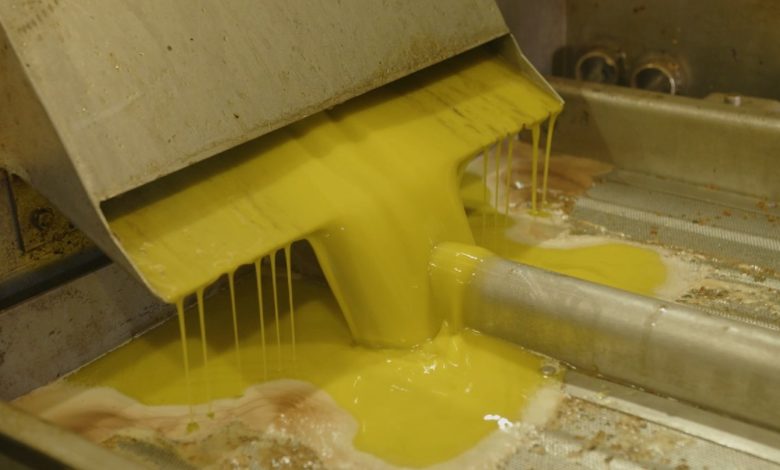
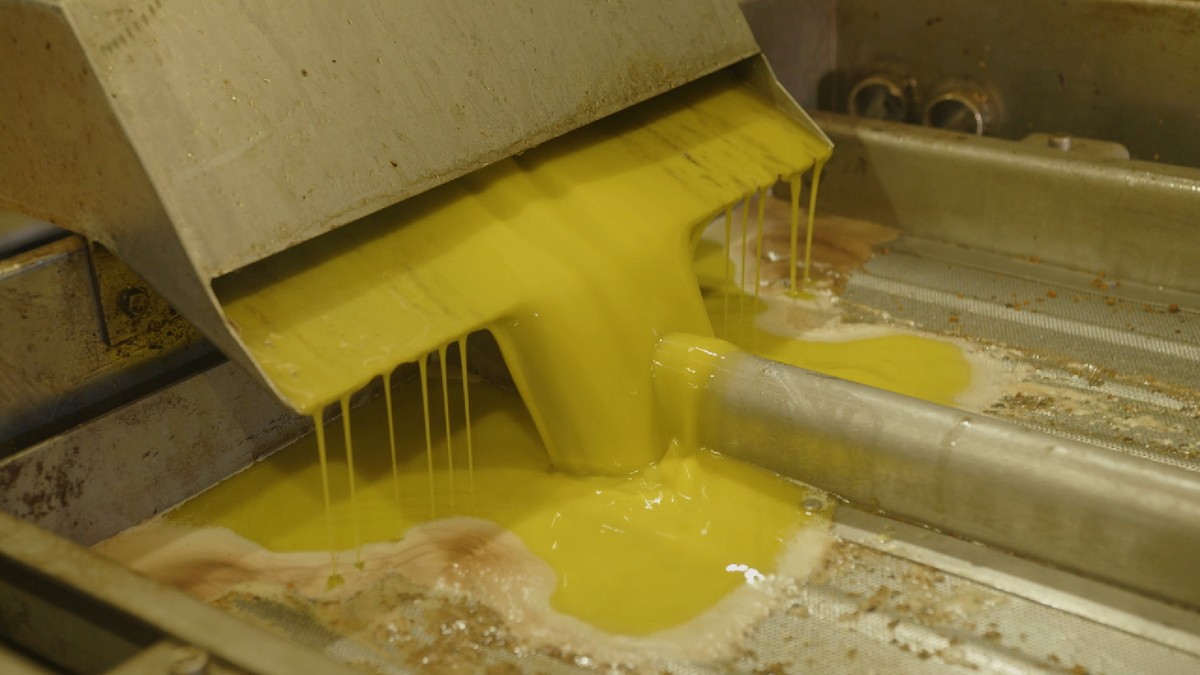
Then the spin process takes place. The spin is necessary to prepare the paste for subsequent extraction.
Narrator: Then massive decanters extract oil from the pulp. Olive waste called Alpeujo is also left. After composting, they are used as fertilizer or fuel.
Francisco: This modern process is more balanced and ecological. That is why he replaced the previous one because there is no water residues.
Narrator: Dcoop maintains high quality standards, and Francisco Aguado tries to make sure that every bottle leaving the factory is perfect.
The new olive oil is stored in huge stainless steel tanks. Nitrogen fills the gap in the upper part of the canister to maintain the freshness of olive oil.
The oil is stored in the dark at a constant temperature. DCOOP has the largest olive oil magazine in the world. It can accommodate 300,000 tone. This is a third of what a tanker can accommodate oil transport.
Tanks can maintain the freshness of oil for up to two years. Each batch of olives has its own different smell.
Francisco: It smells like a field, like wet soil. It's a very nice and pleasant smell.
Narrator: Finally, olive oil is poured into bottles and sealed. Now you can start delivering it all over the world.
Just a few years ago, the Spanish olive industry was doing much better. In 2019, DCOOP produced over 275,000 tons of oil, i.e. more than he could sell. Then the demand for olive oil increased rapidly during the coronavirus pandemic.
Esteban: People stayed at home, so they cooked more and bought good oil.
Narrator: In 2023, farmers predicted harvest below 90,000 tons, i.e. about one third of the record 2019.
And olive oil remains one of the most expensive food oils in the world. From January 2023, an extra virgin dcoop olive oil bottle costs over $ 10. Inflation also took its toll on the producers of olive oil.
Esteban: That is why you can't think that farmers earn more money due to high prices.
Narrator: Farmers like Benito claim that they use practices recommended by engineers from DCOOP. Farmers pass through a tractor. It enters the dust that covers the tree.
Benito: Dust sticks to the leaves of olives, which in turn prevents moisture from evaporating from the plant, but still allows it to breathe.
Narrator: Farmers also plant vegetables in the ground between the trees to maintain soil fertility. They also say that they improved irrigation systems to better distribute a small amount of water available.
Benito: We were unable to recover all olive trees.
Narrator: The production of olive oil will be difficult without enough water.
Benito: It's difficult. I guess it was never as bad as it is now.
Narrator: Benito says, however, that he and other farmers will continue to try.
Benito: Farmers adapt to the situation and try to get as much as possible from the collections.
Crowd: Piotr Nazek