Just a few years ago, turnkey finishing was treated as a market curiosity – an option for the busiest people or investors with a larger wallet. Today, it has become one of the sales pillars of many large developers. Demand is growing especially in two groups.
See also: Digital access to buildings. Blue Bolt sets a new standard on the market
Firstly: buyers for their own residence, often living outside the city, working intensively or buying their first apartment. These clients want to avoid the finishing marathon, save a few months and simply move in immediately after delivery.
Secondly: investors, both those focused on short-term rentals and those planning long-term rentals. For them, time is money – the sooner the premises are handed over to the tenant, the earlier the return on investment will begin.
Developers confirm that this is one of the most stable growing segments. — Purchasing finished premises is a trend that will become stronger in Poland. This is the dominant form of selling apartments in mature markets, says Marek Thorz, PR manager at Atal.
No wonder. Convenience, predictability of costs and lack of contact with renovation teams are arguments that are hard to beat.
Packages and standards: what do developers actually offer?
Today, almost every major player on the market has its own finishing programs. Atal, Robyg, Dom Development, JW Construction – all offer packages in various price and quality variants.
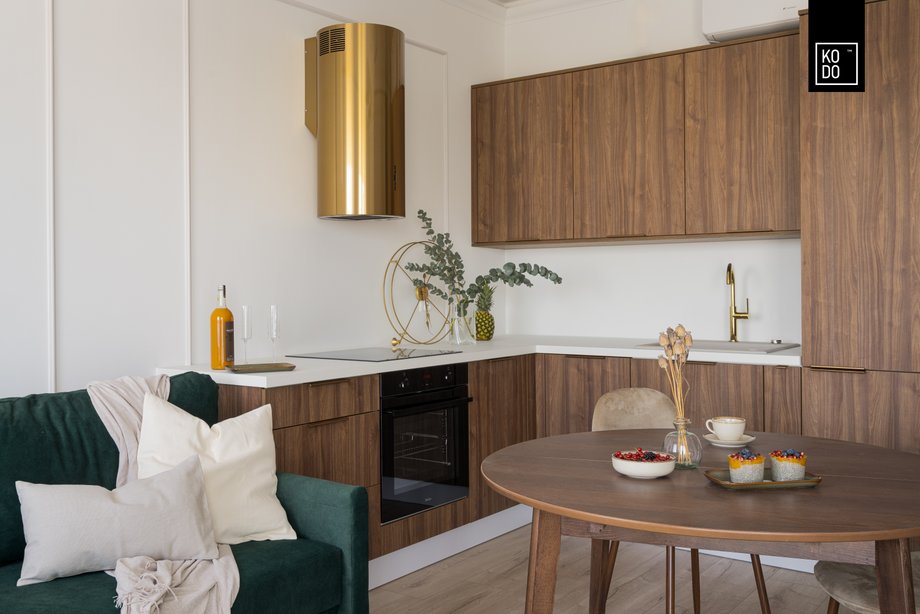
Implementation of the KODO studio
|
KODO
Read also: Poland is losing its position in the eyes of foreign investors. “Alarm bell for those in power”
The three most common levels are:
- Basic / Smart – economical, most often with laminated panels, basic fittings and tiles for standard formats.
- Optimum / Modern – middle variant, with an extended selection of materials, sandwich boards, larger tile formats, more visualization options.
- Premium / High – the highest standard, with premium ceramics and fittings, 60×120 and larger tiles, non-rebated doors, and often also elements of equipment such as kitchen furniture.
The price range is usually approximately PLN 1,000–2,000 per square meter.with some investment packages starting from approximately PLN 999/sq m, and the most extensive premium packages reach approximately PLN 1,600-1,700/sq m.
What is included in turnkey finishing?
Typical package includes:
- wall finishing (finishing, painting, bathroom tiles),
- floors with slats,
- a fully equipped bathroom (tiles, fittings, ceramics),
- interior doors,
- basic lighting,
- sometimes kitchen furniture and household appliances (especially in premium variants),
- executive supervision,
- cleaning and full as-built documentation.
Robyg further emphasizes tax advantage — when using their finishing services, the customer pays 8%, not 23%. VAT, which is important for larger apartments.
Architects at the center of the process: design becomes part of the product
Turnkey finishing is not just renovation work – it's a complete design process in which architectural studios are becoming more and more involved. Developers cooperate with both in-house teams and external studios, such as KODO interior design and implementation.
What is it like to work with such a studio?
Justyna Krawczyk-Sokołowska, head of sales and marketing at KODO, explains that architects participate in the process… already at the design stage of the investment itself. — We support developers in shaping the functional layouts of premises, which increases the attractiveness of the project. We create dedicated finishing programs, prepare visualizations and build investment storytelling, he says.
This is a significant change compared to the old market conditions: the interior is no longer a private addition, but becomes a sales tool and an integral element of the design.
In the KODO model, it is crucial individualization. Each client works directly with the architect, reviewing samples, mood boards and stylistic concepts in the showroom. This is a response to the myth that “turnkey” means mass production without the possibility of customization. More and more often, it is the other way around – refined details and personalization are a way to make an investment stand out.
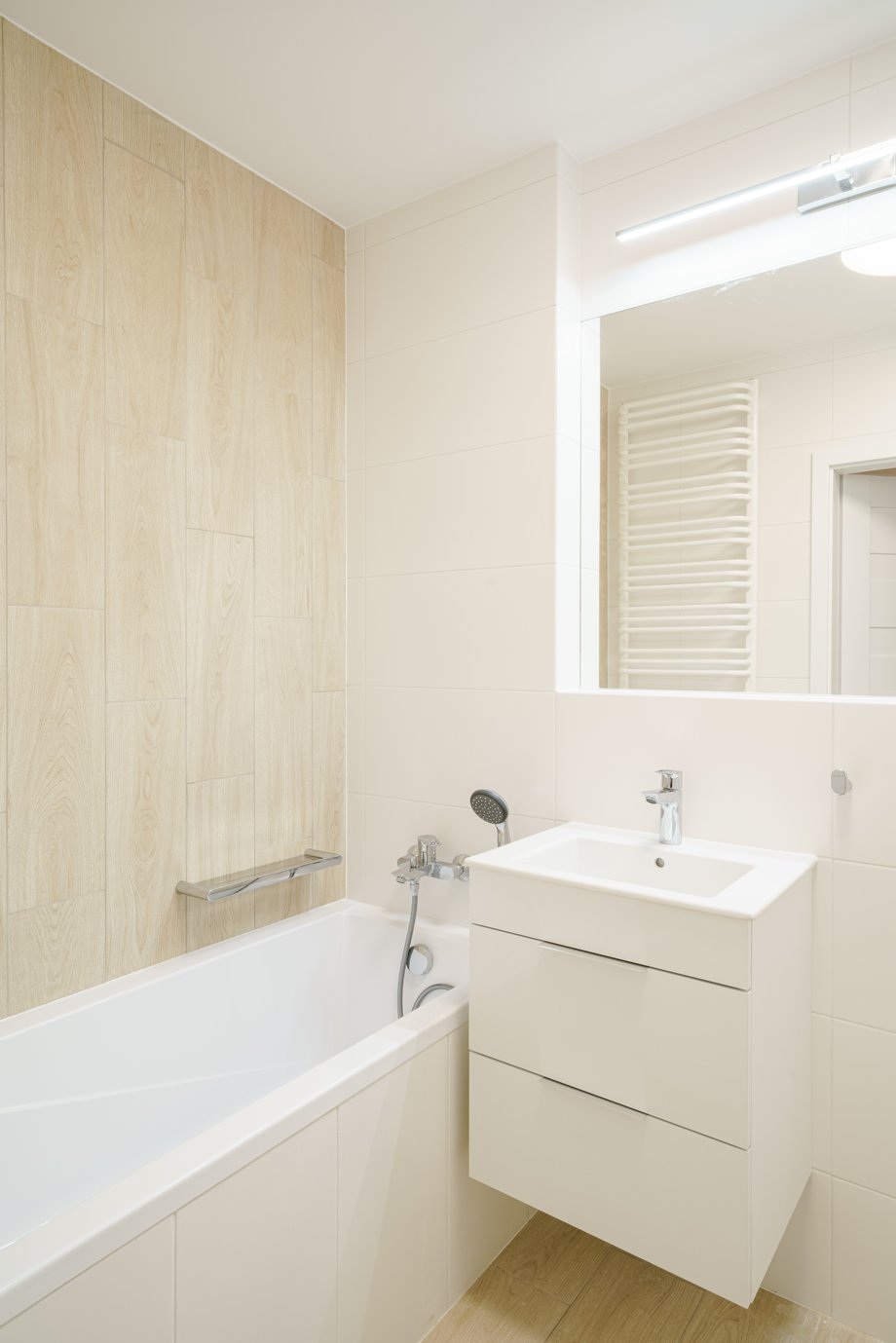
Bathroom design and implementation
|
KODO
Worth reading: Poland ordered such submarines. We saw them being created
How long does it take to prepare a turnkey apartment and what does the acceptance look like?
The implementation time depends on when the customer decides to purchase the package.
1. Finishing under construction
An increasingly popular solution. The work is carried out in parallel with the construction, and the client receives the apartment ready – he does not have to wait additional weeks after obtaining the occupancy permit.
2. Finishing after acceptance
If the work is carried out by an external studio or company, the time is usually 40-70 business days (6-16 weeks), depending on the size and scope of work.
After completing the investment, the buyer receives:
- work acceptance report,
- full as-built documentation,
- list of materials used,
- warranty cards,
- instructions for use and care.
Developers usually provide 2-year warrantyand the service process is becoming more and more formalized, which reduces the number of complaints and increases transparency.
From the perspective of architects: the art of balancing between aesthetics and repeatability
Finishing studios are faced with a task that at first glance seems contradictory: create individual projects that can be implemented in production on a scale of several hundred apartments per year.
This requires:
- selection of collections that ensure long-term availability,
- projects that allow for installation changes without the risk of technological conflicts,
- repeatable materials, but with varying degrees of quality to respond to different price packages,
- building acceptance processes and procedures to minimize implementation errors.
Simultaneously the architect becomes the client's first advisor. He guides him through decisions regarding the format of tiles, the layout of the kitchen, the method of lighting, and the selection of fittings. In many models – as in KODO – the architect takes full responsibility for the implementation from the moment of signing the contract to handing over the keys.
It's a completely different experience than working with a “free” interior designer. Here, the goal is not only aesthetics, but also implementation safety and compliance with the developer's schedule.
Is it worth it? Advantages and disadvantages of turnkey apartments
Advantages:
- significant time savings – even several months,
- predictable budget, predetermined price per m²,
- no need to coordinate teams and orders,
- quick return on investment when renting,
- one warranty covering the entire package of materials and work,
- no renovation chaos in already occupied buildings.
Defects:
- less flexibility with the most sophisticated solutions,
- higher price than when choosing the cheapest materials yourself,
- limited availability of some premium brands in basic packages,
- risk of stylistic typification – if the developer offers too rigid design variants.
However, for most buyers the balance is positive. Developers indicate that interest is growing, and customers are less and less willing to go through the finishing process on their own.
Why do developers invest in finishing? Competitive advantage and faster sales
Robyg emphasizes that The turnkey offer improves not only the comfort of buyers, but also the entire settlement process: the building becomes functional faster and is less exposed to the “renovation stream” of teams in the first months after completion.
It is also a tool that accelerates sales – a ready-made show apartment or a ready-made premises at the final stage of the investment can convince undecided buyers. And for the developer, this means fewer reports and complaints, because the entire process is carried out by proven, certified teams.
It is also important predictability — thanks to permanent finishing partners, companies have control over logistics, quality, material availability and repeatability of the standard.
The new standard of the primary market
Turnkey apartments are no longer a premium service for a select few. They are slowly becoming a standard, especially in large cities. Buyers expect speed, convenience and security, and developers see it as a real way to distinguish their projects.
Simultaneously the role of architects is growing. Large studios emphasize that in order to meet customer expectations, it is necessary to combine individual design with procedural construction precision. This is a completely new form of industry cooperation – closer, more technological and based on creating real added value.