Europe's economic engine is creaking. German companies are packing their bags and moving production abroad. The government still pretends to have everything under control
German economy for three years is stagnant. However, businesses are anything but stagnant. CEOs of corporations and medium-sized enterprises are rapidly rebuilding their companies to adapt to the dramatically changing global situation. Increasingly, the location of the headquarters is no longer so important.
A new analysis by the Federal Association of German Industry (BDI) and the consulting company Deloitte shows how rapidly the flight of German companies abroad is accelerating. Almost every fifth company surveyed admitted that they no longer produce in Germany. This means that in two years this percentage has almost doubled.
Europe's largest economy is also losing sectors with the highest added value at an alarming rate. 17 percent companies have already transferred research, and 13 percent — development to other countries. According to the study this silent escape from the homeland may become even more intense.
Deindustrialization is gaining momentum
This picture of the situation shows how dynamic the process of deindustrialization in Germany is. Both the growing emigration of companies and the too few new, promising enterprises are related with Germany's serious weaknesses as a location.
Undoubtedly, Donald Trump's tariff fury, China's harassment and Russia's war against Ukraine are hampering the activities of local industry. However, competing countries also struggle with these problems. However, in Germany there are serious inconveniences, which are the result of the internal situation: from the absurd costs of the energy transition, the growing shortage of skilled workers and excessive regulation, to the highest labor costs in the world and the overwhelming burden of tax and social security contributions.
The article continues below the video
Emigration is also becoming more attractive because many corporate managers and entrepreneurs have legitimate doubts whether the ruling coalition will find the strength to solve the problem of years of stagnant reforms. The federal budget for 2026 shows that the CDU/CSU and SPD union are not using the risky change in debt policy primarily to revitalize the economy.
Merz's cardinal mistake
Financial resources are available, but social reforms are postponed. Not only in the coming year, but throughout the parliamentary term, a significant part of the debt will be allocated to additional social spending and new subsidies, such as electricity for industry and a VAT cut for catering.
However, with ever-higher pension spending and costly state aid for companies that have permanently lost competitiveness, the German economy it cannot return to the path of higher growth. On the contrary: a broad offensive would now be necessary, which would benefit all enterprises, not just selected industries.
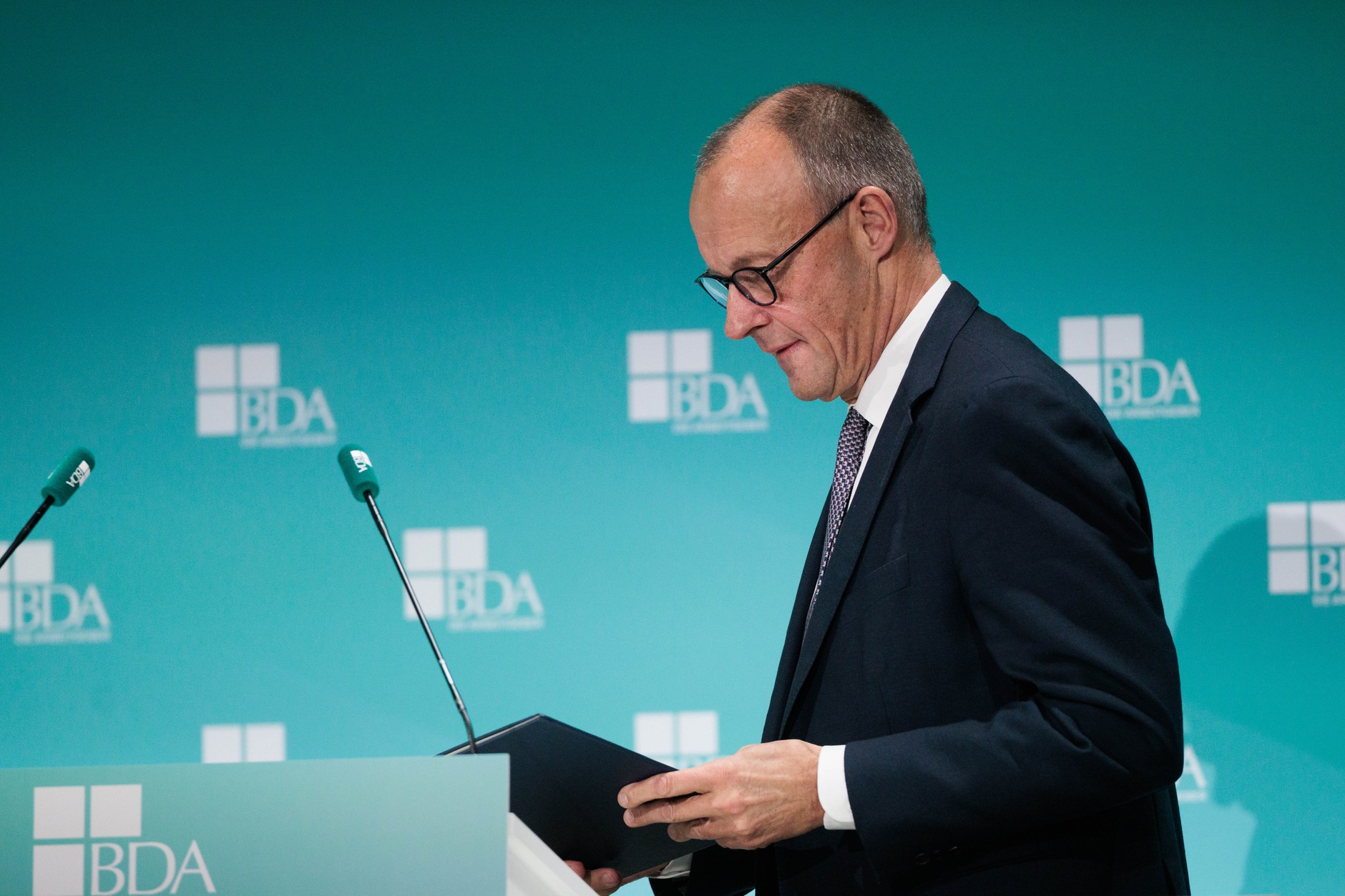
German Chancellor Friedrich Merz during the congress of the Confederation of German Employers' Associations, Berlin, November 25, 2025.CARSTEN KOALL/Getty Images
The pension package is symptomatic of the government's reckless approach to the economic crisis. Chancellor Friedrich Merz says the huge new burdens on businesses and workers are irrelevant “in the face of the brutal reality” on the international stage.
However, considering the economy to be of secondary importance in times of crisis is a cardinal error. Precisely because the geopolitical situation is very tense, it is necessary to consistently strengthen the country's economic position. If the situation in Berlin continues to develop like this, we will eventually lose everything: our businesses, our financial stability, and ultimately our defense capabilities.
I’m Ashley Davis as an editor, I’m committed to upholding the highest standards of integrity and accuracy in every piece we publish. My work is driven by curiosity, a passion for truth, and a belief that journalism plays a crucial role in shaping public discourse. I strive to tell stories that not only inform but also inspire action and conversation.