
It has never been so bad in Europe. This is a test for NATO


European governments are strengthening air surveillance, discussing new rules for the use of force and increasingly calling these events part of the Kremlin's hybrid war. However, there is no official confirmation of Russia's involvement in most of the incidents.
Since the beginning of the war in Ukraine, European countries they regularly record similar incidents. In 2022, unidentified drones appeared near Norwegian oil platforms, in 2023 a Russian missile flew over Polish airspace, and in 2024 the United States Air Force recorded drone flights near its bases in the UK.
At the time, these cases were seen as isolated episodes, but by the fall of 2025, there were so many of them that many began to talk about the Kremlin's new strategy.
According to Novaya Gazeta's calculations, it took place in Europe from August to mid-October 2025 at least 67 events involving aircraft and drones, possibly related to Russia. The number of cases has been rising steadily in recent months, from one to three incidents a week in August to a peak in late September when the number reached 17 in a week.
Moreover, the geography is constantly expanding: according to Novaya Gazeta's calculations, similar cases have been recorded in the last few months in at least 17 European countries.
Common problems of Europe
August 18, Norway. The Su-33 fighter entered the airspace for a minute near Vardo – the country's eastern border, 170 km from Murmansk. This was the third violation by a Russian aircraft in Norway only in 2025. Previously, similar events had not been recorded for over 10 years.
September 9-10, Poland. Okay. 20 Russian drones crossed the border. Some of them were shot down, but most crashed and their remains were found.
September 19, Estonia. Three armed MiG-31 aircraft stayed in Estonian airspace for 12 minutes.
The article continues below the video
September 22–26, Denmark. Multiple unidentified drones were detected over military bases and critical infrastructure, and five civilian and military airports were closed for a week.
September 25-October 4, Germany. First, drones were spotted over critical infrastructure — military bases, a hospital, energy facilities — in northern Germany, and then the Munich airport was closed for two days in a row because of them. Approximately 10,000 people were injured. passengers.
October 3, Belgium. 15 drones flew over the Elsenborn military base on the border with Germany.
We have divided all events into: three main categories: intrusion into airspace, detection of the remains of combat drones (if no border violation was recorded) and suspicion of surveillance of critical infrastructure.
Airspace violation
Since August 2025, the airspace of EU countries has been violated at least 15 times. Piloted means of the Russian army crossed the border five times. (A total of seven fighter jets, one refueling aircraft and one military helicopter were involved in the breaches.) Another five cases involved balloons, probably launched by smugglers into Lithuania across the border with Belarus.
The remaining cases were short-term border violations by unmanned aerial vehicles, both Russian military drones and unidentified drones from Russia or Belarus. Russia denies intentional airspace violations in all these cases.
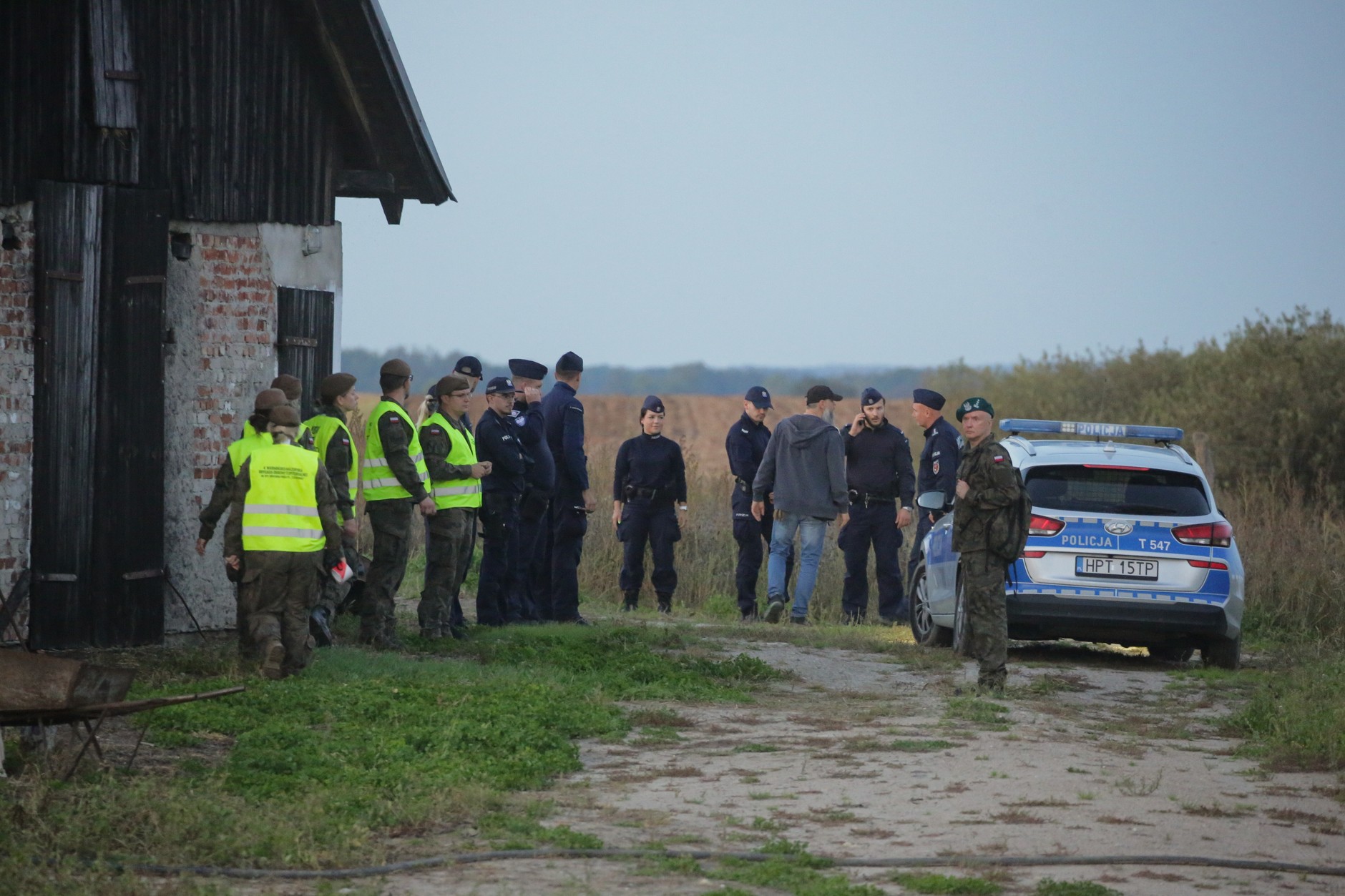
Services at the site where a Russian drone was found in Korsze, Poland, September 20, 2025.Tomasz Waszczuk / PAP
Interception of Russian planes approaching European borders (when a European country's fighter approaches the border-violating plane and escorts it away from the border) happens frequently. However, an airspace incursion, even for a few seconds, is an extremely rare event. Such cases are considered serious violations and may result in immediate action.
This was the case, for example, in 2015, when a Russian fighter entered Turkish airspace for 17 seconds and was immediately shot down by Turkish air defense.
Traces of provocation
Found at least 10 times in European countries wrecks of Russian drones. They were most often found in Poland and Romania, countries bordering Ukraine. These were mainly Geran-1 and Geran-2 models improved on the basis of the Iranian Shahids, not always equipped with explosives. Russia uses such drones to overload Ukrainian air defense systems.
Sometimes mass intrusions look intentional provocations from Russia. So, on the night of September 9-10, approximately 20 unmanned aerial vehicles arrived in Poland, the Polish authorities informed. According to Volodymyr Zelensky, over 90 drones were involved in the attack on Ukraine, some of them were intercepted by Ukrainian forces.
In some cases, drones have been detected far from the theater of war, such as in Bulgaria or Latvia. They apparently fell into territorial waters and washed ashore.
“Spy” drones
Unlike the previous two categories, in the case of the so-called spy drones significantly it's harder to figure out who's behind it. Sometimes detected drones turn out to be launched to record a video for TikTok or amateur nature filming. In such situations, violators face high penalties penalties: tens and sometimes even hundreds of thousands of euros.
Nevertheless, in most cases there are signs to suspect deliberate actions sabotage or espionage. Groups of 10-15 devices were observed mainly near critical infrastructure facilities. They moved in a coordinated manner and were often much larger than typical civilian models.
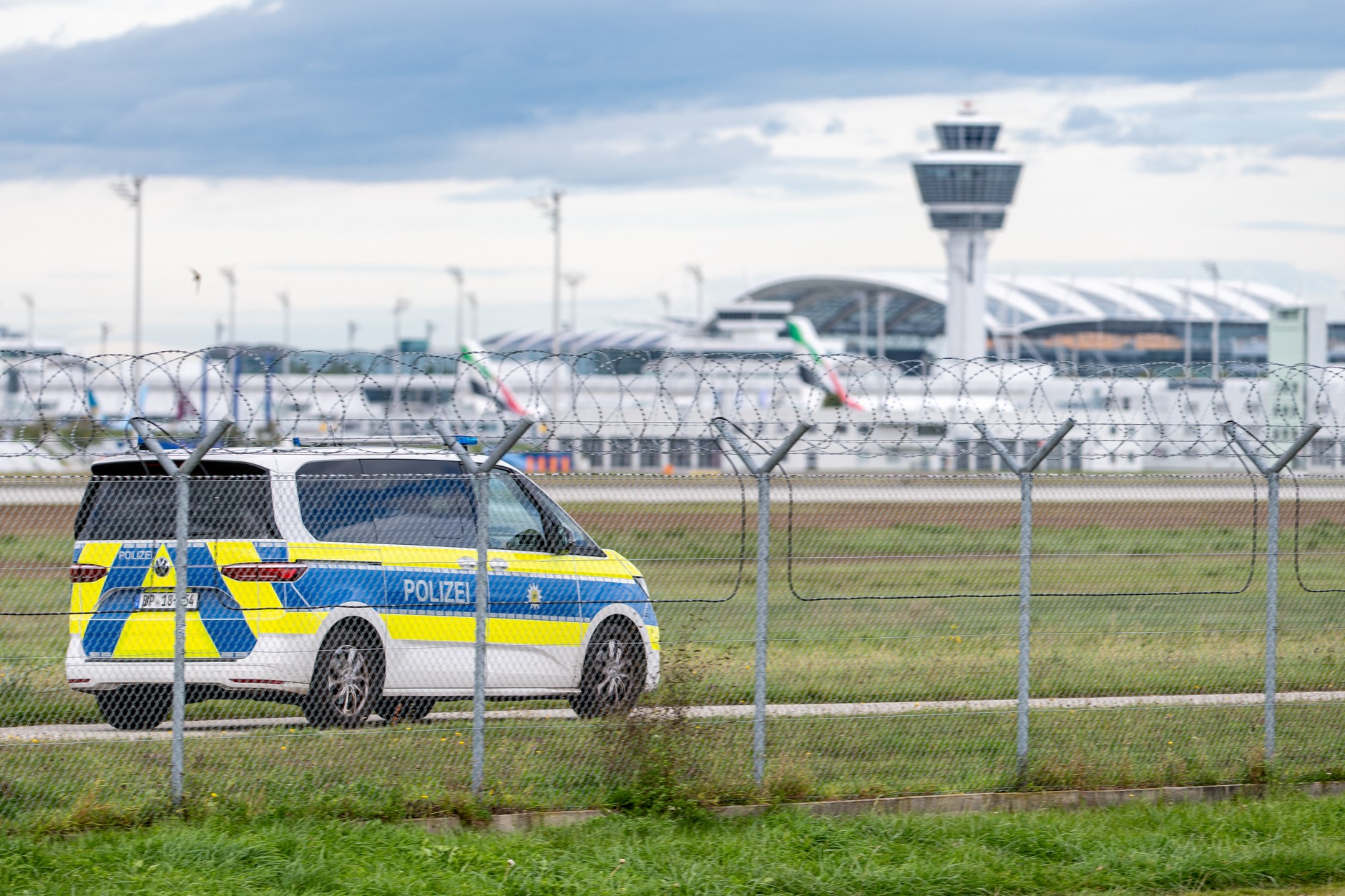
Police after the appearance of drones at the airport in Munich, Germany, October 4, 2025.ARMIN WEIGEL / AFP
According to Novaya Gazeta's estimates, since August 2025, there have been cases in Europe at least 42 such events. They were most often spotted near airports (17), military bases (12), and various government buildings (five).
In most cases of drone detection, the investigation is still ongoing and there are no official versions of the initiators of the attacks yet. However, European leaders have repeatedly stated that a professional actor or the country's government is behind the drone launches. Former German Chancellor Olaf Scholz directly linked the drone wave to Russia, but admitted there was no evidence for it yet.
Some experts theorize that drones are launched from Königsberg, but most investigations point to the so-called shadow fleet – ships used to sell Russian oil bypassing sanctions. In August, for example, the Scanlark cargo ship was detained in Germany and, according to an investigation, may have been used to launch a drone over a German navy ship on August 26.
How Europe responds
The actual scale of espionage regarding military and critical infrastructure in Europe may be much biggerthan it appears from press reports. In some countries, lists of such events are secret: in the Czech Republic, authorities have confirmed an increase in drone activity near strategic facilities, but do not publish the list of cases themselves.
Even if incidents are not treated as secret, not all facts about the appearance of drones reach the media. In Denmark, for example, police received over 500 reports from citizens during a series of raids, but not all of them were processed quickly.
The heads of the largest European arms companies Airbus and Thales Belgium also note the intensification of drone activity near their facilities and emphasize that they lack specific instructions on how to deal with such situations.
In response to espionage and provocations, European authorities adopt recipeswhich give the right to shoot down drones violating airspace and threatening infrastructure facilities. For example, Germany is preparing a law that will allow police to shoot down such devices using firearms, lasers or signal jamming. Lithuania and Romania have also given their military the right to shoot down drones that illegally enter the country's airspace.
It continues in parallel modernization and development of defense infrastructure. The EU is preparing to allocate additional financial resources and create a “drone wall” by the end of 2027 – a system of sensors, interceptors and containment assets along the eastern flank. NATO is also strengthening its presence in the east: Operation Eastern Sentry has been launched to strengthen air defense forces, reconnaissance drones and equipment on the alliance's eastern border.
European politicians believe that the increase in the number of aviation accidents is related to Russia's attempts to increase pressure on Europe, divert attention and arm the front in Ukraine, as well as sow fear and doubt about the EU's ability to protect its own space. The purpose of such pressure is not to destroy objects, but to show the opponent's weakness.


