“Don't bring a child into the world if you can't afford it.” Lively poverty debate on social media


A new study reveals that teenagers raised in poverty or lack of emotional support develop depression and anxiety more often than those exposed to direct aggression. The effects of deprivation are transmitted from childhood to adulthood, through the way in which love and safety become conditions for survival, say the specialists.
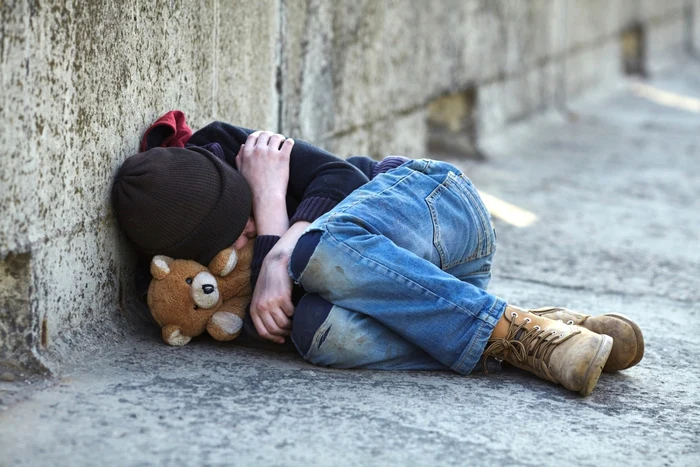
Photo credit: Shutterstock
“There are wounds that hurt suddenly, like a slap. And there are wounds that hurt silently, until they become your way of being in the world. Poverty is one of them.” Dr. Gabriela Marc, principal clinical psychologist and associate university lecturer at the Faculty of Psychology and Educational Sciences, explains for “Adevărul”.
“Children raised in material, but especially emotional, deprivation more frequently develop depression and anxiety in adolescence than those exposed to direct aggression. Bullying hurts, but deprivation slowly shatters the inner structure that gives meaning and security. When there is a lack of support, emotional support, the child no longer fears others; he comes to perceive life as insecure and difficult”. she adds.
Research published in Epidemiology and Psychiatric Sciences confirms the observation in the office. The team led by Santosh Giri and Nancy Ross analyzed data from the Longitudinal Study of Australian Children, one of the largest scientific bases on emotional development. The results show that trauma experienced by parents in childhood – poverty, neglect, lack of support – significantly increases the risk of anxiety and depression in adolescents. The authors note that the effects are not only psychological, but also biological: “Early experiences become imprinted in the body, influencing responses to stress and the ability to regulate emotions.”
“Poverty is not only material, it is also emotional”
“A child raised in deprivation learns to live on the alert, even when there is no longer danger, because his focus is survival. The body tenses, breathing becomes short, sleep becomes fragile, because he has learned that the world does not offer safety and he must protect himself. Poverty, neglect, the lack of an available adult send the same message to the child: You are not worthy, you do not matter enough for someone to stay with you. Over time, this insecurity turns into deep sadness, then helplessness, and in adolescence, depression. It's not a choice. It's an adaptation to a cold world, it's a fight for one's life”, explains Dr. Gabriela Marc.
The Australian researchers will continue the study, focusing on the resilience factors that can mitigate the transgenerational effects of trauma: stable relationships, community membership and cultural identity, as they convey. “We hope these results will guide family-centered prevention programs and public mental health policies,” said Santosh Giri.
“In Romania, poverty and migration have left deep traces. More than a third of children grow up with absent parents or in families living on the edge of subsistence. Many do not only lack resources, they lack a warm look, a voice to accompany them in their fears. They may be houses full of objects, but empty of emotion. Behind school results and learned smiles often hide tense bodies, teenagers who they carry the burdens of their parents without knowing that they do not belong to them”, says Dr. Marc.
She also details how trauma is inherited. “Children are not born good or bad, with trust or fear. They learn both from the way they are looked at, touched, listened to. When the parent is overwhelmed by his own childhood pain, worries, shame, he can no longer offer presence. And the child feels the absence in the silence of words. He struggles and seeks the adult's presence, but if he is not there, the child's heart closes day by day. The trauma is inherited thus: by the way love breaks, the way love's invisible thread breaks day by day like a spider's web.”
In her view, healing is not about forgetting pain, but about relearning safety: “Lack is made whole through presence, through an adult who remains and through a safe relationship that doesn't falter when mistakes happen. What really brings us back to us is the concrete experience of safety, a breath that settles, a touch that says 'You're okay,' a look that stays, a promise that is held there, in the stillness of the body that no longer awaits danger.”
Moreover, says the specialist, we need to build a safe environment around our children that supports, not judges. “Let's learn to listen and offer space, not solutions. Let's stop confusing strength with silence, power with vulnerability, and shame with responsibility. Poverty is not only material, it's also emotional: the absence of a look that says: You're safe. Bullying passes, but emotional poverty remains in the cells, in the way the child fears being loved and, later, in the way the adult will look at life.”
At the same time, Dr. Marc summarizes the meaning of resilience: “Nothing is permanent. A conscious adult, an authentic relationship, or a moment of presence can change the direction of a life. Coming back to yourself is not hiding pain under comfort and appearances, but staying alive in the midst of it, letting life flow again where there was pain. Shame doesn't go away when we deny it, but when it's met with gentleness. When someone looks at it without judgment and says, simply: It's okay. You don't have to be otherwise you deserve it. I love you, I see you, I hear you. I'm here.”
The voice of those who experienced the absence
After the study was published, countless users from around the world took to Reddit to share their own experiences of poverty, neglect and the trauma that remains in the body. Many have confirmed what psychologists have been saying for years: emotional insecurity does not disappear with childhood.
For example, one user wrote:
“I was a severely abused child and had several health problems, including depression. Paradoxically, I felt better during the military training: all the big men were crying, but for me it was quiet. The screams of the instructors did not affect me, because that is how I had grown up. One day I left home for good and cut off all contact. I realized that the toxic family environment made me more depressed and confused. Now I am stoic and have a extraordinary emotional regulation. I no longer give people the power to control my condition. Insults have no effect on me.
I am against the idea that all adults 'deserve' to have children. Some may call me an extremist, but I don't care. I'm not thinking of adults, but of children. I'm against suffering, and if that means some people shouldn't have children, then that's ethical. Don't bring a child into the world if you can't afford or can't give it the life it deserves. Yes, rich people can be careless too, but at least the child won't live in misery.”
Another user reacts to the study's findings, asking an essential question:
“The authors say that the age of 12-17 is a window in which the course of life can change: some young people fall into depression, addictions or even commit suicide, others manage to thrive. But what happens to those who have become adults and still suffer? How can they have a better life if their mental disorders stem from childhood traumas? For them there is no longer prevention, only consequences.”
The same commentator goes further and calls for social responsibility:
“I think bullying should be punished more severely, and verbal abuse should have legal consequences, maybe even jail time. Victims lose years of life and health because of these behaviors. I don't care that the bullies have problems at home too: it's time to show compassion and empathy, not transfer the pain onto others. Go to therapy, don't spill your trauma on your colleagues.
Many times, parents and abusers behave the same. Hitting children is considered abuse, but so should verbal violence. Verbal abuse, whether between parent and child or between peers, creates a toxic generational cycle that gets worse.”
Another user added: “Constant deprivation, even at a low level, erodes you in a different way than sudden trauma. Bullying is an acute wound. But poverty and lack of emotional support? That's an ongoing pain. Never ending. No wonder it stays with you.”