On October 21, the founder of the Nobel Prize, the chemist Alfred Nobel, was born. In 2018, at the age of 62, the footballer Ilie Balaci, nicknamed the “blonde miracle”, died.
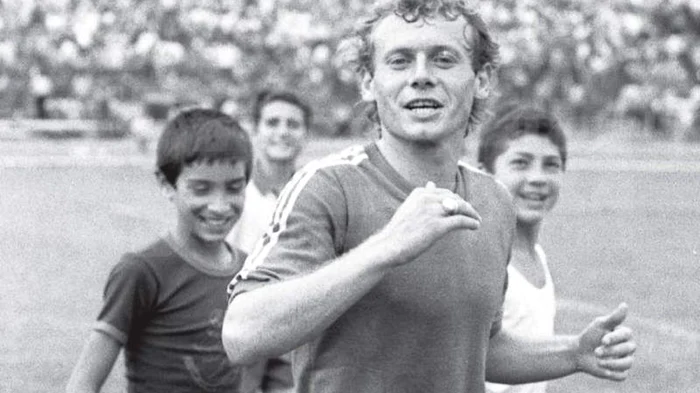
Ilie Balaci/PHOTO: Archive
1097: The Crusaders begin the siege of Antioch
The siege began on October 21, 1097 and ended on June 28, 1098, the fortress being conquered by the Christians.
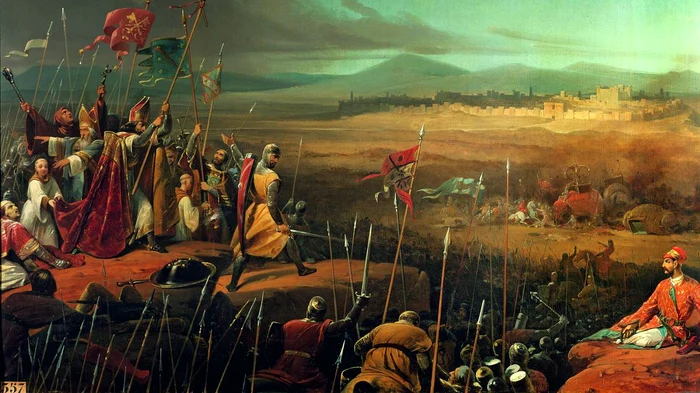
Siege of Antioch/PHOTO: Historia
The Siege of Antioch marked the arrival of the First Crusade in the Holy Land. The events set a pattern of betrayal, massacre and heroism that would mark future campaigns. By capturing Antioch, the Crusaders secured supply lines and reinforcements to the west, according to Britanica.
After marching through the Seljuk lands, the Crusaders conquered Edessa and reached the huge city of Antioch on October 20, 1097.
The Seljuk Empire was a medieval Sunni Turko-Persian Islamic empire that established itself in the Near and Middle East, where it fought battles with the Byzantines and the Crusaders. He subjugated Afghanistan, Iran, Syria, Mesopotamia and Anatolia in turn. The Seljuks establish their supremacy within the Arab world and control the Caliphate from Baghdad.
Boemund of Taranto, Raymond of Toulouse and Godfrey of Bouillon each commanded a section of the blockade lines. The Turkish garrison was commanded by Yaghi Siyan, who summoned a relief army from Damascus and another from Aleppo, cities in present-day Syria, both of which were defeated by the Crusaders before reaching Antioch.
On June 28, the Crusaders went into battle with the Holy Spear as their standard. Bohemond hurried back to Antioch to accept Shams' surrender, occupy the citadel, and announce that he was now Prince Bohemond of Antioch.
The Crusaders lost 2,000 of their 30,000 soldiers, and the Turks 10,000 of their 75,000.
1833: Swedish chemist Alfred Nobel, founder of the Prize that bears his name, was born
Born on October 21, 1833, in Stockholm, Sweden, Alfred Nobel was an inventor, entrepreneur, scientist and businessman who also wrote poetry and plays. His father was also an inventor and engineer. His varied interests in various fields are reflected in the prize he established and for which he laid the foundations.
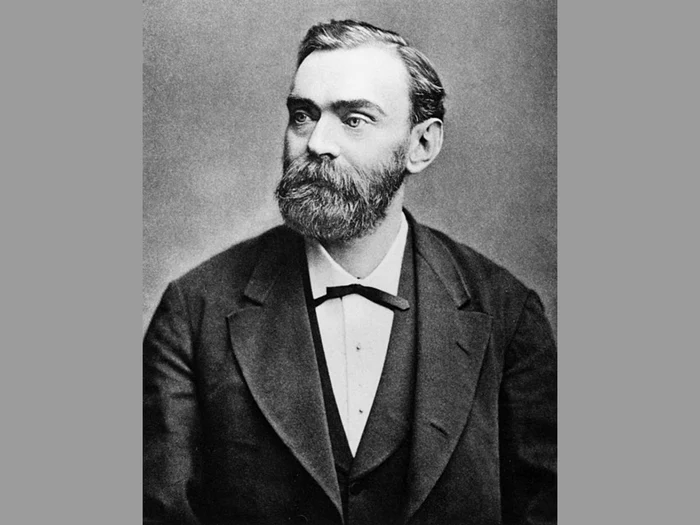
Alfred Nobel/PHOTO: Wikipedia
Meanwhile, Immanuel failed in various businesses until he moved in 1837 to St. Petersburg, Russia, where he prospered as a manufacturer of explosive mines and machine tools. Five years later, the entire Nobel family moved to Russia, Britanica writes.
Alfred left Russia to study chemistry in Paris in 1850. Returning after several years in Sweden, Alfred began testing prototype explosives in a laboratory at his father's residence.
In 1867, Nobel gave birth to one of the most important inventions, dynamite. By chance, he discovered that nitroglycerin was completely absorbed by kieselguhr, a type of porous siliceous earth, and the resulting mixture was much safer to use and easier to handle than pure nitroglycerin.
Nobel called the new product “dynamite” (from the Greek dynamis, meaning “power”) and obtained patents for it in Great Britain (1867) and the United States (1868).
By 1895, Nobel had developed angina pectoris and died of a cerebral hemorrhage at his villa in San Remo, Italy, in 1896. At his death, his worldwide business empire consisted of more than 90 factories producing explosives and munitions.
Alfred Nobel signed his last will and testament in Paris on November 27, 1895. He specified that the bulk of his fortune was to be divided into five parts and used for prizes in physics, chemistry, physiology or medicine, literature and peace for “those who, in the previous year, will have brought the greatest benefit to humanity”.
Since 1901, the Nobel Prize has honored men and women from around the world for outstanding achievements in physics, chemistry, physiology or medicine, literature, and work for peace.
1954: Romanian footballer Marcel Răducanu was born
Marcel Răducanu was born on October 21, 1954, in Bucharest, in a family of athletes from the Pantelimon neighborhood.
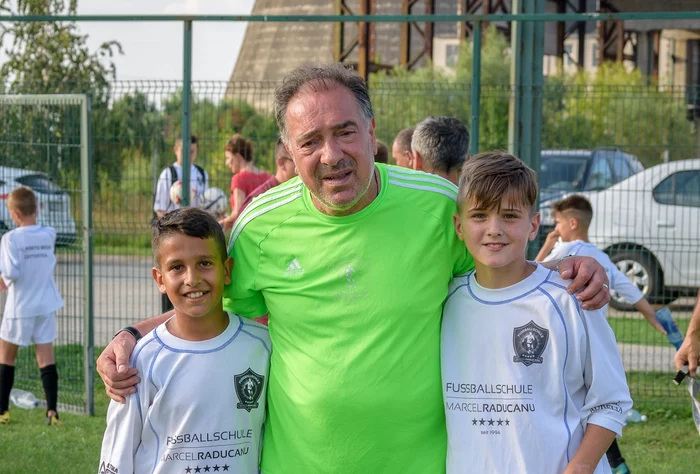
Marcel Răducanu/PHOTO: Facebook
He was one of the most talented and fine Romanian dribblers of all time.
He was among the few footballers who recognizes the arrangements in football and describes how he took the bribe (along with other teammates) for Steaua to lose a match in Cluj, score 3-0. The military club had the video recording of the moment the bribery took place and was put in evidence after denying it.
He wrote (in a memoir) more details of the corruption in the football of those times but which he refused to publish in order not to be sued by those who are still alive and are still involved in football in Romania.
He played 21 matches for the Romanian national football team. Appointed “Footballer of the Year” in 1980 in Romania, Răducanu took refuge in West Germany in 1981 on the occasion of a match of the national team in Dortmund.
As he was a captain of the Romanian Army, he was sentenced in absentia to 5 years and 8 months in prison for desertion.
After a one-year quarantine imposed by UEFA, Marcel Răducanu played for Borussia Dortmund and then for FC Zürich. He retired in 1991.
After graduating from the coaching school of the German Football Association, he opened a football school accredited by the German Football Association in Dortmund in 1994.
On August 8, 2008, he married for the third time, to Anna.
1999: The first issue of Playboy magazine appeared in Bucharest
The Romanian Playboy edition, one of the 25 existing local editions, entered the market in October 1999, being the first male lifestyle publication, an international glossy brand, that appeared in Romania.
The magazine's best-selling issue was that of January 2001, with 110,327 copies circulated.
Playboy Romania closed in 2016 due to low sales. In 2014, Playboy's average monthly circulation was 6,000 copies, with a monthly average of 2,500 to 4,000 copies sold.
2018: The footballer Ilie Balaci passed away
Ilie Balaci was born on September 13, 1956, in Bistreț commune, Dolj county. Although the documents show the date as September 13, his real birthday is September 8.
At the age of 9, he moved with his family to Craiova, where he started practicing athletics. After a few months, he also signed up for football, practicing both sports in parallel until he was 11 years old, when he finally chose football.
The “blonde wonder” started football at the Craiova University juniors at the age of 9, in 1965. He debuted in the first division at the age of 17, on August 12, 1973, in the match Jiul Petroşani – Universitatea 1-1. A few months later, he played in the Romanian national team, in the match against the French team, in Paris, on March 23, 1974). He was the youngest debutant in the national team in the history of Romanian football (17 years and 6 months).
Balaci played, alternately, at Craiova University (1973-1985), FC Olt Scornicesti (1985-1986) and Dinamo Bucharest (1986-1988), for which he played 347 games in Division A and scored 84 goals.
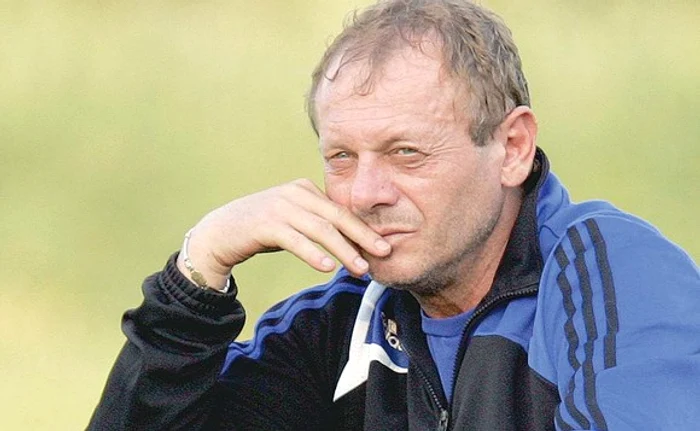
Ilie Balaci/PHOTO: Archive
He was named the best footballer in the Romanian championship twice (1981 and 1982). Although at the age of 27, when he was the best footballer in Romania and the leader of Craiova Maxima, he was injured, he continued to play until the age of 31, but not at the same level.
Due to a serious knee injury while sitting, he missed Euro 1984. Mircea Lucescu did not call him up, even though he had been the team's leader in the preliminaries.
Ilie Balaci died in Craiova, on October 21, 2018, following a myocardial infarction. A few hours after he met with several friends in a club in Craiova, where he allegedly complained of a sore throat. He collapsed on a Sunday, and the family immediately called 112. After almost an hour of resuscitation, the former great footballer was declared dead.