Crime and mystery-solving movies and series dominate the charts on streaming platforms. And “true crime” – a subgenre in which real crimes are examined – even more so. Is it normal that we like to watch such content? Yes, says criminologist Dan Rusu, who also comes up with explanations. “True crime fascination is, first of all, useful!”, he says.

The “true crime” audience consists mainly of women
Women watch most of the “true crime” type of content, that is, films, series or documentaries that tell the story of real crimes. Behind this phenomenon hides an emotional explanation: women – who were the main victims of serial criminals – learn how to anticipate dangers.
“They represent between 70 and 90% of the viewers. The reasons are multiple, but I would mention the most instrumental of them. True crime fascination is, first and foremost, useful! It can help us in real life, because it can teach us how to anticipate dangers, to protect ourselves from them and reduce the related uncertainty. I am always amazed when I see a defiant attitude towards people who consume this content. There's nothing wrong with that and it can be very useful when the show or movie is quality”says Dan Gabriel Rusu, university lecturer and doctor of criminology.
“We have to learn to differentiate between quality films, series and documentaries and poor quality ones. The former manage to hold up a mirror to society, helping us to understand something about ourselves. The others, however, only repeat harmful stereotypes, symbolically assault the victims (once again) and perpetuate a distorted image of reality”he adds.
“Monster: The Ed Gein Story,” the series that sparked revulsion but dominated the charts
“Monster: The Ed Gein Story” is the series recently released by Netflix that dominated the charts. Viewers complained about the much too graphic scenes, which presented the abominable deeds of one of the most famous American criminals: Ed Gein. He not only killed two women, but also dug up graves and used the bodies to create furniture as well.
,,It was really hard for me to watch it, it's so terrifying it really charges you up. (..) The series is on the borderline between thriller and horror, it shocks a lot, intentionally, but it also has an important psychological component, it tries to look at the monster as a human being“, wrote one of the viewers on a Facebook group dedicated to lovers of movies and series.
“This series must be seen on an empty stomach”, “Macabre”, “Shocking”other users also posted.
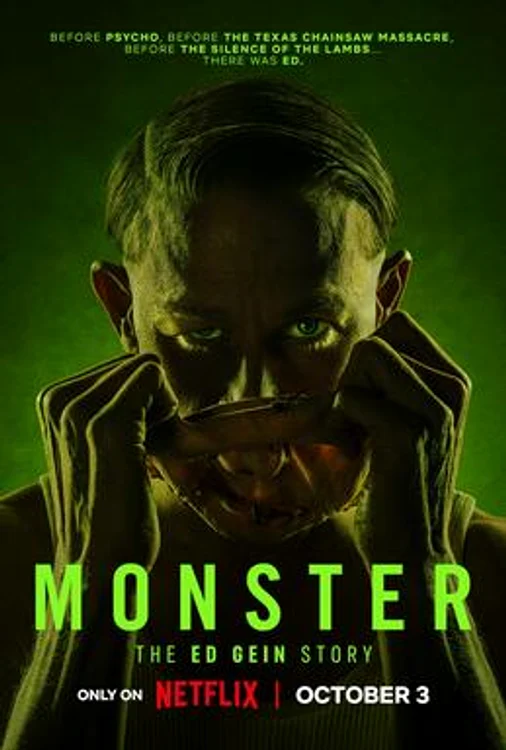
The official poster of the horror series “Monster: The Ed Gein Story”
“Series like this offer the opportunity to experience very strong emotions from a distance and safely”
Despite the macabre scenes, ten days after its release, the series had reached over 30 million views. Criminologist Dan Gabriel Rusu explains:
“I don't think it's about the joy or pleasure of seeing someone suffer (schadenfreude, as they say in German), although it is possible in some cases. Rather, series like this offer the opportunity to experience very strong emotions from a distance and in safety. Thus, we can reflect on human nature, on life and access a rich repertoire of emotions
A 2021 study showed how people who used to watch horror movies with contagion themes reported lower levels of stress during the COVID-19 pandemic. The argument was that these people processed similar scenarios through the movies they watched, which helped them tolerate reality with a little more ease. We can project our own fears into these series to process them.”
However, there can also be negative effects on viewers who are constantly exposed to such themes. And there is another danger, the criminologist points out.
,,This is where a real problem arises: when TV shows only glorify serial killers, portraying them as a criminal elite, possessors of “precious” information, when they romanticize violence at the expense of victims, presented as guilty for their own victimization. Then we really have a problem. I kept debating and criticizing certain series (including Romanian ones) on my TikTok and Facebook, precisely for this reason”.

Dan Gabriel Rusu, PhD in Criminology and university lecturer
When viewers get to “stick” with the criminals
A special situation is represented by the series “You”, which tells the story of a fictional serial killer this time: Joe Goldberg, a charismatic sociopath, fond of books, but who developed obsessions with women, and once the dream fell apart, he went on to murder. Despite these things, there were not a few viewers who wanted Joe not to be caught by the authorities. The fact that the series is narrated in the first person made this possible.
“Again, the explanations are multiple and depend a lot from case to case. However, I would say that we have access to his internal dialogue which may explain a sense of closeness that the viewers have towards the protagonist. We feel like we are part of his secret world. That we know him closely, that we are in the intimate circle. Moreover, we hear his neutralizations, excuses and minimizations of the internal dialogue that facilitates his violence. We have access to the thinking behind the violence and are absorbed in the justifying internal story. In addition, the stereotypical portrayal of serial killers. Joe is smart. He can quote you from Dante Aligheri at all hours of the day and night, is conventionally attractive as a man, and so on. Other people can identify with him for different reasons. Joe Goldberg self-idealizes to maintain a grandiose sense of self and demonizes his victims”says Dan Gabriel Rusu.
Criminals who had supporters also existed in reality. Ted Bundy is the most famous example.
Video source: https://www.tiktok.com/@drdanrusu