August 17: Traian Vuia is born, aviation pioneer, and the German Hans Grade makes the first flight with a monoplan


On August 17, the pioneer of world aviation was born, Traian Vuia, and the German Hans Grade makes the first flight with a monoplan. In 1906, the prototype built by Traian Vuia, baptized “Vuia I”, flew for the first time to Montesson, near Paris.
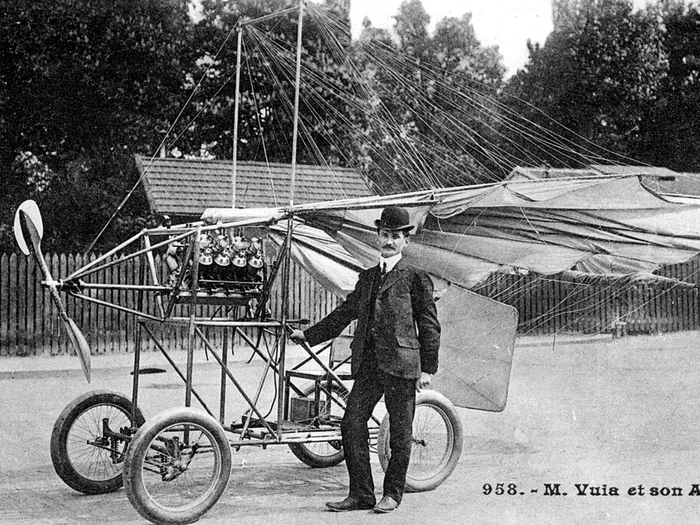
Traian Vuia/Photo: Wikipedia
1872: The Romanian Traian Vuia's Romanian aircraft builder is born
Traian Vuia was born on August 17, 1872, in the village of Surducu Mic (part of the former Bujoru commune, today Traian Vuia, Timiș county) from the former Caraș-Severin County, his princes being the priest Simion Popescu and Ana Vuia.
After graduating from the Roman Catholic High School of Lugoj and the Faculty of Law in Budapest, Traian Vuia dedicated to research and experimentation in the field of human flight. In 1901, Vuia obtained the doctorate in legal sciences with thesis: “Military and industrialism, the status and contractus regime ”, writes Rador.
https://www.youtube.com/watch?v=ynd_jtvxLwk
However, Traian Vuia returned to his passion, flight. Therefore, in 1902, Vuia arrived in Paris, bringing in her luggage the project of an original “aeroplan-automobil”, designed during the student period, and the related model, made during the last twelve months.
In Paris, he met Victor Tatin – a theorist who had built an experimental model of airplane in 1879 – to whom he showed him.
Tatin becomes interested in his project, but he finds that an adequate engine will not be found and the flying object will remain unstable.
Vuia will not give up, he will continue to check on the project -including with the financial support, from home, of his mentor Coriolan Brediceanu -, and will send him, on February 16, 1903, to the Paris Academy of Science, which rejects the project with the mention:
“… too utopian … the problem of flight with a device that weighs more than the air can be solved and it is only a dream.”
He does not abandon his idea, and in 1903 he obtained a patent for a car aircraft, a patent that will be published on October 16, 1903.
A year later, Traian Vuia begins the construction of an engine, one with compressed carbonic acid, which had the advantage that it was simple and slightly expensive, but it could not be developed, serving only for demonstrations, because its operating time was about three minutes.
In 1906, “Vuia i” took off for the first time
Only in 1905 it completes the construction of the prototype “Vuia I”, or “Liliac”, alluding to the form of the flying car, and on March 18, 1906, in Montesson, near Paris, flew for the first time.
After an acceleration over 50 meters, the device rose to a height of about a meter of soil, thus flew about 12 meters, then the plane landed, being damaged after colliding with a tree. It turned out that the apparatus conceived by Vuia had a precarious longitudinal stability, and the motor force was totally insufficient.
The car had a total weight of 250 kg, a support surface of 14 m² and a 20 hp engine, and at the first tests, held at the end of 1905, the device will be used as a car, with the wings disassembled, for the author to learn practical in his handling.
The press of the time from all over the world noted that Vuia is the first man to fly with a harder device than the air, equipped with his own take -off, propulsion and landing systems, has taken off from a flat surface, using only his own means, without “external help”. Equally, there have been a lot of criticisms on the event, and some are still continuing.
After the plane was repaired and modified, Traian Vuia made two flights, on August 12 and 19, 1906.
Traian Vuia was appreciated as a pioneer of aviation and received recognition for his contribution to the scientific field. He was elected honorary member of the Romanian Academy in 1946 and remains an emblematic figure in the history of Romanian and world aviation.
He died on September 3, 1950, in Bucharest, being buried in the Bellu Cemetery.
1909: Hans degrees performs first flight with Libele, a single -place plane
Born on May 17, 1879, in Koszalin, Pomerania (a historical region that was divided between Germany and Poland), Hans Grade was a pioneer of German aviation.
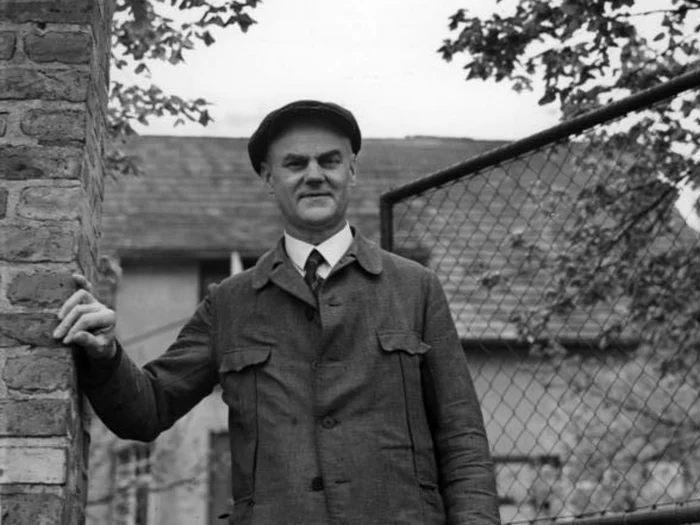
Hans Grade/Photo: Wikipedia
On October 28, 1908, Grade successfully made his first flight over the German territory in a motorized motorized plane of his own construction, at Magdeburg, writes Museum Digital.
In 1909, Hans Grade built the grade monoplan, an aircraft with one place. It was the first heavy aircraft than the successful air in Germany, and about 80 copies were finally built.
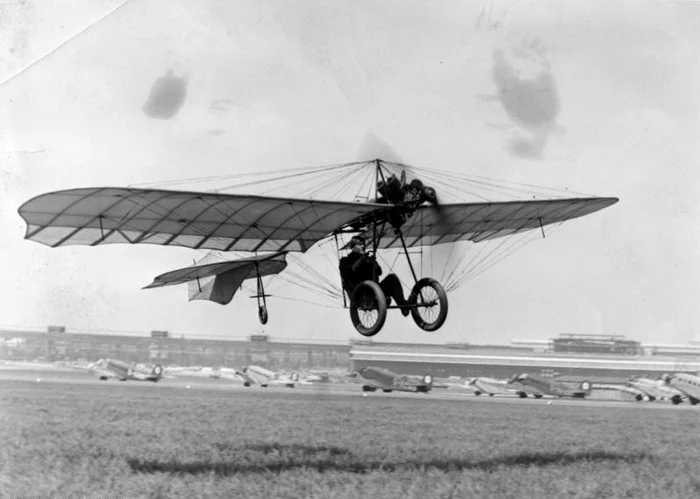
The Libele/Photo monoplan: Wikipedia
The first flight with this monoplan was made on August 17, 1909.
Also this year, with a new model of monoplan, he won the “Lanz-Pris Der Lufte” award worth 40,000 brands, granted to the first German to piloted a “8” flat in a German engine in this country, on a distance of two pillars 1000 meters away.
In 1910, Hans Grade set up the first German aviation school. Two years later, a monoplan transported Germany's first air mail, when the Pentz pilot made a flight from Bork to Bruck.
Hans Grade died on October 22, 1946, in Borkheide, Germany.
1925: Writer Ioan Slavici is extinguished from life
Ioan Slavici was a Romanian writer, journalist and teacher, a corresponding member of the Romanian Academy. He was born on January 18, 1848, in the town of Syria, Arad county. He was contemporary and friend with other great titans of Romanian literature, such as Creangă, Caragiale, and Eminescu.
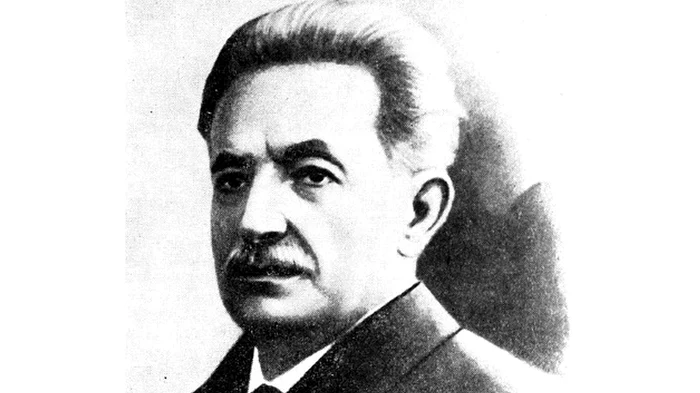
Ioan Slavici/Photo: Archive
Ioan Slavici began to write at the urging of Mihai Eminescu, who recommended the magazine “Literary talks”. Here, the writer published his writings from the beginning, which were mostly stories: “Fairy of Zorilor”, “Floriţa from Codru”, “Two faces with a star in the forehead”.
In December 1881, the volume “Novels from the people” praised by N. Xenopol and Mihai Eminescu appeared. Noroc “(1880),” Pădureanca “(1884) etc.
Like any writer of those times, the political life was not indifferent to Ioan Slavici, being a defender of the rights of the Romanians in Transylvania had much to suffer because of his political ideas, being imprisoned in several situations.
Ioan Slavici died on August 17, 1925, at the age of 77, in the city of Panciu, and was buried near the church in the courtyard of “Brazi Monastery”, in the funeral being present from the Society of Writers, Liviu Rebreanu, Galaction Gala and Mihail Sorbul.
1943: Was the American actor Robert de Niro
The legendary actor Robert De Niro was born on August 17, 1943, in Manhattan, New York, being the son of artists Virginia and Robert de Niro Senior. His paternal grandfather was of Italian origin, and his other ancestors are Irish, English, Dutch, German and French, according to IMDB.

Robert de Niro/Photo: Profimedia
De Niro has earned his fame initially for his role in “Bang the road Slowly“(1973), but he earned his reputation as a versatile actor in”Mean Streets“(1973), who was his first film with director Martin Scorsese, with whom he would collaborate in many other consecrated films.
Received an Oscar for best supporting actor for his role in “The Godfather Part II“(1974) and received nominations for the Oscar awards for best actor in”Taxi Driver ” (1976), “The Deer Hunter“(1978) and “Cape Fear” (1991). He received the Oscar for best actor for his role as “Jake Lamott” in “Raging Bull“(1980).
https://www.youtube.com/watch?v=-qwl-fwx4t4
De Niro has obtained four nominations to the Golden Globe for best actor – musical film or comedy for his work in “New York, New York” (1977), along with Liza Minnelli, “Midnight Run ” (1988), “Analyze this” (1999) and “Meet the parent” (2000).
https://www.youtube.com/watch?v=rn1vtou_su0
In 2025, De Niro turns 82. He never retired from acting and continues to work regularly, mainly in the film.
[1945:Indonesiaproclaimsitsindependence
When the Second World War broke out in Europe and stretched to the Pacific, the Japanese occupied the Eastern Dutch Indies in March 1942, after the Dutch colonial army was taught, following the fall of Hong Kong, Manila and Singapore.
https://www.youtube.com/watch?v=g2ztwl9-kpy
On April 1, 1945, American troops landed in Okinawa. Soon after this, on August 6 and August 9, the United States launched atomic bombs on two Japanese cities, Hiroshima and Nagasaki. A few days later, on August 15, 1945, the Japanese surrendered to the Allied forces.
This occasion offered the Indonesian people the opportunity to proclaim their independence. Three days after the unconditional teaching of the Japanese, on August 17, 1945, Indonesian national leaders, Sukarno and Dr. Mohammad Hatta proclaimed in the name of Indonesia Independence.
2017: A van led by a Moroccan entered a lot of people, in Barcelona
On August 17, 2017, two attacks took place in Barcelona and Cambrils, after which they lost 16 people, and more than 100 were injured.
https://www.youtube.com/watch?v=04D8MZFQmyc
Following the Barcelona attack, 14 people were killed and at least 100 were injured. The attacker fatally stabbed another man as he diverted his car and ran with her, and another person was killed in a related incident at Cambrils, a day later.
As in the Nice attack in July 2016 and in the subsequent ones in other parts of Europe, men drove large vehicles in crowded areas frequented by foreigners. People from over 24 countries have been killed or injured. Of the 16 victims, six were Spaniards, three Italians, two Portuguese, a Belgian, a Australian-British, a German, an American and a Canadian; Two were children.