The Russians don't come with the tank anymore. Moscow changes its battle pattern and could hit NATO early than expected, warns ISW

A new report by the Institute for War Study (ISW), published on October 11, draws an alarm for Allied states: Russia no longer needs entire tank divisions to become a direct threat to NATO. Rapid adaptation, drone war and flexible use of human resources can allow Moscow to act much earlier than plan the West.
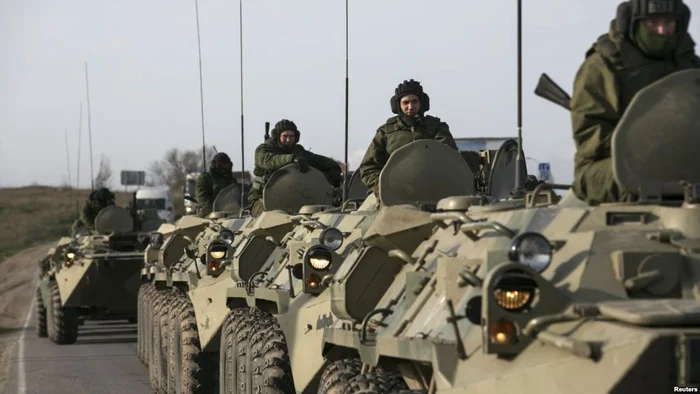
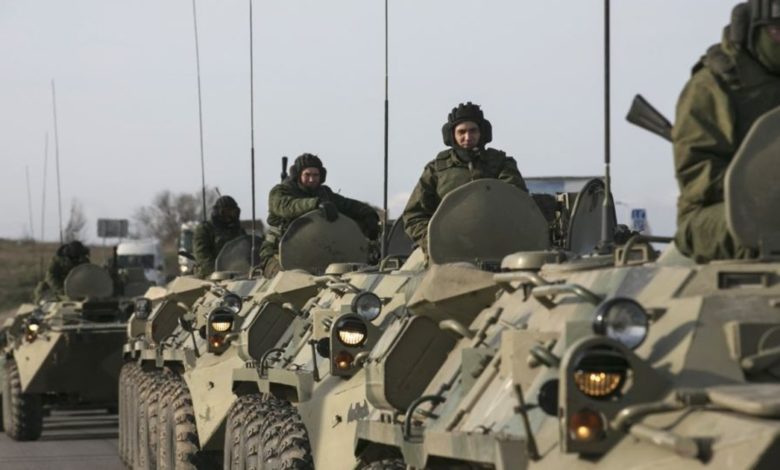
Column of Russian armored/photo: Archive
According to ISW, the Russian Federation could be “a significant threat to NATO in a timely time closer than the present, without having to completely restore its tank fleet.”
The American Think Tank points out that more and more frequent sabotage and drone recognition activities in Europe are clear signs that Moscow has already entered what experts call the “zero phase”-the preliminary stage of potential conflict, intended for psychological and informational training.
“Zero Phase”: The War in the Shadow has already begun
According to the report, Russia carries out major hybrid operations – from cyber attacks and propaganda to air recognition missions – meant to test NATO reactions and vulnerabilities.
The purpose of these actions is not only military, but also psychologically: to induce uncertainty, to erode confidence in collective defense and to prepare European public opinion for a perceived confrontation as inevitable.
The “zero phase” is, in fact, an older Russian concept of Maskirovka – a term that designates the art of hiding the real intentions through operations of misinformation and indirect pressure.
A Kremlin learning from losses
ISW notes that, despite the massive losses suffered in Ukraine, Russia has maintained its ability to generate forces and create strategic staff reserves.
Analysts believe that Moscow could “To carry out a significant fighting power on the eastern flank of NATO” in just a few months after the end of the Ukraine war.
Moreover, Russia develops new operational concepts that allow it to carry a conventional large war without relying on heavy armor and armored, while limiting the opponent's ability to use these means.
“Russia learns to obtain the effects of an air prohibition on the battlefield without holding air superiority.”warns the report.
This means that Moscow can paralyze the logistics and mobility of the enemy using drones, precision artillery and electronic war, without the need for massive aviation.
Threat could come faster than the West believes
ISW warns that there are no indications that Russia would expect the full reconstruction of the army before a new escalation.
On the contrary, a possible attack “It could take place before that time, if NATO fails to restore a credible level of discouragement.”.
The report recalls that the experience gained in Ukraine has transformed the Russian army into an adaptable, infantry-based, low-cost technology and rapid innovations on the battlefield-a combination that, although less spectacular than Soviet tanks, proves effective in a wear conflict.
NATO, in front of a strategic dilemma
“NATO and its allies must be prepared to discourage and, if necessary, defeat the threats that Russia will raise immediately after the cessation of struggles in Ukraine.”Isw concludes.
In short, the modern war of Russia is no longer based on gross strength, but on speed, adaptation and controlled chaos.
And if the “zero phase” is already in progress, then the psychological front has begun – and the next challenge for NATO is not when Russia will attack, but how prepared the West is to react.