Putin was supposed to flex his muscles and got short of breath. The Russian war machine inhibits

Reading the three -year budget plan transferred by the Duma government, you might think that Putin had an exceptionally he had a word. After all, he promised exactly it three months ago: “We are planning reduce defense expenses both next year and in the next yearfor the next three years. “
This year, 13.5 trillion rubles are to be spent on “National Defense” [ok. 600 mld]in 2026. Only 12.9 trillion of rubles [ok. 570 mld zł]. Estimates for 2027 and 2028, after taking into account inflation, will also be lower than in 2025. There is something serious behind arresting the growth of military expenditure. Is Putin really starting to plan a room? Or maybe other reasons were influenced? I think that these “other considerations” are in the foreground here.
This year The federal budget will have a deficit of 5.7 trillion of rubles [ok. 253 mld zł]. This is his re -repaired version, which in parallel with the budget for the upcoming three -year period is currently processed by pride.
It's quite amazing. In the previous three years of the war, the deficit was much smaller. Now, to patch the hole, the authorities are increasing the revenues from the bonds. This is also amazing. Putin's financiers believe that indebtedness is not the best way to raise money. First of all, because the sale of bonds to state banks is actually problematic. Secondly, because with current ultra -high interest rates such sales will bring problems in the future.
Continued article under video material
Therefore, the issue is usually planned in such a way as to simply cover the costs of redemption of old bonds and repayment of interest on new ones. However, now the financial situation is so extraordinary that the state -owners' finances break their promises. According to the updated budget for this year, the total expenses are expected to amount to almost 43 trillion rubles [ok. 1,9 bln zł]. It's only 6-7 percent more than in 2024. However, so far this year expenses have already surpassed by as much as 21 percent. So the real deficit can increase by a few trillion rubles.
Problematic budget. Russia will have to start tightening the belt
It is obvious that in the government balance something is wrong. The introduction of new bonds to the plan for 2026 is therefore completely inevitable. There are not many options and they are all obvious. Government revenues can be increased, e.g. by raising taxes. Government expenditure can be frozen. And finally, You can stop taking care of the budget balance and just spend as much money as you want. In such cases, the deficit is covered by issuing money without public well -being. After all, that's what war is for.
Two months ago I wrote that the regime will have to make a choice: “In this way, two budget variants for 2026 are possible: Inertial, suggesting readiness to end the war, and innovative – clearly aggressive and requiring the population to give the regime to the regime of some of the current privileges.”
Of course Civilian technocrats begged Putin to allow an inertial option. And this option is now ahead of us. Expenses in 2026 (approx. 44 trillion rubles, or approx. PLN 2 trillion) are only 3 percent. Higher than those expected in 2025, after taking into account inflation, this is not an increase, but a reduction. And maybe even reduction in nominal terms, if expenses in 2025 exceed the plan.
Demonstrative cutting of planned expenses for “National Defense” in 2026 indicates a certain seriousness of the regime's intention. Finally, in 2025, they also initially promised that they would hardly raise the state expenses at all. But the planned 1.3-fold increase in military expenditure showed that these promises were insincere. And now they may not even be a bluff.
Two Traumas of Putin: the fall of the USSR and inflation
I assume that two factors prompted Putin to accept this option. Firstly, believes that this excessive military expenses have led to the collapse of the Soviet Union. Regardless of whether it is true or not, he believes in it and often repeats that he will not allow the Russian Federation into the arms race. It is quite likely that the current 8 percent GDP spent on war is a threshold that he really doesn't want to cross.
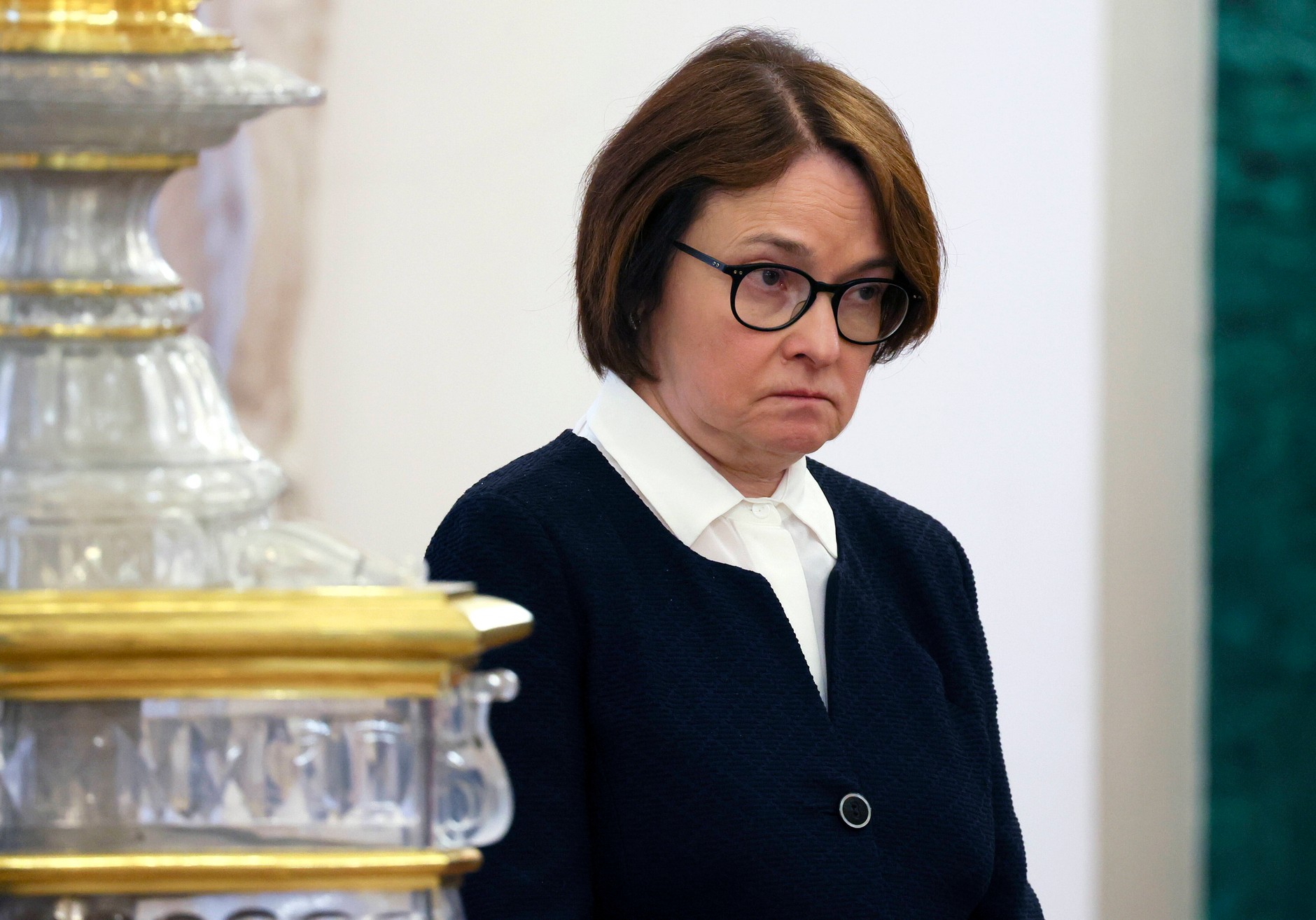
Elwira Nabillin, president of the Russian Central Bank, during the celebration of the Day of Victory. Moscow, May 9, 2025/ EPA / YURI KOCHETKOV / POOL / PAP
Secondly, Putin inherited the fear of inflation from the 90s. That is why he supports a rather unusual anti -inflation strategy of Elwira Nabi3lina. Serious inflation is a normal phenomenon in a war -covered war, but in recent months it has been suppressed by very high interest rates. The fragility of this success is apparently obvious to the leader. All kinds of issues, including excessive bond issue, terrify it in advance.
The budget for 2026 satisfies these fears of the leader and therefore requires some sacrifices in financing at least military preparation, if not the war itself. And total budget expenditure does not actually grow. But This is not enough for balance, and there is no hope for a natural increase in income. To extract at least 1.5 to 2 trillion rubles [ok. 66-88 mld zł]raising taxes again. The deficit in 2026 will continue to be impressive, but not as large as in 2025.
The forecast of the Ministry of Economic Development for 2026 and subsequent years is very informative. Not only has become the basis of the current budget, but also He draws a picture of the Russian economy with a thick line that would answer Putin is satisfied today.
What will Putin agree to?
There is no dreams of a flourishing economy, which the regime was devoted for some time when the fears of sanctions turned out to be excessive. This year, it is expected that this year will be only 1 percent. And even less next year. Given the systemic falsification of statistics, this means at best a deep stagnation, if not recession.
The forecast (or rather its main version) includes the maintenance of current physical and monetary exports of crude oil and petroleum products, and a clear but not violent depreciation of the ruble. In addition, there is an almost imperceptible rate of growth of the consumption of goods and services by the population in 2025-2028. In fact, it is a decrease in consumption rather than its increase. Not fatal but moderate.
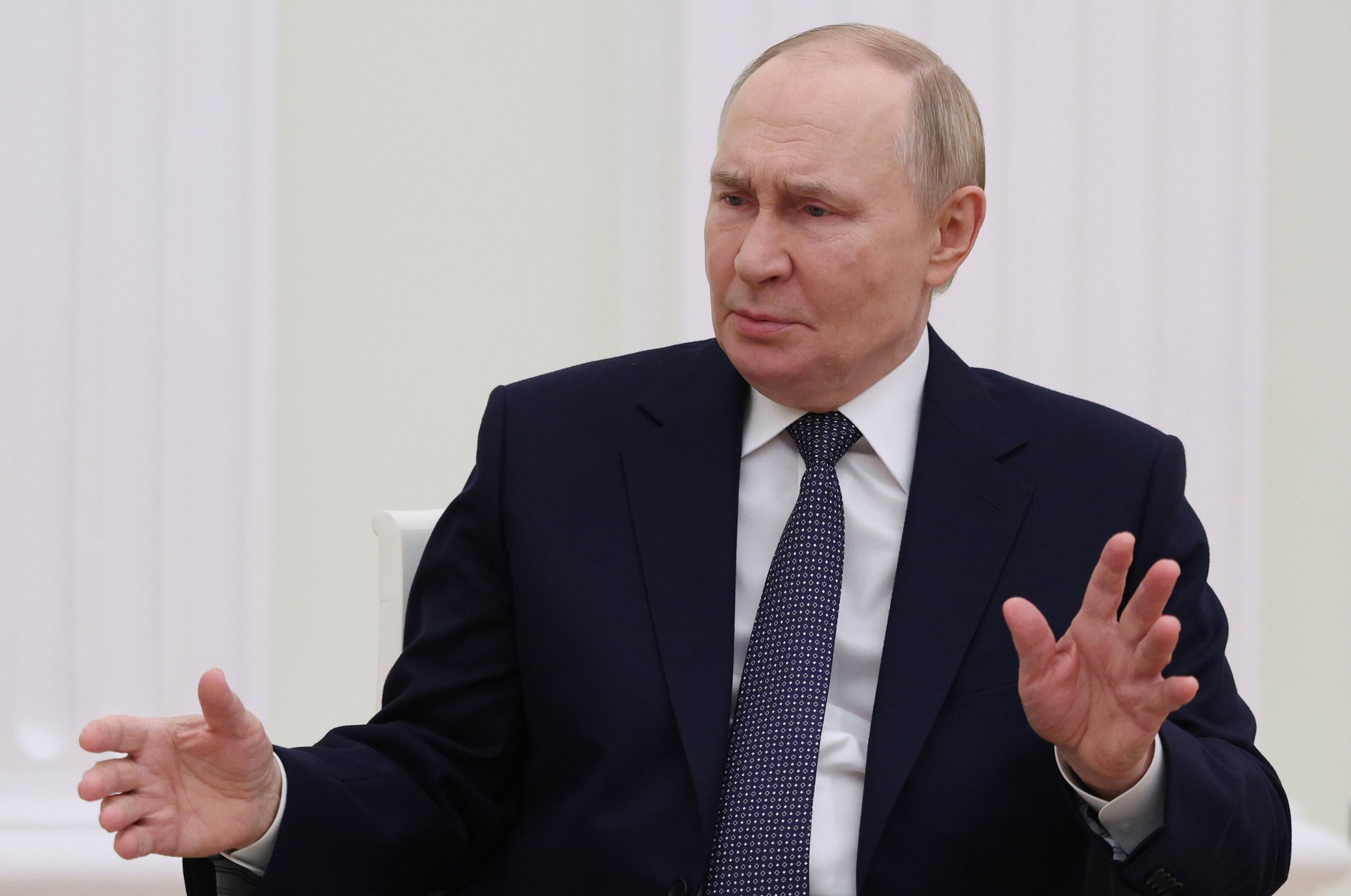
Vladimir Putin, President of Russia, in the Kremlin. Moscow, September 26, 2025EPA / Ramil Sitdikov / Pool / PAP
I do not assess the realism of this forecast. It is important that it was made by the courtier Putin and paints exactly the image with which he agrees for the coming years. The economy in stagnation, a slightly regretting nation and lack of noticeable inflation. The price, which is ready to pay for this splendor, was specified in the same forecast. The growth rate in military sectors, which was previously fast, should now become much more modest.
Expert: It is impossible to return to the civil model painlessly
The military sector will continue to grow twice as faster than the entire manufacturing industry. This means that The participation of the civil industry will continue to fall And it will not increase in absolute numbers either.
The outline of post -war Russia and its economy presented by Putin shows that He does not intend to return to the state from the peaceful 2021. This is also because the “return” to pre -war Russia would cause serious inconvenience to the regime that he does not see.
“It is impossible to return to the civil model painlessly,” says financial expert Oleksandra Prokopenko. – Such a reversal will inevitably lead to a decrease in GDP in conditions when the entire structure of the economy is adapted to military orders, i.e. to the next crisis.
But Putin really likes the militarized economy, which emerged for nearly four years of war. He is in stagnation, but he can live and work forever if he is not undergoing too much load. The regime sensed this risk and makes it clear that today he agrees a bit to alleviate his military appetite. But of course this consent is not given once and for all.
Putin apparently accepts the fact that the war against Ukraine in 2026 may end and that there will be no new wars for now. However, nothing will stop him from abandoning caution, if the mood suddenly increases. And militarized Russia will wait in full combat readiness.