The barbed wire curtain of Romania in the 80s, between border guards and border guards. The young woman who gave birth while fleeing on the Danube

Thousands of Romanians have kept disturbing memories of the humiliations experienced in the attempts to flee from Romania under the Ceaușescu regime. Soldiers then sent to “defend” the country's borders from those trying to cross them were often accused of brutality. Some have sought explanations for them.
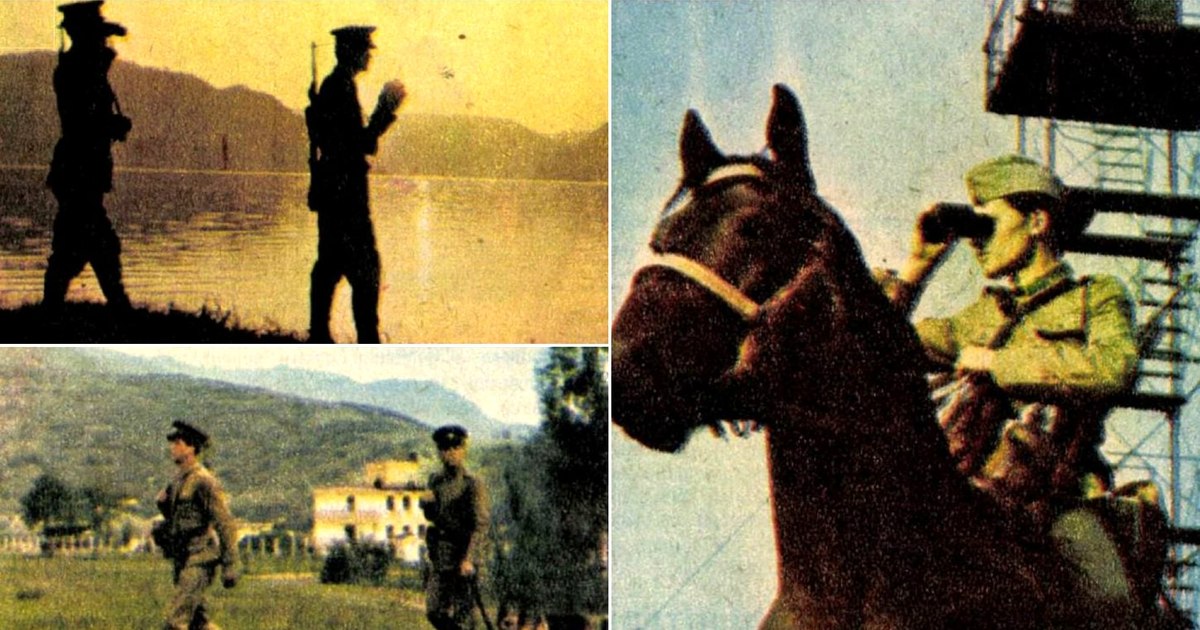
Border guards. Photo: Army Almanac, 1989.
In the last years of the Ceaușescu regime, tens of thousands of Romanians risked their lives in the extremely risky attempt to “escape” from socialist Romania to the West, illegally crossing the western and southwestern borders of the country into Hungary and the former Yugoslavia.
Tens of thousands of Romanians “forced” the borders with Hungary and Yugoslavia
Many of them faced mortal dangers: they could always end up under the rifle of the Romanian border guards. Those who obeyed the summons and returned from the road, surrendering to the guard posts, ended up in custody and had to face the humiliations and beatings they received, as punishments complementary to the days in prison.
Over three and a half decades later, many “frontierists” continued to harbor resentment towards those who tried to prevent them from fleeing Romania. On the other hand, many former soldiers from the borders of socialist Romania remember with nostalgia the time they spent in the army, the difficulties of life as a border guard and keep the feeling that they were defending their country.
Marin Botea, a former commander of the border guard troops in Romania in the 90s, explained in 1990 how the number of Romanians trying to cross the border to reach the West increased in the last years of the communist regime. He stated that, if initially the neighboring countries, Yugoslavia and Hungary, where more than 90 percent of the defectors ended up, handed over the Romanians to the communist authorities in Romania, at the end of the 80s this procedure had no longer become a rule.
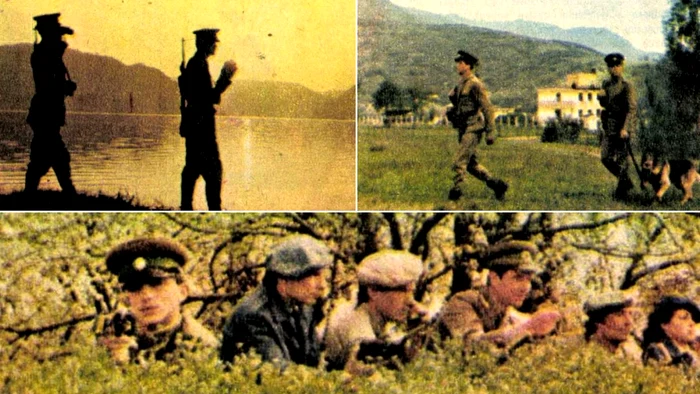
Border guards. Photo: Army Almanac 1989
“Starting with the seventh decade, the situation at the border changed radically, and the number of Romanian citizens who intended to leave the country by any means increased continuously. For example, if at the beginning of the dictatorship such people were around 200-400 annually, in the first half of the new decade it reached 2,000-3,000, and in the last two years the number increased to around 17,000-18,000 of so-called “criminals” who tried to cross the border fraudulently and who, of course, were detained by the neighboring border authorities. Later, the people who crossed the border were returned in a much smaller number than those who reached the territory of the neighboring state”. Colonel Marin Botea looked.
Most of those who tried to cross the border fraudulently were between 17 and 35 years old, but, according to the official, in 1988 and 1989, the groups that intended to flee Romania included women, and in some cases children and even elderly members of the respective families.
“Among them were also individuals in conflict with the law, such as criminals, citizens prosecuted for acts imputable to them or persons who had committed other crimes on the national territory”, added the colonel in 1990.
The number of those who managed to escape, bypassing both Romanian, Hungarian and Yugoslav sentries, as well as those who ended up in desperate attempts to leave the country, remained unknown.
The young woman who gave birth to a baby girl while fleeing Romania
In the last years of the Ceaușescu regime, among the many stories about “frontierists”, presented by the Western press, some were completely out of the ordinary. The publication Los Angeles Times reported, in August 1989, about a Camelia Sorina Popescu, a young woman from Romania who, being nine months pregnant, decided to flee her native Romania.
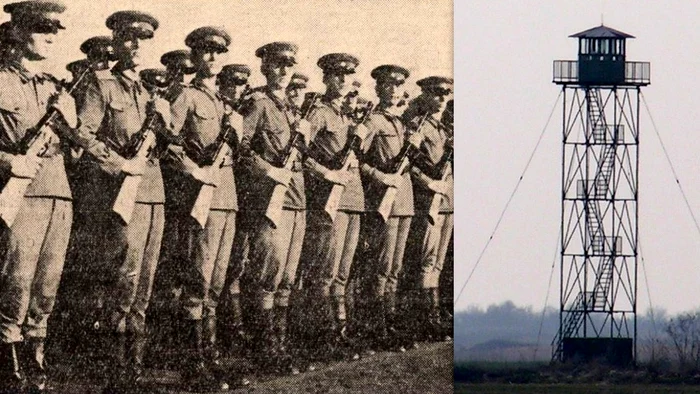
Border guards. Source Facebook
“She floated down the Danube on an inner tube and then walked another six miles to reach Yugoslavia. And, as it turned out, she did so just hours ahead of schedule. Shortly after arriving in Yugoslavia, Sorina boarded a bus to Belgrade, at which point she went into labor, Ilustrovana Politika magazine reported. The 30-year-old teacher was taken to a hospital in Negotin, where she gave birth to a little girls”reports the LA Times.
According to the journalists, Camelia's husband, Alexander, had previously fled Romania through Hungary, arriving in Austria, where he lived in a refugee camp. A friend who fled with him, however, was shot by soldiers while trying to swim across the Danube. The couple wanted to either go to Canada or settle in Austria, the publication also stated.
Romania surrounded itself with fences
Another article published by the LA Times in 1989 reported that, according to Hungarian officials, in 1988 and the first part of 1989 more than 15,000 Romanians, many of them ethnic Hungarians, crossed the border into Hungary, which led the authoritarian leader Nicolae Ceaușescu to order the erection of a fence over two meters high between the two countries, just as Hungary was dismantling its own “Iron Curtain” from the border with Austria.
Romania was laying barbed wire and digging anti-vehicle ditches along its border with Hungary, in a move observers interpreted as an attempt to stem the flow of defectors, Western journalists said.
“Already, Hungary is gaining a reputation as a kind of gateway to Western Europe. Since citizens of socialist countries can travel relatively freely within the Eastern Bloc, would-be defectors plan their 'vacations' in Budapest, then sneak across the Hungarian-Austrian border to the West. Hungarians even joke that Ceausescu bought the old fence between Hungary and Austria to erect on his own western border. Although international pressure has halted construction, it is said that another fence still remains on Romania's border with Yugoslavia”, LA Times note, August 9, 1989.
Also at that time, the Hungarian newspapers were full of reports about shootings and incidents at the border, on the border with Romania, the publication informed.
The border guards, praised in the communist press
From Romania, the events were seen quite differently. Soldiers on the borders of Yugoslavia and Hungary were often praised for their courage in defending their country, even in peacetime, against those who tried to leave it.
“The border guards are, as required by law, on a non-stop combat mission,” informed the “Almanac of the Army” in 1989, recounting some events experienced by soldiers guarding the border.
In one of these, the magazine reported on the efforts made by the border guards, helped by the locals, to catch three Romanians who were trying to illegally cross the western border.
“From generation to generation, people from the edge of the country have considered themselves, out of love for the country, border guards in civilian clothes. We feel you in the commune, in the plain or on its paths, with us, in guarding and defending the border, in the unswerving observance of the border legislation”, informed the publication.
The Army Almanac praised a villager's gesture of reporting the three fugitives, shortly after they asked her how they got to the border.
“Mariana Tiurbe knew what she had to do. She closed the warehouse and went bulletproof to the picket. The lieutenant-major was working, together with some soldiers, in the vegetable greenhouse, which is said to be a model in the commune. He listened to Mariana calmly. Then, in front of the scheme with the guard district, he established a plan. It was 8 o'clock in the morning when the action began“, informed the publication.
According to her, in the following hours, the fighters from the patriotic guard closed a favorable direction of travel, legitimizing all the residents who were leaving for agricultural work in the fields. The alarm team rummaged through the covers, bushel by bushel. Patrols and posts had come in ambush.
“It was obvious that the three were caught as in a mouse race. They tried to enter the gorge, but… To retreat towards the commune, but… To force the passage through the water of the canal, but… Thus ended the plan thought and rethought by the group of criminals quarreling with the laws of the land, with a total failure. Nothing moves without the knowledge of the border guards. Keen eyes watch over us, hours of the day and hours of the night, the quiet of the country”, the publication concluded in 1989.
Beatings and humiliations, the order of the day
Real stories of Romanians trying to flee to the West began to appear in the Romanian press only in 1990. Some revealed the sadism with which those suspected of intending to leave Romania were treated. Some Romanians reported about the crimes and rapes committed by the soldiers on duty, others about the humiliations they were subjected to after they were caught.
Some former border guards explained that the excesses were sometimes encouraged by the way they were trained not to show mercy towards the Romanians who forced the fraudulent crossing over the border.
“To us, the soldiers, everything was presented to us in the darkest colors. Namely, we were told endlessly that these can only be the type of criminals who want to escape the judgment of the law, saboteurs, agents of foreign powers, and many others that give you goosebumps. Periodically, we were processed the cases resulting in the border guards being attacked at the post, their disarmament, situations with soldiers tied up faithfully or severely beaten by criminals, etc.”, reported a former border guard, in the Border Police magazine.
The soldiers received special training, designed to help them cope with any situation encountered during risky missions on the border. They were often sent on individual missions, having their guns loaded and the barricade drawn all the time, especially at night.
“At night, in bad weather, alone, why not scared (individual missions were generalized), having to walk miles through the wilderness, anything could happen… If the soldier met the one who wanted to run, it was just the two of them. According to the procedure, the first time he had to shout “Stop!”, and if the fugitive didn't stop he had to shout “Stop, I'm shooting!”, then fire a warning shot and, finally, full fire… What was really happening only they knew – the fugitive and the soldier”, recounted the former border guard from Jimbolia.
The beating habitually used on fugitives
Even the militiamen from the border towns did not behave more friendly to those suspected of intending to leave Romania illegally. An ethnic Hungarian recounted in 1990 the experience he had gone through, after he had been caught together with two of his friends near Oradea, near the border.
“A militiaman registered us and took us to the police station in the village of Sântion. There the slaps and insults started to flow, because the chief of the police station asked us why we wanted to run away? He grabbed my hair (I mention that I was wearing braids) and hit my head, several times, against a metal cabinet, saying: “Parrot!”. After that they took us to the police station in Oradea, where a civilian he greeted us with the words: “And you've brought the derbedei” and he slapped me as we arrived”he recalled.
The young man said that he was then put in the Militia cellar, together with other fugitives, where he spent the night.
“After a while, the door opened and the officer on duty shouted: “Pletosi, out!”. He saw me and said: “Tarzan, come here, because you're the first to get a haircut!” nice of us!”. When we asked for food, the officer on duty came, lit a match and said: “Those who don't have cigarettes don't eat!”, so we didn't eat.”he recalled.
The next day, he was released, after another series of humiliations and beatings, and sent to his native area, Covasna.
More than 35 years after the tragedies and dramas that happened on Romania's borders, many of those who experienced them remained affected by them.
“Frontierists”, as those who tried to flee socialist Romania are called, share their disturbing memories on online platforms, in books and in publications. On the other hand, many former border guards from the 80s are looking for their former colleagues and reminiscing about their youthful years on numerous social media groups.