On Friday, the Moody's agency decided on the rating of Poland. Although it was maintained at level A2, its perspective was changed to a negative one, as was the case with the Fitch agency recently. In the justification, we read again mainly about problems with state finances, a large deficit and powerful debt.
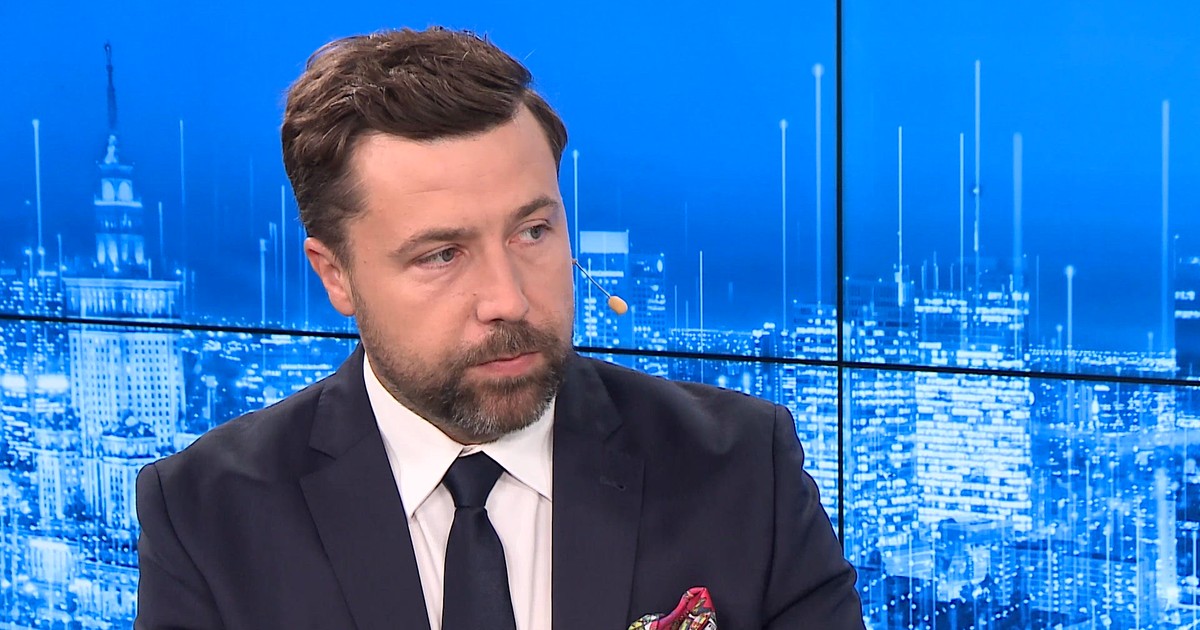
Although the Fitch and Moody's rating agencies have changed the perspective of Poland's rating to negative, Mariusz Zielonka in Onet financially emphasizes that “We should still and we can be proud of the fact that we are one of the fastest growing economies in the European Union and with quite good perspectives for the next at least two years“. Economic growth in Poland is to be around 3.2-3.4 percent in 2025, which significantly exceeds the EU average.
Rating Fitch: High deficit warning
Changing the perspective of rating by the Fitch agency to a negative is not an isolated case in Europe. “The fact that Fitch changes the rating perspective is currently happening in Europe. In all countries, because Fitch also changes these ratings, for example for France” – explains Mariusz Zielonka.
The main reason for the agency's decision is the growing budget deficit. “Fitch did not look at possible economic development, and he actually looked at a very high deficit and a very high ratio of debt to GDP in 2026” – explains the economist. Poland is covered by the excessive deficit procedure, and the government presented the European Commission that the deficit in 2026 will amount to 0.1 percent. GDP, meanwhile, the draft budget talks about 6.5 percent.
“It is not necessarily an idea that we can get off this deficit in some short perspective” – warns Mariusz Zielonka. The economist points out that” the government in this budget draft has written that all laws increasing CIT or CIT for banks or sugar tax will come into force. These are solutions that are not there and whose entry into force is quite debatable“.
Innovation with the key to the future, not the investments themselves
One of the most important challenges for the Polish economy is the issue of innovation. Zielonka emphasizes the difference between investments and innovations: “We are very dependent on these investments, And we place much less emphasis on innovationbecause these investments are the result of some earlier activities, such as innovations, such as a potentially greater risk of investing. “
“Innovations are indeed the element that causes long -term growth, but not the only one” – notes the economist. Poland spends on research and development About 1.5 percent GDP, while the EU average exceeds 2 percent. “This innovation is problematic in Poland, although it is growing. These expenses for research and development are growing” – admits Mariusz Zielonka.
Bureaucracy is the greatest barrier to innovation
The main problem of the Polish innovation system is not the lack of academic centers or financial resources, but excessive bureaucracy. “We do not lack academic centers, we do not lack implementations. We are limited by bureaucracy” – diagnoses an expert.
“If scientists who have to take the risk of research projects must watch every zloty on each side in fear of the control and accuse them of being spent contrary to their destiny, we will not have innovation in Poland” – he warns. The economist emphasizes that “this innovation is associated with a certain level of risk, which must be undertaken whether it is a university or a research center, in order to see if a given thing really makes sense.”
KPO: From Covid help to controversy
Referring to the controversy around the national reconstruction plan, especially the support program for the Horeca industry, Zielonka explains the genesis of the problem. “KPO was constructed differently and from the beginning was to be a quick help for the countries that were to come out of the Covid period. This backwardness in receiving these funds nearly three years causes that we want and we must spend it faster” – he explains.
“This money and these projects were written for quick help. There were no substantive criteria, from which we would confess, later to confess to those entrepreneurs who received these funds” – adds the economist. Zielonka emphasizes that “we actually have a situation in which three thousand applications and a small percentage of entire funds from KPO weighs on the image of the entire program.”
The economy resistance to shocks
Despite the structural problems, the Polish economy has shown resistance to subsequent crises. “It should be remembered that we have been functioning in a very fast and dynamic economy since Covid-19,” notes Zielonka. “Entrepreneurs and citizens have already got used to this, this volatility and events that are happening in the world, do not affect so much or cause the disturbances of our market and our economy.”
“We have proved some resistance of our economy, because please see that even by reaching since 2008, all the macroeconomic shocks that we had in Europe, we were this proverbial green island on the map of Europe, which also gives us some advantage for the future” – concludes the main economist of the Lewiatan Confederation.