2026-02-17 16:16, updated 2026-02-17 16:48
publication
2026-02-17 16:16
update
2026-02-17 16:48
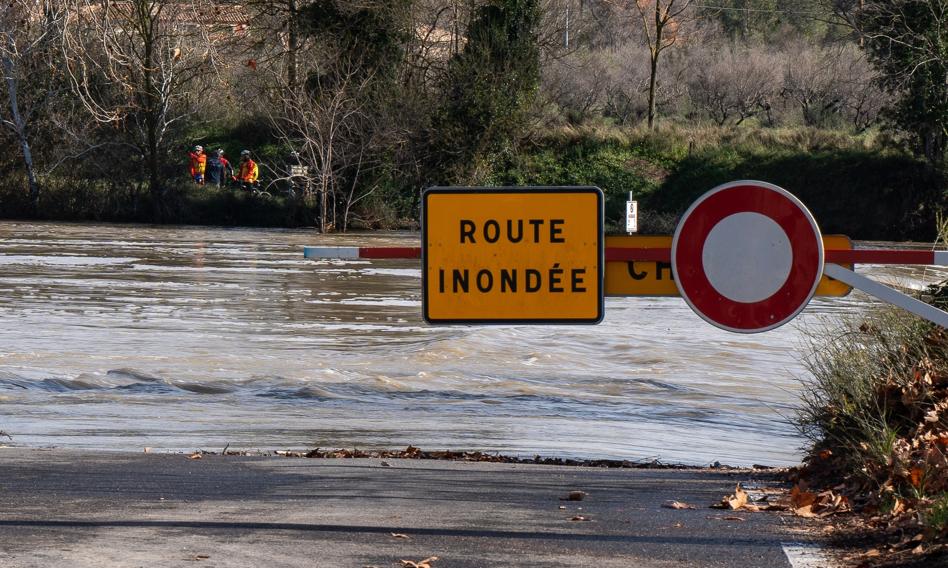
More than nine thousand households were left without electricity and about 1,500 people had to be evacuated due to floods in western France, local authorities announced on Tuesday. A flood alert was issued in a total of 12 departments.
The flood risk monitoring service Vigicrues reported that the highest flood alert level – red – remains in three departments: Maine and the Loire, Gironde and Lot and Garonne.
Vigicrues warned that heavy rainfall will continue on Tuesday and in the afternoon a flood is expected in the tributaries of the Loire in the north-west of the country: the Loir, Sarthe, Mayenne and Maine rivers. Many roads and farms in the area are already flooded.
Angers underwater: River levels at their highest in a quarter of a century
In the north-west, the city of Angers (approx. 160,000 inhabitants) is most at risk. Local authorities closed parking lots and some tram stops.
We have been observing the highest water level for 25 years, warned Christophe Bechu, mayor of the commune of Angers. The mayor appealed to residents to remain responsible and closely monitor information from the authorities.
Storm Nils is devastating the southwest
The situation is also difficult in the south-west of France, where the Garonne, Adour and Dordogne rivers (near Bordeaux) are flooding. These areas were hit by storm Nils, which, according to experts, caused floods.
On Tuesday and Wednesday, a total of 12 departments across France will be marked orange – the second highest threat level. The departments concerned are: Charente, Charente-Maritime, Correze, Dordogne, Ille-et-Vilaine, Indre-et-Loire, Länder, Loire-Atlantique, Sarthe, Tarn and Garonne, Vendée and Morbihan.
Experts: It's a wet future for Europe
The AFP agency, citing scientists from the Intergovernmental Panel on Climate Change (IPCC), pointed out that heavy rains will become more frequent and more intense due to climate change. “Statistically, we are experiencing what is our future, i.e. wetter winters and, as a result, more rainfall,” noted Pierre Brigode, a hydrologist from the University of Rennes. (PAP)
awm/adj/