The government and the president are arguing about SAFE. Poland's image is losing as a result

Despite the presidential veto, the government continues activities related to Poland's participation in the SAFE program. The mechanism was created in 2025 and is intended to support the European defense industry through low-interest loans. One of the goals of the European Union is also to reduce dependence on American arms suppliers.
Donald Tusk's cabinet adopted the “Armed Poland” resolution, which enables the Ministry of National Defense and the Ministry of Finance to sign appropriate contracts. The loan for the Armed Forces Support Fund is to be taken out by Bank Gospodarstwa Krajowego. According to the SAFE guidelines, projects must be completed by 2030.
Poland has already submitted 139 tasks, counting on significant funds for the national defense industry and strengthening its competitiveness on the European market.
Veto against the SAFE Act: arguments from the Presidential Palace
The President pointed out that the Chancellery of the President had been working on the act for many weeks, but it had not been possible to develop a project that would guarantee the preservation of sovereignty while using EU funds. – This is too serious a commitment to sign without knowing what the currency risk will look like in the coming years and what the European Union will look like in 2050 or 2060 – he added.
Read also: This is the president talking about SAFE. We check whether he is right
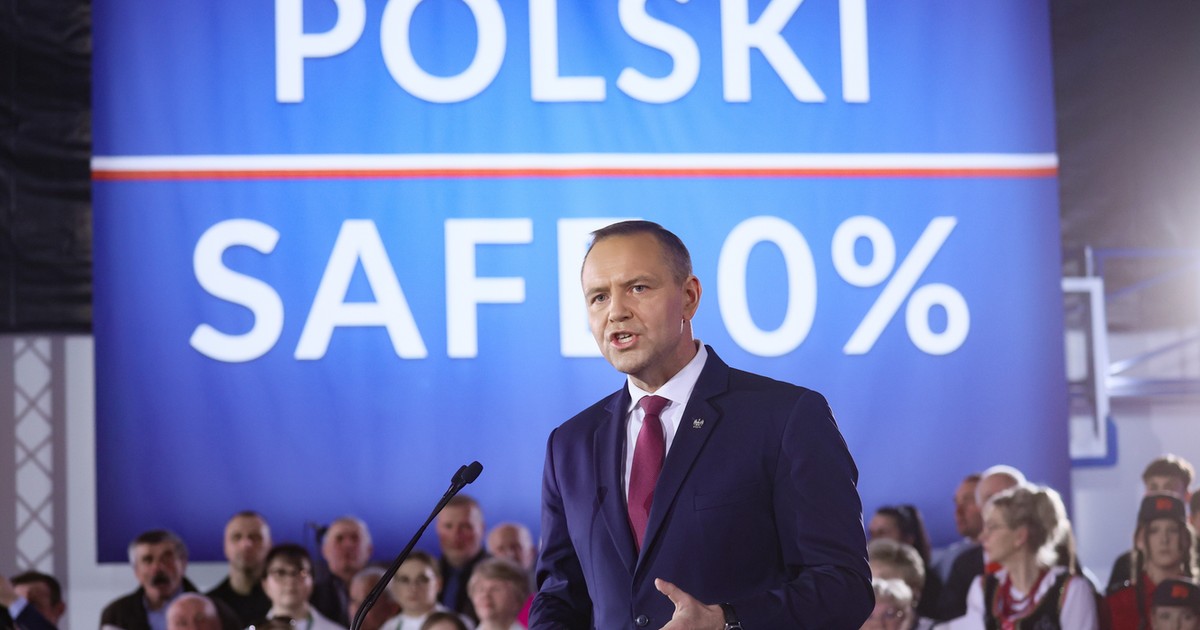
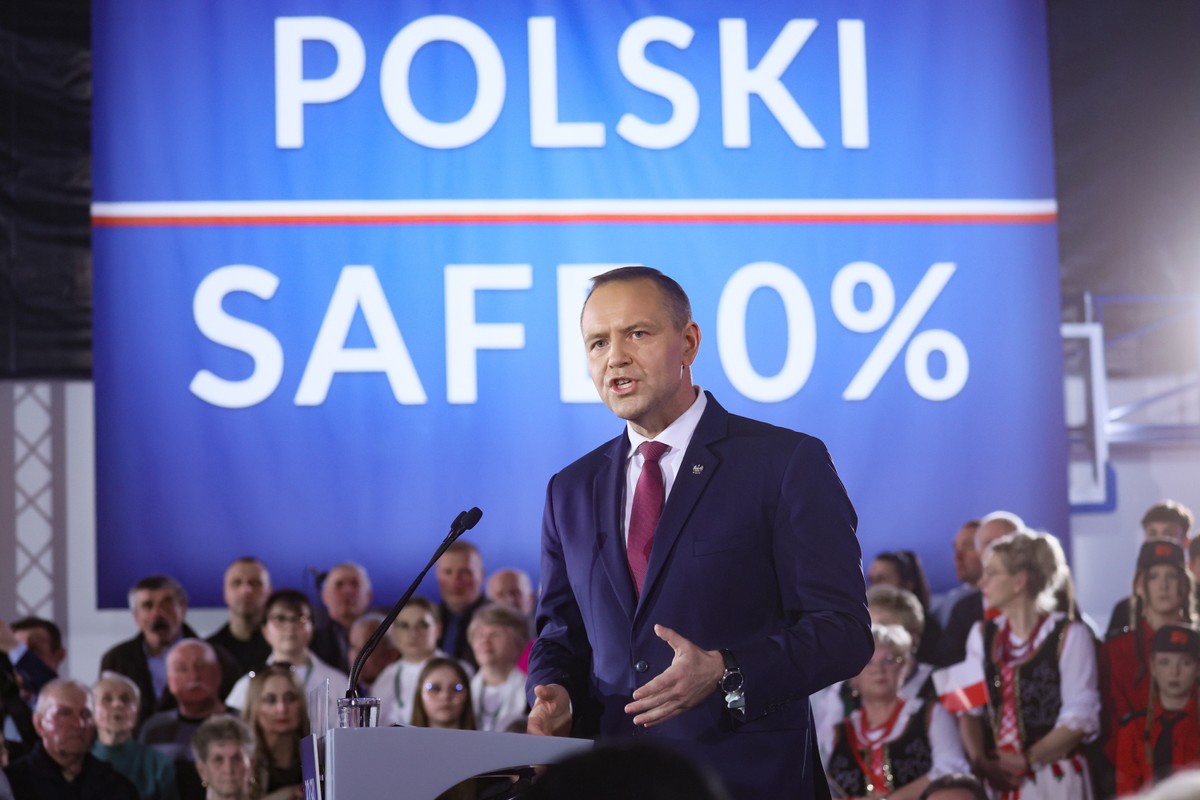
Nawrocki repeated his appeal for the Sejm to take up the presidential bill on the so-called Polish SAFE 0%, which would allow PLN 185 billion from NBP profits to be used for defense. — This act is ready, it can be adopted and will guarantee flexible, interest-free funds for the development of the Polish armed forces until 2070, tailored to Polish needs, he argued.
Reparations from Germany as a source of defense financing?
The president also pointed to alternative sources of financing for Polish defense, including: through war reparations from Germany, which he discussed with Chancellor Friedrich Merz during his visit to Berlin.
— Since there is so much concern about the development of Polish forces, shouldn't we finally implement a plan in which Germany starts paying reparations to Poland and we invest these funds in our security? – he asked.
The president also referred to differences in positions with Prime Minister Donald Tusk on the issue of reparations and armament financing. — We want to have a strong army, but we also want to have a sovereign, free, independent Republic of Poland, which is part of the European Union; and Poland is no longer and will no longer be an auxiliary farm of any country in economic and military matters, he emphasized.
Government: Armed Poland program despite the president's veto
In response to the president's veto, the government, during an extraordinary meeting, adopted a resolution on the basis of which the Armed Poland program will be implemented. Prime Minister Donald Tusk assured that the president's veto would not stop the implementation of the SAFE program, which will be continued under the Armed Forces Support Fund operating at Bank Gospodarstwa Krajowego.
The Polish application for the SAFE program amounted to EUR 43.7 billion and was approved by EU institutions, making Poland the largest beneficiary of the program. According to the government, 89 percent these funds were to go to Polish arms companies.
Read also: The European Commission is finalizing the agreement with Poland. Payment in April is questionable
Political dispute over SAFE
The SAFE program has become the subject of a political dispute between the government and the opposition. The government emphasized that low-interest loans are an opportunity to modernize the army and develop the defense industry. The head of the General Staff, General Wiesław Kukuła, and the head of the Armament Agency, General Artur Kuptel, also expressed a similar opinion.
The opposition, including PiS and Konfederacja, raised doubts about the terms of the program, suggesting that SAFE may enable the European Commission to interfere in Polish defense policy.
Czech Republic: the dispute in Poland affects the country's position
According to a Czech analyst from the Association of International Affairs, Pavel Havliczek, the prolonged dispute between the Polish president and the government over the SAFE program may harm the international perception of Poland as a stable and effective partner in security matters.
As he points out in an interview with PAP, from the outside, it may look like decision-making paralysis in key areas, which weakens the image of Poland as a country capable of consistently strengthening its own defense.
The expert also emphasized that despite political differences, the transatlantic bond remains strong in Poland, and the conflicts themselves more often dominate the public debate.
The analyst pointed out that there is also an ongoing discussion about SAFE in the Czech Republic: the previous government did not see much benefit in the programwhile the current authorities are more interested in using available funds, although their wider implementation is limited by skepticism towards EU institutions.