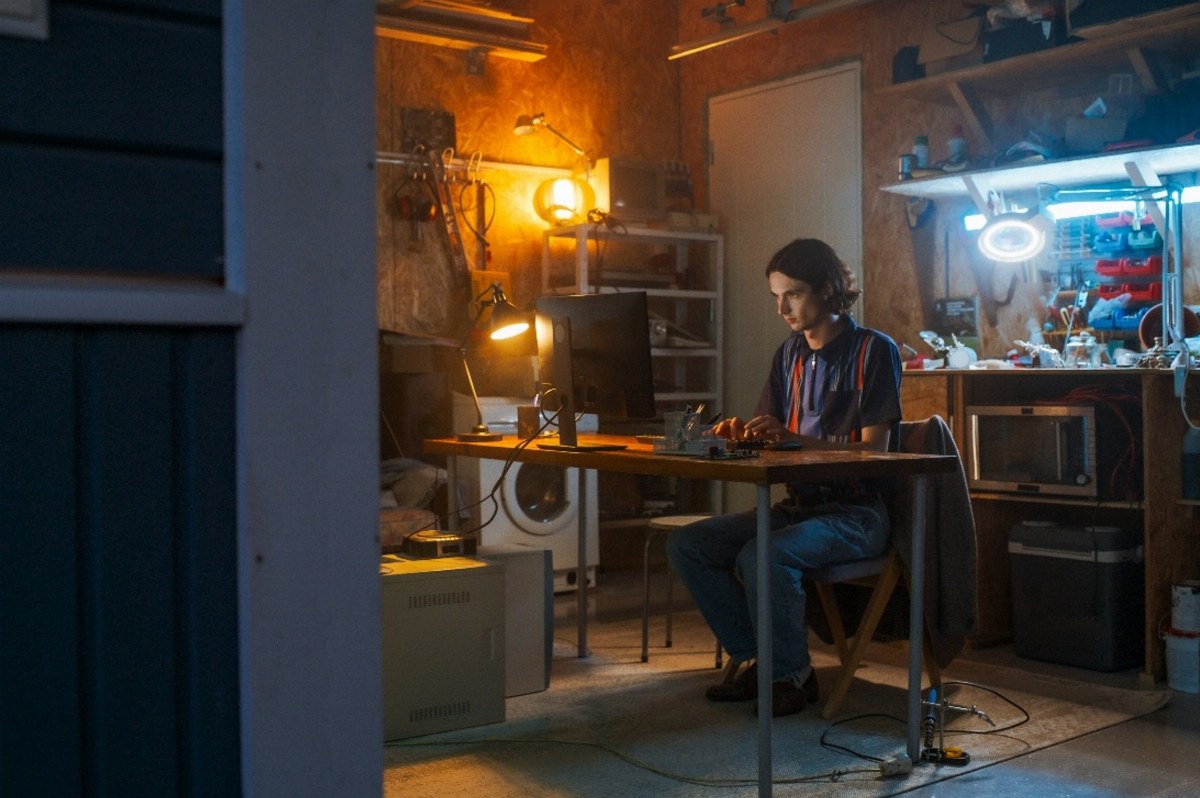
Great stories often do not originate in grand locations. Sometimes, they begin in an ordinary garage, where individuals carve out space for experimentation, failure, and their unique ideas. This narrative is vividly illustrated by a modest garage on Addison Avenue in Palo Alto, California, where William Hewlett and David Packard created their first product, an audio oscillator, in 1938. Decades later, the state recognized this site as the “Birthplace of Silicon Valley.”
This example highlights how a small workspace can spark a journey far beyond a mere driveway. Similarly, the garage theme resonates through one of the most notable tech tales of the 20th century. Apple, celebrating its 50th anniversary this year, reminds us of its origins, noting the grand idea birthed in a small garage where the vision of personal computing first took shape in the mid-1970s.
Another garage, located in Bellevue near Seattle, served as Amazon’s first office, with makeshift desks constructed from bought doors attached to legs. This “door desk” became a symbol of the company’s frugal beginnings. While today these stories reflect global corporations, their early days were remarkably ordinary.
But what makes a garage so appealing for innovation? It offers a unique kind of freedom, being private enough to allow for failed attempts yet practical enough to leave ongoing projects for another day. Perfection is not a pressing expectation here; instead, there is room for trial and error.
The concept of the garage as a creative space extends to culture as well. The term “garage band” has become an archetype of musical journeys. However, even more intriguing than tracking famous bands practicing amid cars and tools is the underlying idea: professional studios can come later. Initially, all that is needed is a place to close the door and test whether what’s in one’s mind truly works.
One does not have to establish another tech giant like Apple. A personal garage story can take on a more private character. For some, it may involve restoring a classic car; for others, it could mean setting up a workshop to revisit long-lost hobbies. A garage can emerge as the hub for sports passions or the space where after-hours projects finally materialize beyond mere plans.
In Poland, a similar narrative unfolds with the company WIŚNIOWSKI, known for its development of garage doors. Over the years, the brand has not only adapted to changing user needs but has also introduced innovative solutions ahead of their time. Today, WIŚNIOWSKI chronicles its journey from Poland’s first automatic garage door to smart solutions designed for integration with automotive systems.
This narrative explains why the brand established the International Garage Door Day, with the first celebration occurring on September 18 last year. Much discussion then centered around the garage door and its surprisingly vital role in daily life, serving as a movable element of a home that grants access to spaces housing items often far more valuable than the term “garage” implies.
This year, the focus shifts to the stories unfolding behind the door. The theme “Garage Stories: History Begins in the Garage” aims to highlight entrepreneurship, creativity, and simple interests that make garages the first personal spaces for many individuals.
As garages take on multiple roles, the perception of the door itself also evolves. It safeguards the space used daily and often serves as a primary access point to the home, needing to endure for years while complementing the building’s architecture.
At WIŚNIOWSKI, the quality of the door is seen as a product of a complete system. Springs are tailored to the door’s dimensions, steel components are protected against corrosion, and panels can be 40 or 60 mm thick. Essential to this story are the production methods and the control of each production stage. Equally important is the possibility for homeowners to customize the front of their homes. The color, texture, and design of the door can be adjusted to fit the building’s architecture, while automation and smart solutions aim to minimize everyday distractions.
Every garage has its story; the door should align with it.
The PRIME Black Edition is for those who treat their garage as a personal studio, with features that help maintain a comfortable temperature. The design includes black finishes throughout, blending functionality with character.
The UniPro is a robust choice for a busy garage filled with vehicles, tools, and sporting equipment, featuring a 40 mm thick panel that helps retain heat and a convenient automated opening system.
UniTherm panels, 60 mm thick, are ideal for garages connected to homes, effectively retaining warmth for those fulfilling multiple roles.
For a more discreet option, the MakroPro 2.0 ELH door can replicate the home’s exterior finish, blending seamlessly into the structure while employing industrial-grade solutions for durability.
The roller door is practical in spaces where every inch counts, offering a corrosion-resistant aluminum curtain that rolls up neatly, maximizing overhead storage space.
The swing door facilitates easy access for DIY enthusiasts, ensuring tools and supplies are always at hand while maximizing the area.
As technology has advanced, so has the story of automatic garage doors. The introduction of remote controls enabled drivers to operate doors without exiting their vehicles, and now smartphones can manage doors through dedicated apps. The latest innovation allows control from the car interface, streamlining access without fumbling for devices.
Wiesław Noga, a product automation manager at WIŚNIOWSKI, explains the rationale simply: if drivers can manage navigation and music from their car screens, why should they need to reach for their phones before their garage doors?
This interaction reflects a broader trend, as smart cars and smart homes increasingly merge, with the car screen becoming a home interface. Garage doors exist at this intersection, making such connections feel particularly natural.
This year’s garage story from WIŚNIOWSKI also took a musical turn. A live session featuring artist Magda Bereda was recorded at their factory, showcasing her journey from humble beginnings to an online following of over 1.5 million. The session was timed with the International Garage Door Day premiere.
Bereda reflects on her early musical attempts in a garage, recalling how she and her brother crafted their first hits. The idea of performing a concert in a garage resonates with her, symbolizing the space’s potential as a starting point for something larger.
During the live session, Bereda performed three tracks, including the debut of her new song, “Co jeśli.” Her story exemplifies how a small, private space can nurture a great passion.
There’s a narrative circularity to this. WIŚNIOWSKI’s origins trace back over 35 years to a garage, and now the brand returns to that space with technology enabling door control from the car while inviting artists like Bereda to create music within.
This illustrates why garages are so effective at storytelling; they impose no rigid expectations on what should occur inside, offering a few square meters of personal space to start something uniquely one’s own. The remainder depends entirely on who stands on the other side of the door.