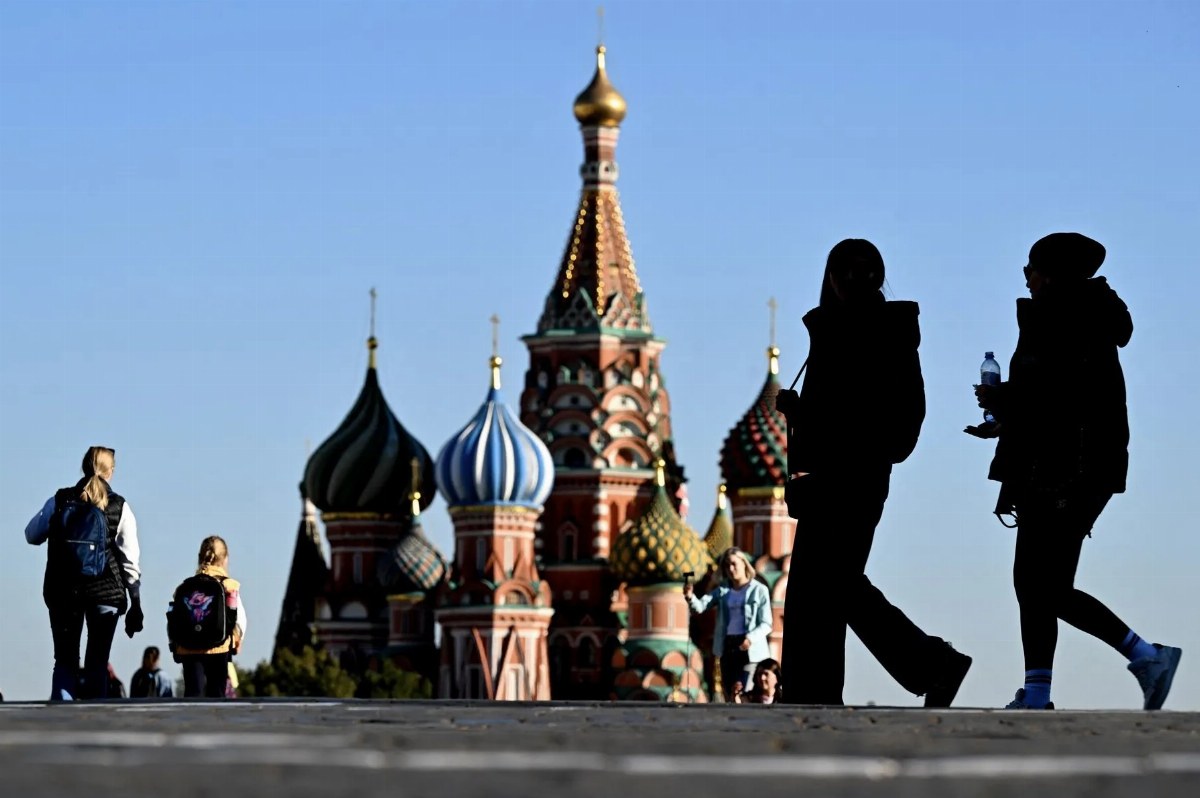
As the elections approach, the outcome seems predetermined, yet international observers will closely monitor voter turnout and the margin of victory for the pro-Kremlin “United Russia” party, searching for signs of public discontent after over four years of conflict.
Voting will take place from Friday to Sunday, allowing Russians to elect 450 deputies to the State Duma, the lower house of parliament, marking the first legislative election since the onset of the large-scale invasion of Ukraine.
In addition to parliamentary candidates, voters will also select regional legislators and governors in 11 regions.
However, experts cited by the independent publication The Moscow Times indicate that citizens’ choices are severely limited, as the electoral programs of the main parties largely align with Kremlin policies.
The primary political contenders for seats in the Duma include the ruling “United Russia” party, the Communist Party, the Liberal Democratic Party of Russia (LDPR), “Just Russia”, “New People”, and “Yabloko”. The only real alternative to the Kremlin, “Yabloko”, bases its campaign on an anti-war platform but has been excluded from the party list voting for the Duma.
Predicted Majority for United Russia
This election will also extend to the four partially occupied regions of Ukraine, which Moscow claims to have annexed, even as fighting continues in those areas.
The voting process will span three days, with 33 regions offering electronic voting—measures that critics argue could facilitate result manipulation.
Observers predict that “United Russia”, which currently holds 321 of the 450 Duma seats, will secure a majority of the votes.
Given that the outcome is predetermined and Putin’s political dominance faces no immediate threat, analysts suggest the Kremlin views the elections as a means to mobilize public support for the war and legitimize its actions.
Declining Popularity of Putin
Despite the expected results, foreign observers will be watching voter turnout and the winning margin of “United Russia” for signs of public dissatisfaction after years of warfare.
The general populace has felt the direct impacts of the war, with a summer marked by long-range drone attacks bringing conflict closer to home for millions of Russians.
These developments have affected public sentiment. Polls indicate a decline in Putin’s popularity, although it remains relatively high, with the independent Levada Center reporting it at 76% in August, down from 87% in September 2025.
Economic Challenges
The conflict has exacerbated economic issues, which have stagnated following an initial boost from massive military spending. The government has raised taxes and increased domestic borrowing to manage a growing budget deficit.
Attacks on Russian oil refineries triggered a severe fuel crisis, peaking in June, subsiding for a few weeks before resurfacing in August.
Additionally, a series of attacks on warehouses belonging to online retailers Wildberries and Ozon has resulted in substantial losses for hundreds of thousands of individual sellers, causing a shockwave in the economy.
Last month, the Kremlin dismissed Andrei Klepach from a position at the state-controlled development bank VEB after the former chief economist warned that Russia could not sustain a prolonged war of attrition with Ukraine and anticipated a major social crisis.
Putin has also had previous clashes with German Gref of Sberbank, who cautioned at an economic forum last September about a potential recession, prompting a sharp response from the president.
Potential Mobilization Ahead?
Currently, officials assert that Russia’s economy is resilient and that military forces are advancing on the front, aiming to capture the entire Donbas region in the coming months—though specific timelines remain unclear.
Some foreign observers suggest that Russian authorities appear to be laying the groundwork for a new wave of military mobilization post-elections, a prospect deeply unpopular among the Russian populace. The Kremlin has repeatedly denied any plans for mandatory mobilization.
Vladislav Vlasiuk, a special envoy of Ukrainian President Volodymyr Zelensky, stated, “Numerous reports have suggested that mobilization will begin. We will see. It seems to me that this is entirely contrary to peace negotiations.”
Declining Competitiveness of Elections
Experts differ on when and how exactly Russian elections lost their competitive nature, but they agree that the 2022 invasion of Ukraine marked a significant turning point.
Political scientists now describe Russia as an authoritarian electoral system: an autocracy that continues to hold elections while tightly controlling the conditions under which they occur.
John Reuter, a political science professor at the University of Wisconsin-Milwaukee and an expert in Russian electoral politics, noted, “You can’t openly call for the war to end or openly contest the legitimacy of President Putin.”
He added that beyond that, candidates and parties participating in elections have some freedom to debate other political issues within these constraints.
Other commentators have noted that as early as 2011, authorities were already shaping the composition of successive Dumas to the “desired level.”
For the Kremlin, “United Russia” must always hold a constitutional majority, while other parties are expected to know their place and “not interfere with the smooth and vigorous legislative process, which essentially consists of the automatic approval of bills sent by various branches of the executive power,” explained Russian political commentator Ekaterina Schulmann, now in exile.
While observers note that control over elections was evident even before the war, some argue that conditions have formally deteriorated: for example, in the past decade, the number of legally registered parties has dropped from 75 to 17.
Assault on Free Elections
The erosion of Russia’s political and electoral system began in the mid-2000s as the Kremlin tightened its control over the media and took measures against influential oligarchs.
Direct elections for the governorships were abolished between 2004 and 2012, although this restriction remains in place in some regions.
Direct elections for mayors have also been eliminated in regional capitals and major cities, along with stricter regulations on political parties.
Recent measures include rules prohibiting “foreign agents” from running for public office and more severe restrictions on independent electoral observers.
The independent election monitoring organization “Golos,” which documented electoral violations since 2000, was forced to cease operations last year after its co-chair was imprisoned.
Aleksei Navalny’s attempts to provide a political alternative have also been stifled; the political activist ultimately died in prison.
Exclusion of Yabloko Explained
The fate of “Yabloko,” the only registered party advocating a pro-peace platform, illustrates the limitations of the electoral campaign in 2026.
In excluding “Yabloko” from the electoral lists for the Duma, a court cited alleged violations related to foreign funding, campaign materials distributed through restricted foreign platforms, and copyright norms.
The party denies any wrongdoing.
“Yabloko” still has registered candidates running in single-member constituencies—a designated geographical area electing a single deputy to the Duma—and at regional legislative elections.
In total, at least 36 opposition candidates have been excluded from elections for the Duma and regional legislative elections, according to the exile publication “Viorstka”. More than half of these cases involved candidates from “Yabloko.”
Seventeen of these candidates were disqualified due to online posts mentioning Navalny, who appears on Russia’s federal list of “extremists and terrorists.”
Others were excluded for sharing links to Facebook and Instagram, banned social media platforms in Russia, or for displaying logos from these platforms.
Limited Interest in the Elections
Amid these restrictions, public interest—both among the general populace and candidates—seems limited.
Although televised debates are officially part of the electoral campaign, Putin has never participated in one, and many candidates from “United Russia” have followed suit.
In Ryazan, the public broadcaster “Rossia 1” spent two consecutive days unsuccessfully trying to gather candidates for the Duma in its studio.
On both occasions, the presenter ended the show shortly after the introduction, as no candidates showed up, according to The Moscow Times.
Sixty-six percent of Russians are unaware of when the elections for the Duma will take place, while 28% indicated they do not plan to vote, according to a June survey published by the independent polling institute “Levada Center.”
Of those who do not intend to vote, 41% stated their vote would not change anything, while 24% do not believe the elections will be fair.
Ternovoi noted that the initial registration of the anti-war party “Yabloko”—even without particularly well-known party leaders—triggered a largely spontaneous mobilization among segments of the anti-war electorate.
And when “Yabloko” was excluded from the electoral lists for the Duma, “Election Atlas” recorded an 80-fold increase in interest in the party on social media.