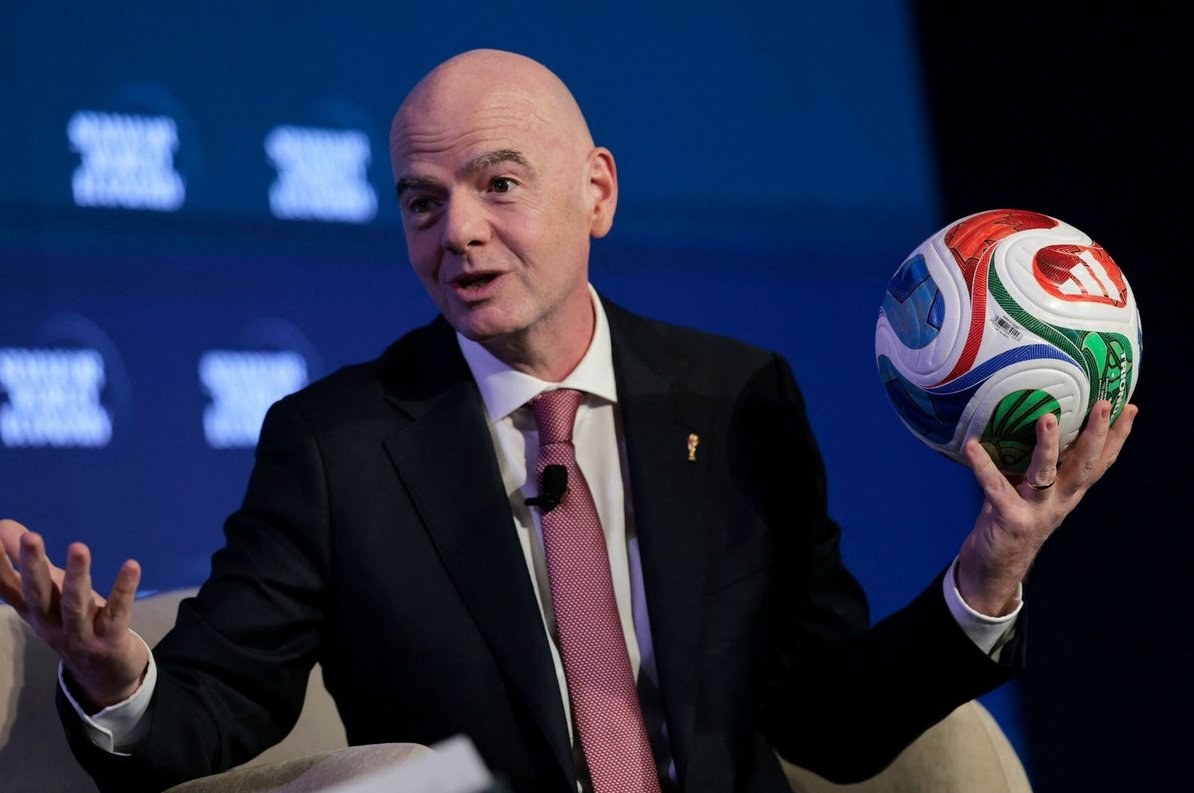
FIFA’s recent effort to privatize part of its operations, spearheaded by President Gianni Infantino, has encountered significant backlash and is now deemed a failure. This ambitious initiative, often referred to as a “one-person project,” was criticized for its perceived inadequacy and the potential involvement of private investors.
Approximately a week and a half after the conclusion of the World Cup, news emerged that has abruptly brought FIFA and Infantino, who recently celebrated significant success in North America, back to earth.
The proposal to sell a portion of shares faced sharp criticism, particularly concerning the involvement of private investors, including Thrive Eternal led by Joshua Kushner, brother of Jared Kushner and brother-in-law to former US President Donald Trump. Critics raised concerns that these investors, eager for returns, could exert influence on decisions beyond their expertise to maximize profits.
Additionally, Bloomberg analysts noted that the $20 billion privatization plan was undervalued. They argued that amidst FIFA’s ongoing accusations of “selling football,” the organization significantly downplays its worth.
Ultimately, FIFA has decided to abandon its plans to create a $20 billion company responsible for managing the organization’s commercial rights and selling a 20% stake to private investors.
Controversies surrounding this plan have cast doubt on Infantino’s future leadership. Numerous national football associations have already lost or are losing confidence in him, as reported by the Financial Times.
Infantino is set to run for reelection next year. FIFA’s Chief Operating Officer, Kevin Lamour, stated that the sale of shares was a “one-person project,” and he and his team were “misled” by its creators.
FIFA announced plans to establish a separate entity involving private investors to take control of commercial and operational rights for one of the world’s largest sporting events. This proposal has undergone critical scrutiny from various global stakeholders, including UEFA, which has warned that it threatens the “soul and governance principles” of the sport and has threatened to boycott the World Cup.
FIFA’s vision for the new entity, tentatively named FIFA Forward Enterprise (FFE), included responsibility for commercial aspects like broadcasting rights, sponsorship, ticket sales, and licensing, along with operational duties such as planning and organizing tournaments like the World Cup.
FIFA intended to maintain ownership of this subsidiary while asserting “exclusive control” over sports matters such as competition management and regulatory decisions. They projected initial capital valuation for the subsidiary at $20 billion, promising that the net profits from FFE would be reinvested into global football development.
The proposed structure aimed to introduce private investments, with FIFA estimating it could secure $4.2 billion from selected long-term investors willing to acquire minority stakes without controlling influence. This funding could potentially allow FIFA to distribute up to $40 million to each of its 211 member associations, significantly increasing the previously planned budget.
While similar entities exist within sports, such as Liberty Media managing Formula 1 rights, the proposed FFE has drawn criticism primarily due to the involvement of private investors. Although selling a 20% stake may not seem significant at this juncture, the absence of guarantees that this stake would remain limited has raised concerns.
As FIFA sought private investments, many expressed their discontent, arguing that Infantino prioritized money and power over the integrity of the sport itself. Analysts from Bloomberg suggested that FIFA should have valued its derivative venture at over $20 billion, considering the inflated valuations seen in the AI sector, illustrating that a higher valuation could complicate rejection of financial support from member nations.
Historically, FIFA has struggled to generate revenue compared to other sports entities. The recent World Cup has highlighted the organization’s potential to earn substantial profits, with fans willing to pay any price to support their teams. However, FIFA’s offer was insufficient to convince powerful European federations that financial gain was more important than solidarity with UEFA.
Sources: Bloomberg, CNN, Financial Times