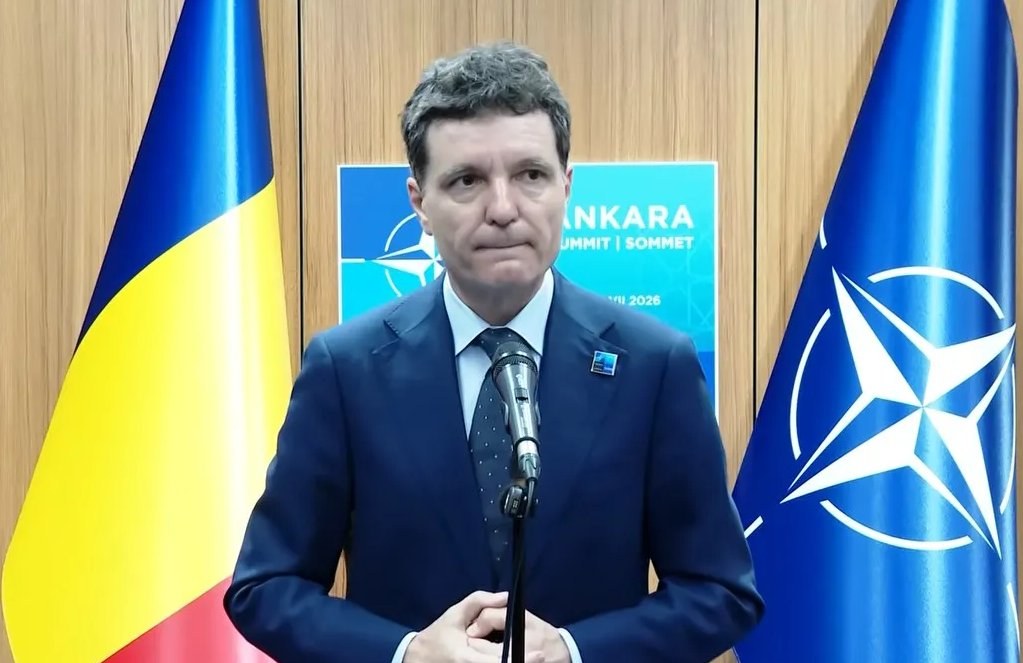
At the NATO summit in Ankara, discussions centered on the expansion of a fuel pipeline network originally established during the Cold War. Poland, the Baltic states, Romania, Bulgaria, and Turkey are poised to be the primary beneficiaries of this initiative, as reported by Bloomberg and Reuters.
NATO allies aim to finalize a historic agreement to extend the pipeline network eastward, enhancing fuel supply security for all member nations in case of crisis. However, Romanian President Nicușor Dan appeared unprepared when questioned about Romania’s readiness for the project during a press conference.
When a Bloomberg journalist inquired about Romania’s involvement, President Dan expressed confusion, asking, “The system of…?” A voice from the audience suggested that the pipelines should originate from Turkey. After a brief silence, Dan requested clarification, finally stating, “As far as I know, our infrastructure is among the best in the region.” A video of the moment is available online.
According to Bloomberg, the announcement regarding the pipeline system is expected on Wednesday in Ankara, following years of debate among allies.
The proposed pipeline system will stretch 10,000 kilometers and run 80 centimeters underground, crossing 12 countries and currently connecting to military bases in western Germany, including the U.S. Ramstein Air Base and major civilian hubs like Frankfurt Airport.
Originally designed to support Western air forces in a conflict with the former Soviet Union, the pipeline’s expansion reflects growing concerns that the existing infrastructure concentrated in Western Europe may be inadequate for large-scale operations near Russia’s borders, as highlighted by the Polish Centre for Eastern Studies.
During the summit in Ankara, Polish President Karol Nawrocki emphasized the importance of extending NATO’s fuel pipeline network to the eastern flank of the alliance. He noted that the dual-use nature of the pipelines could enhance security across NATO’s eastern borders, presenting an opportunity for Central Europe to raise this critical issue.
The initiative is projected to be NATO’s largest investment ever, potentially costing around $30 billion over two decades. NATO will cover the majority of the funding, while Eastern countries will contribute to the remaining costs, although details are still being negotiated.
Discussions among diplomats intensified last week as they finalized a statement for approval by leaders at the Ankara summit, with Poland striving to secure the agreement for pipeline expansion.
For years, NATO has contemplated extending its Central European Pipeline System eastward. However, the project’s scale has raised concerns among allies about its sustainability.
The fuel transported through these pipelines is also suitable for ground vehicles, as additives make it compatible with diesel-powered trucks and tanks. The expansion could alleviate storage capacity deficiencies since pipeline fuel would supplement existing stored fuel.
Military officials cite fuel and munitions as the two essential supply elements for operational deployment, with NATO estimates indicating that a large-scale conflict could require hundreds of thousands of cubic meters of fuel daily.
According to a Polish think tank’s study, NATO’s fuel consumption in a conflict may exceed the existing infrastructure’s capacity even before large-scale hostilities begin, due to troop movements, air transport operations, and fighter jet missions.