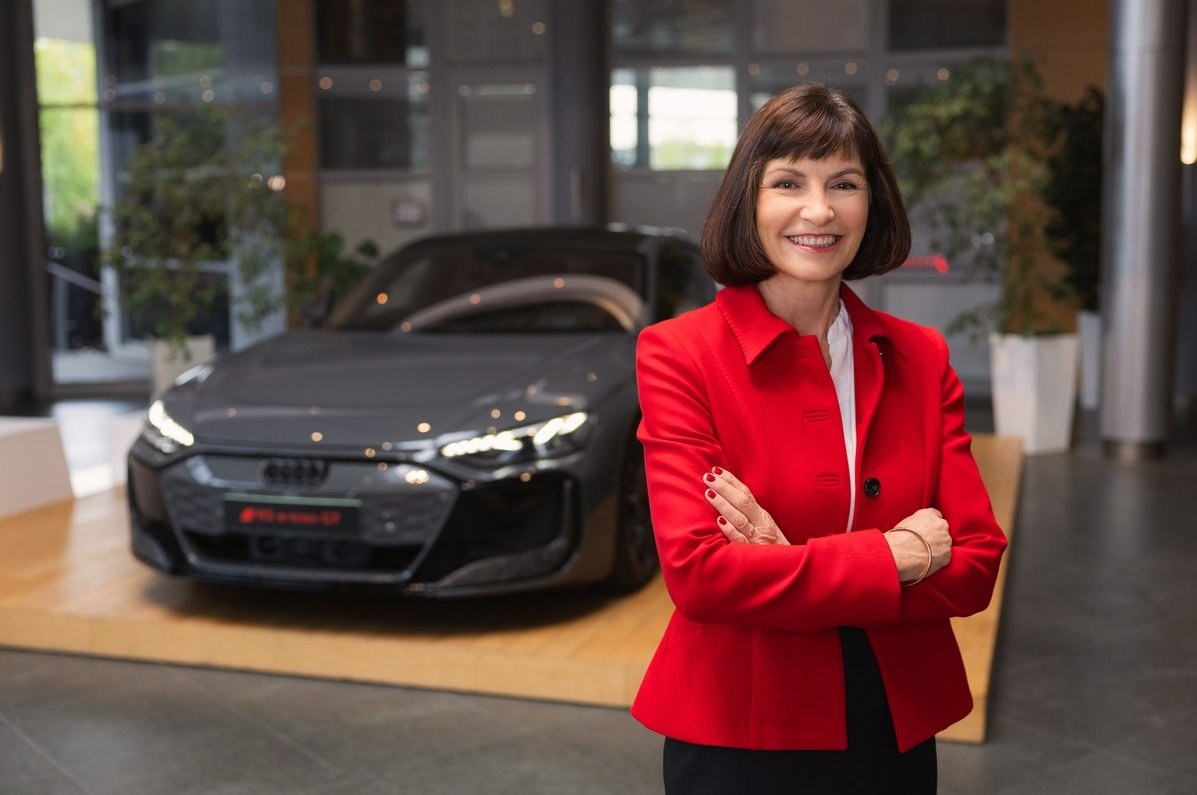
Volkswagen Group Polska is asserting its dominance in the automotive sector, with sales figures being just one facet of its strategy. Carla Wentzel, CEO of Volkswagen Group Polska, elaborates on the company’s position in the Polish market and highlights the importance of a diverse model portfolio, an extensive after-sales network, and financing options that more than half of customers utilize. She also discusses the electrification strategy, growth potential in Poland, and the anticipated electric model expected to be released in 2027, priced around 20,000 euros.
According to Izabella Wit-Kossowska, Volkswagen Group Polska supplies one in four new cars registered in Poland, with the company maintaining a significant lead over its nearest competitor, delivering 45,000 more vehicles by 2025. Wentzel states that in 2025, Volkswagen Group Polska delivered nearly 165,000 cars, solidifying its position as market leader, a feat attributed to a customer-focused approach encompassing various factors.
The group boasts six strong brands: Volkswagen, Volkswagen Commercial Vehicles, Škoda, SEAT, CUPRA, and Audi, providing around 100 models, including over 20 electric and more than 30 plug-in hybrids. This extensive offering caters to a wide range of customer expectations across different market segments and price levels.
The second pillar of success is the advanced scale of the company’s after-sales services. Volkswagen Group Polska has established the largest authorized dealer network in Poland, consisting of approximately 440 showrooms and service centers across nearly 190 locations. In 2025, this network executed over 1.5 million service orders, facilitated by the distribution of more than 64,000 parts daily from a central warehouse in Poznań.
Moreover, an attractive financial offer plays a crucial role, with over half of the vehicles sold in 2025 financed through Volkswagen Financial Services. Modern financing options with low monthly payments are vital for many customers’ mobility.
Volkswagen has created a complete ecosystem to meet customer needs. From January to May 2026, registrations of electric vehicles from Volkswagen Group Polska surged by 86% year-on-year, outpacing the overall BEV market growth rate almost threefold. This trend suggests increasing consumer confidence in electric cars, particularly those from Volkswagen.
There is a noticeable uptick in customer trust in electromobility across Europe, with Norway leading at a remarkable 98% market share of electric vehicles in sales during the first five months of the year. Other countries like Denmark, Finland, Sweden, and Belgium also showcase significant adoption rates. However, Poland lags, with a mere 5.3% market share, placing it second to last in Europe while being the fifth largest market in the EU for new car sales.
Volkswagen’s electric vehicle sales have shown notable growth since the introduction of its first electric model, the e-up! in 2013. It took about a decade to reach the milestone of one million electric cars sold, but only a year to achieve four million. The group maintained a roughly 27% market share in Europe for BEVs in 2025, with a 66% increase in deliveries to customers. In Poland, despite lower figures, the company is a leader in electric vehicle sales as well, with significant year-on-year growth and a strong lineup of refreshed and new models to sustain this momentum, half of which are electric.
New models like the Cupra Raval and Volkswagen ID. Polo, both priced under 100,000 PLN, raise the question of whether price remains the primary barrier to electrification in Poland or if it is the lack of infrastructure or mental barriers from customers.
For electric vehicles to become an obvious choice, three key issues must be addressed: affordability, charging convenience, and supportive market frameworks, including energy prices and purchase incentives.
Volkswagen offers innovative vehicles with ranges exceeding 700 kilometers, comparable to combustion engine cars, and significantly reduced charging times. For instance, the Audi A6 e-tron can recharge enough energy for over 300 kilometers in just 10 minutes. This indicates that during a travel break, passengers often require more time than the vehicle does for charging.
Regarding pricing, Volkswagen has delivered over four million electric vehicles, leveraging economies of scale to gradually lower unit costs and offer electric cars at increasingly attractive prices. In higher segments, electric vehicle prices align closely with their combustion counterparts. The company is now introducing a family of affordable urban electric cars, with the CUPRA Raval, Volkswagen ID. Polo, and Škoda Epiq already launched, and the ID. Cross set to join soon, effectively lowering the entry barrier into electromobility. Furthermore, Volkswagen plans to offer an electric vehicle in Europe for approximately 20,000 euros by the end of next year.
Charging infrastructure remains critical, as the number and quality of charging points are decisive for many customers, especially those living in multi-family buildings. Public infrastructure is better than its reputation; for example, along the highway from Warsaw to Poznań, there are already 93 fast DC charging points in 30 locations, with a fast charger available approximately every 10 kilometers. By the end of May, there were 13,500 public charging points available in Poland, not including private chargers, which are even more numerous. Volkswagen Group Polska also provides over 50 charging points for its employees and is preparing for further expansion.
Finally, a mental shift is necessary; customers need to recognize that electric cars are a sensible, practical, and economical choice that also offers a great driving experience. Research indicates that less than five percent of Poles have had the opportunity to drive an electric vehicle, meaning there’s limited experience among drivers. This situation is expected to change over time.
The automotive industry currently faces significant challenges, including ongoing job cuts at various manufacturers. These changes result from multiple factors, including market demand fluctuations. In 2019, over 13 million passenger cars were registered in the EU, but this number fell below 10 million in 2020. While registrations have slowly risen to 10.8 million by 2025, the EU has been selling about 2-3 million fewer cars annually compared to pre-pandemic levels, necessitating adjustments in production capacity.
Challenges also stem from American tariffs, fierce competition from China, and geopolitical conflicts impacting fuel prices. This situation pressures profit margins, compelling manufacturers like Volkswagen to streamline operations while continuing to invest in new products, software, and technology. This balance between discipline and dynamism is vital for maintaining market leadership.
How is Volkswagen Group Polska preparing to compete against aggressive Chinese automakers? This competition poses a strategic challenge for the entire European automotive industry.
Volkswagen is simplifying complexity, enhancing cost efficiency, and introducing affordable electric models in Europe. The debut of a new family of urban electric vehicles exemplifies how scale and shared technologies can translate into more competitive products.
The company’s strengths lie in its extensive model portfolio, strong brand positioning, after-sales operations, dealer network size, and customer trust. This combination ensures that the residual value of Volkswagen Group vehicles remains high over the years.
Volkswagen Group companies paid over 743 million PLN in corporate income tax in Poland for 2024, marking a substantial contribution. Volkswagen Group Polska alone contributed 264 million PLN, the highest in the automotive sector, averaging over 1 million PLN in taxes daily. This tax contribution reflects their commitment to the Polish economy and society.
Poland is a crucial country for Volkswagen Group, which operates 19 companies, two joint ventures, and employs over 22,000 people. Additionally, thousands more are employed through the dealer network and supply chain.
In terms of production, the Volkswagen Poznań plant is the largest car manufacturer in Poland, producing 236,000 vehicles last year, including Volkswagen Caddy and Crafter models sold across six continents. Notably, 70% of the components used in their production are sourced from Polish suppliers.
Volkswagen Group also manufactures millions of parts and components annually in Poland, with nearly 4.8 million components produced by the foundry in Poznań and 620,000 engines produced by Volkswagen Motor Polska in Polkowice in 2025. An engine rolls off the production line every 30 seconds, celebrating the 15 millionth engine produced last year.
The significant impact of Volkswagen Group on the Polish economy, coupled with robust supply chains and tens of thousands of jobs, extends beyond tax contributions.
In conclusion, Volkswagen Group Polska is a market leader, paying substantial taxes and accounting for one in four new cars sold in Poland. With numerous challenges ahead, its focus remains on navigating through transformation while retaining scale, profitability, and customer trust.
In the short term, the company aims to strengthen its market position through attractive and innovative vehicles, quality, design, and customer experience, while increasing the degree of electrification. Looking ahead, Poland is viewed as one of the most important markets for Volkswagen Group in Europe.