Dieter Schwarz, the founder of Lidl and the wealthiest individual in Germany, has been making substantial investments in technology startups through his firm, D11z Ventures. This lesser-known aspect of his business endeavors highlights the mindset of an entrepreneur renowned for his secrecy.
The name D11z Ventures cleverly incorporates a code that refers to the eleven letters between “D” and “z” in Schwarz’s full name. With a net worth of €61.8 billion, Schwarz has established himself as a leading figure in the business landscape of Germany.
D11z Ventures operates similarly to the prominent venture capital firm Andreessen Horowitz (A16z), known for its early investments in startups like Skype, Instagram, and Airbnb.
Anonymous Billionaire with a Vision
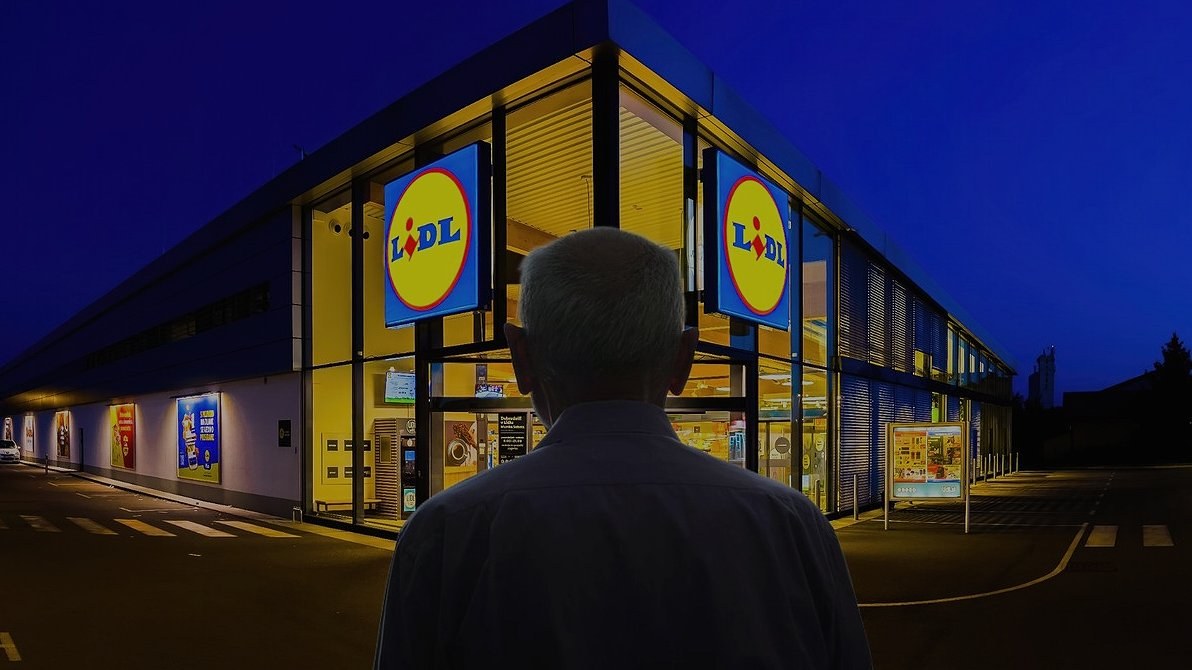
Just as A16z invests in innovative ideas in Menlo Park, D11z Ventures focuses on bold technological visions in Heilbronn, just a short drive from Lidl’s headquarters in Neckarsulm. At 86 years old, Schwarz remains a largely anonymous figure, with few recent photos and reports suggesting he can shop in his hometown without being recognized. He opened the first Lidl store in Ludwigshafen in 1973, and today his retail empire extends to over 12,000 Lidl and Kaufland locations across 31 countries.
The supermarket business generates approximately €140 billion, accounting for 75% of the total revenue of the Schwarz Group, as confirmed during the group’s financial results presentation for 2025. The group also encompasses a recycling company, Prezero, and Schwarz Digits, which develops cybersecurity solutions and promotes digital sovereignty in Europe.
Understanding Schwarz’s perspective on the world and the future remains largely elusive. However, the flow of investments he makes in startups provides insight into his entrepreneurial thinking.
This segment of Schwarz’s business, estimated to be worth hundreds of millions of euros, is just as opaque and complex as the rest of his enterprise. Schwarz and his associates declined to comment for “WELT AM SONNTAG,” adhering to a long-standing practice of maintaining privacy.
Ambitions for Expansion
When examining individual startups, their connections to the Schwarz Group often become apparent, revealing only pieces of a larger puzzle. Currently, D11z Ventures is associated with slightly over 30 companies, with plans to expand this number to 100 by 2030. A complete picture can only be formed by navigating through the network of discreet companies registered in commercial registries.
Investment vehicles often bear names like Omega Ventures, SDL Lambda, or Stoco 112, which do not directly link back to the Lidl founder. Schwarz also invests through the Schwarz Group and his family-owned investment firm, D11z Ventures.
This family office is structured to manage, protect, and grow substantial wealth for affluent families. Their investment strategies tend to be conservative, while backing startups is considered high-risk. Many new initiatives fail, and the few successful ventures must yield enough profit to offset losses. Therefore, funding startups heavily relies on trust—often in young entrepreneurs.
Technological Innovations for the Future
Schwarz’s investment strategy appears to focus on companies that could enhance or expand existing business practices. For instance, Kaptura has developed technology for 3D product scanning in warehouses using 360-degree scans, aligning with retail needs.
In the recycling sector, Eeden specializes in a chemical method for separating cellulose from PET plastics, allowing for the reuse of textiles made from mixed cotton and synthetic fibers. This innovation reduces the amount of materials sent to landfills or incinerators.
Additionally, Schwarz is investing in foundational technologies with unclear practical applications, such as Eleqtron, which focuses on quantum computers capable of solving complex problems involving numerous variables.
Pursuit of European Technological Independence
In the case of Eleqtron, another significant theme in Schwarz’s investments emerges—the goal of reducing Europe’s dependence on the United States for advanced technologies. However, achieving this objective has proven challenging for Schwarz.
His most notable startup investment to date has been Aleph Alpha from Heidelberg, once regarded as a promising contender in German artificial intelligence, referred to as the “German OpenAI.” Following the success of ChatGPT, Gemini, and Claude, Aleph Alpha lost its competitive edge in language models and ceased their development. Following a merger supported by the Schwarz Group and high-level political backing, Aleph Alpha joined forces with Canadian rival Cohere. The Schwarz Group invested about €500 million in Cohere, aiming to leverage its technology to maintain the competitiveness of its own European cloud platform, Stackit, against American giants like Amazon Web Services (AWS).
Unexpected Ventures
The startup portfolio also features surprising projects, such as Rogon Technologies, which is developing an application for scouting football talents. Could this reflect Dieter Schwarz’s personal passion for soccer?
For years, the football stadium in Hoffenheim was named after Prezero, a recycling company owned by Schwarz. Lidl has been a sponsor of Bayern Munich and UEFA for many years. However, whether the patriarch himself is a football fan and which club he supports remains a mystery, much like many aspects of his life.