An abdominal hernia operated correctly from the beginning can avoid complications and difficult reoperations. What patients should be aware of

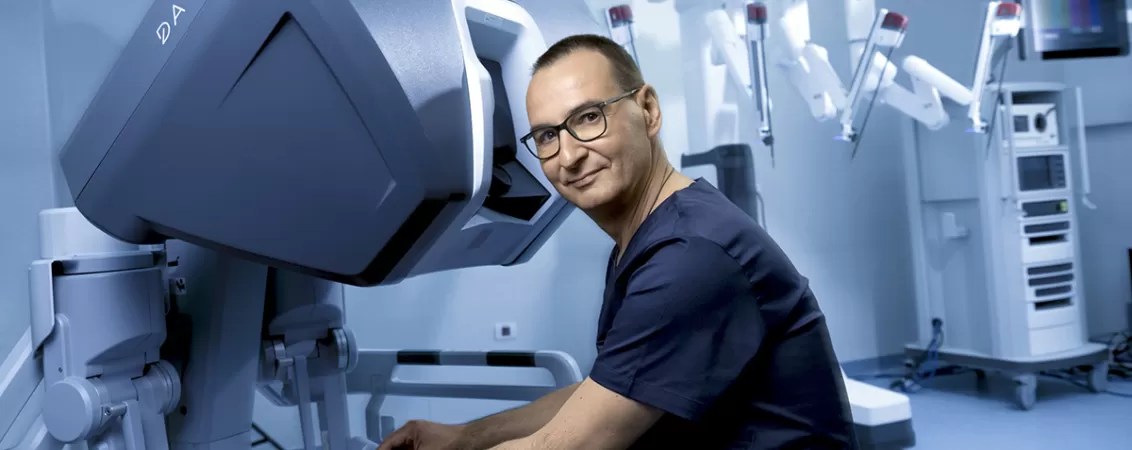
An abdominal or inguinal hernia operation can significantly influence the long-term evolution of the patient. When the repair is done correctly and adapted to the particularities of each case, the chances of a quick recovery and a lasting result are very good. Conversely, certain complications such as recurrence, chronic pain or the need for reoperation can turn a seemingly simple condition into a much more difficult problem to treat. In such situations, the surgeon must intervene in an area already modified by previous operations, with scars, adhesions and sometimes implanted prosthetic materials, which increases the degree of difficulty of the intervention. Dr. Victor Radua surgeon specializing in abdominal wall surgery and complex hernia reconstruction, emphasizes the importance of a correct assessment from the very first intervention and explains why the experience of the surgical team, the choice of the right technique and careful treatment planning can decisively influence the final outcome.
“In hernia surgery, as in any other superspecialization, experience and the volume of cases matter. It is important for the patient to inform himself and choose a center that frequently treats such pathologies and that can offer the most suitable solution for his case,” explains Dr. Victor Radu.
Hernia occurs when there is a defect in the abdominal wall through which different anatomical structures can protrude. The most common form is the inguinal hernia, found mostly in men. Another important category is eventrations, which occur at the level of a postoperative scar and may require complex reconstructive interventions.
Chronic pain and relapses can occur after difficult interventions
A portion of patients who refer to a specialized center have had previous surgery and require evaluation for persistent pain, recurrences, or other complications associated with the initial intervention. According to Dr. Victor Radu, one of the most common misconceptions is that the mesh used for hernia repair is responsible for chronic pain.
“In most situations, the pain is not generated by the prosthetic material itself, but by the technical particularities of the intervention: the positioning of the mesh, the way it is fixed or its relationship with the nerve structures in the area”, explains the specialist.
Reoperations are generally more complex than the initial operation. The anatomy is modified, and the anatomical layers already operated generate adhesions and scars, and sometimes it is necessary to remove previously implanted prosthetic materials. For this reason, the main objective is for the first operation to provide as solid and durable a repair as possible.
Dr. Victor Radu emphasizes that the success of a hernia operation does not depend exclusively on the use of a mesh, but on the entire reconstructive concept: the choice of the anatomical plan, the technique used and the observance of surgical principles. “The mesh is an important element of the reconstruction, but the final result depends primarily on the quality of the surgical repair,” says the doctor.
Hernias do not appear only because of physical exertion
Many patients associate the appearance of hernias exclusively with lifting weights or intense physical exertion. In reality, the mechanisms are more complex. There is an individual predisposition that influences the resistance of the tissues, and on top of this, favorable factors such as physical exertion, chronic cough, constipation, obesity or certain professional activities can be superimposed.
“Just as not all people who sit for a long time develop varicose veins, not all people who lift weights develop hernias. There is always an individual component that influences the appearance of the disease,” explains Dr. Victor Radu.
In the case of eventrations, the determining factor is the existence of a previous surgical intervention. According to data from the medical literature, after open abdominal surgery, the risk of an eventration can reach approximately 20%, while after minimally invasive surgery this risk is significantly reduced, but not completely eliminated.
How patients choose the right specialist
Modern medicine is increasingly moving towards overspecialization, and abdominal wall surgery today represents a distinct field within general surgery. For this reason, patients should consider the experience of the surgeon, the type of cases currently treated, and the access to modern techniques available. “The current trend is for each field to be approached by doctors with dedicated experience. This allows the accumulation of a high level of expertise and the provision of adapted solutions, including complex cases,” says Dr. Victor Radu.
The doctor's professional activity is mainly dedicated to abdominal wall surgery, with an important volume of interventions for hernias and hernias, including complex cases of abdominal reconstruction.
Minimally invasive surgery has changed the treatment of hernias
In recent years, the development of laparoscopic and robotic techniques has considerably expanded the treatment possibilities in hernia surgery. In many situations, the minimally invasive approach allows for reduced operative trauma, faster recovery and early reintegration into daily activities. However, the choice of technique must be individualized for each patient.
“Our goal is to offer each patient the most suitable solution for their case, using the techniques and technologies that can bring real benefits in recovery and long-term results,” explains Dr. Victor Radu.
One of the modern directions of development is represented by the transposition of established principles of open surgery into minimally invasive approaches. In this context, robotic surgery offers additional advantages of visualization and technical precision. “The robot is a valuable tool, but the final result always depends on the experience of the surgeon, the planning of the intervention and the observance of the surgical principles”, emphasizes the specialist.
What role does the net play in the success of the intervention?
The mesh used in hernia surgery has the role of strengthening the abdominal wall and reducing the risk of recurrence. However, the choice of material must be adapted to each individual case. According to Dr. Victor Radu, the important characteristics are resistance, tissue integration and long-term tolerance. The success of the intervention, however, depends on several factors: the experience of the surgeon, the particularities of the patient and the choice of appropriate materials.
Quitting smoking, controlling body weight and following postoperative recommendations contribute significantly to reducing the risk of complications and recurrence.
Fast recovery after minimally invasive surgery
One of the major advantages of minimally invasive surgery is accelerated recovery. The duration of the intervention varies according to the complexity of the case, from less than an hour for certain inguinal hernias to several hours in the case of complex abdominal reconstructions.
However, most patients benefit from a quick recovery and a reduced hospital stay compared to open surgery. “The main advantage of minimally invasive surgery is the possibility of performing complex interventions with reduced tissue trauma and superior post-operative comfort for the patient,” concludes Dr. Victor Radu.
Hernia surgery has evolved considerably in recent years, and patients today have access to modern techniques that allow very good results and a quick recovery. However, the choice of treatment must be made individually, following a careful evaluation and an open discussion between the patient and the medical team.
***
Read other informative articles on medical topics in the Make Romania good section.
This article is supported by MedLife, the largest network of private medical services in Romania, and is part of an extensive information and education effort, dedicated to prevention and a long-term healthy lifestyle.
At MedLife, health is approached with care and responsibility, starting from the real needs of each patient. Medical decisions are based on complex evaluations, supported by multidisciplinary teams of good doctors and state-of-the-art technologies. Through modern diagnostic and treatment solutions and, more recently, genomics expertise and the possibility of early identification of risks for common and lifestyle diseases, MedLife aims to help people take better care of their health.
The objective is clear: active prevention and timely intervention, before health problems affect the balance and quality of life. Because health means more than the absence of disease. It means energy, mobility and balance, at any age. MedLife is constantly investing in solutions that support sustainable health and contribute to a life well lived, not just today, but over the long term.
More information about the available services can be found at https://www.medlife.ro/.
Article sponsored by MedLife