Trump, Clinton, Bush. The generation that ruined American politics

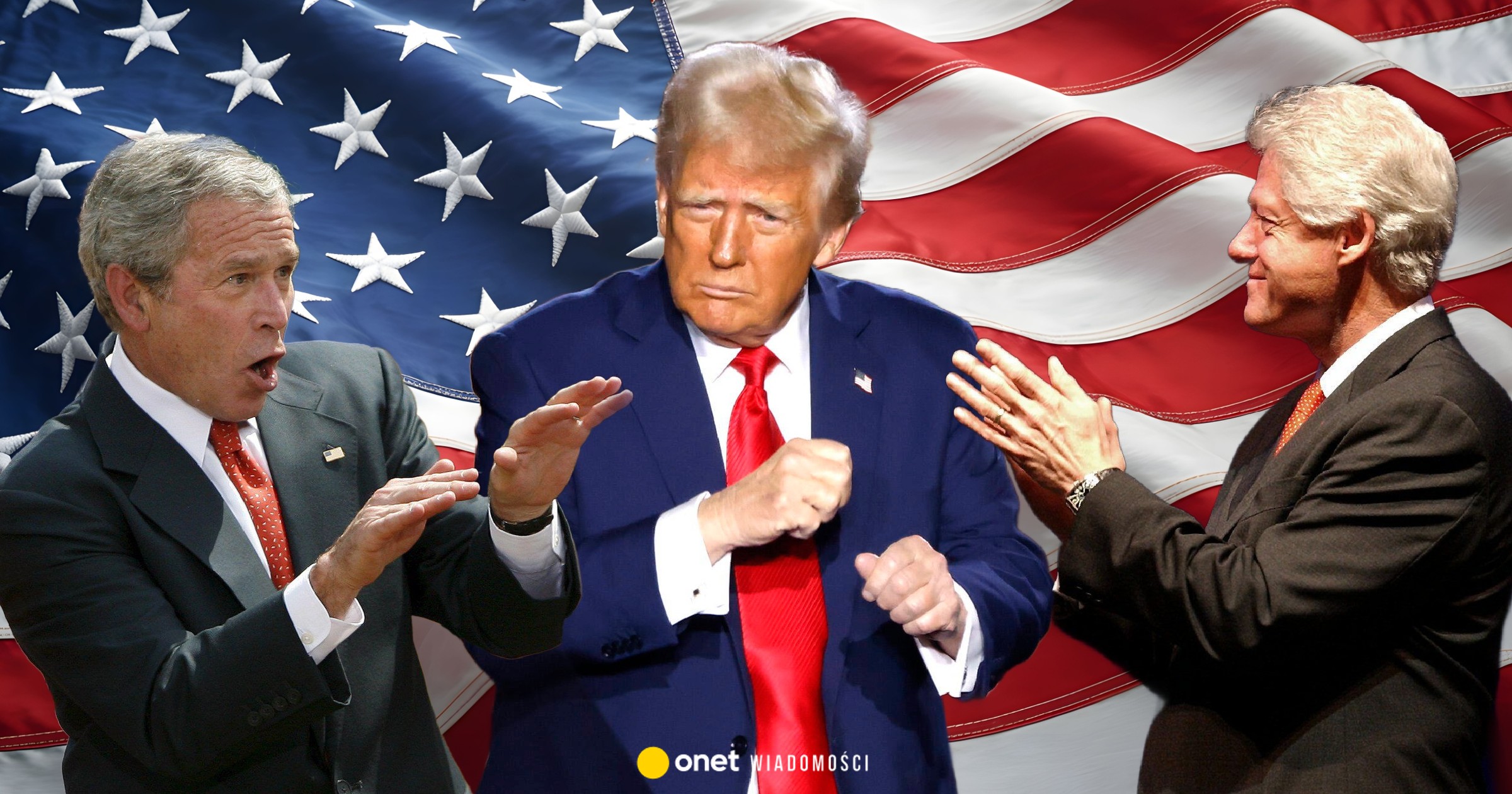
In 1992, when Bill Clinton defeated George H. W. Bush for the presidency, the change of power was accompanied by a wave of comments about generational change.
This election marked the end of an extraordinary era: seven successive presidents born in the first quarter of the 20th century whose youth and careers were shaped by service in World War II. At the time, it seemed that this generation – for 32 years, from John F. Kennedy taking office to Bush's departure – would dominate American culture for an unprecedented long time.
Today, on the 80th birthday of Donald J. Trump – who was born at Jamaica Queens Hospital in New York – a striking reflection comes to mind. The children of 1946 are preparing to watch over American public life for even longer.
A few weeks after Trump, George W. Bush was born — at Yale-New Haven Hospital in Connecticut on July 6. Next was the youngest of the three, and the first to become president: Bill Clinton, born William Blythe, was born on August 19 at the Julia Chester Hospital in Hope, Arkansas.
Whose side are you on?
Here they are: three American presidents who turn 80 this summer. Aged gentlemen in every respect. Each of them differs in style, temperament and vision for the country. But they have something important in common. Each of them was an exceptionally talented politician in his own way and in his own time. All three are also leading members of the generation that devastated American politics.
Chip Somodevilla/POOL/ABACAPRESS.COM / PAP
George W. Bush and Bill Clinton, former US presidents. Washington, January 20, 2025
Clinton, Bush and Trump undoubtedly have varying degrees of responsibility for the decline of US political culture. However, all three of them, born in 1946, played key roles in the multi-year process in which Americans were increasingly confined to political tribes; public debate has become increasingly vulgar and offensive; misunderstanding and contempt towards people with different views was growing; there was less and less trust in the government and institutions, less and less belief in the country's ability to rationally self-determine and solve long-term problems, or even to agree on the most basic norms of good and evil.
It is worth separating this reflection from the classic generational criticism, embodied in the slogan “OK, boomer”, which went viral at the end of 2019, just before the pandemic. In fact the generation of Americans born in the decade after World War II are people of great creativity and idealism. They were on the front lines of the struggle for racial and sexual liberation that changed American life. Their music and films (Steven Spielberg turns 80 in December) have shaped global culture. The technology creators of this generation (Bill Gates and Steve Jobs – both born in 1955) had as much influence on the world as the greatest political figures of their time.
But in politics, their legacy has proven toxic. This was a generation whose political disputes boiled down to one question: “Whose side are you on?” And this question has consumed the country for almost six decades.
In the 1960s, universities developed their characteristic moralizing politics – polemics about Vietnam and whether to look at the emerging counterculture with sympathy or contempt turned into the belief that the enemy was not just someone who was wrong – he was fundamentally evil, even wicked.
Few people imagined that variations of these disputes would continue into adulthood – and old age – of that generation. Politics in the 1990s was a morality play: Bill Clinton, who won the White House by promising to reject the Reagan-era “decade of greed and selfishness,” faced Newt Gingrich and Republican revolutionaries who tried to run Clinton from office by taking advantage of his sex scandals. Typically a unifier, Clinton survived politically by asking the divisive question: Whose side are you on? The majority then chose him over Gingrich.
For a moment, the attacks of September 11 seemed like an event that would unite the country beyond political divisions. However, George W. Bush's confrontational style of government and the decision to wage war not only in Afghanistan but also in Iraq turned national security issues into the next front: Whose side are you on? The combination of Bush's wars and the 2008 financial crisis was a key condition for Donald Trump's subsequent takeover of the Republican Party.
Above all, however, it was Trump who noticed that the combination of social media and constantly active smartphones means that inflaming moods and brutal attacks on opponents can become not only an ad hoc tactic, but also the basis of an entire political movement based on grievances and grievances.
Fierce and long-lived
Historically, even the most bitter or violent political disputes have been a means to solve important problems. Historian James G. Randall in 1940 referred to the generation of politicians of the 1840s and 1850s as the “generation of losers,” blaming their shortsightedness and showboating for sparking the bloody Civil War. Most subsequent historians have rejected this assessment – there was no middle ground or gradual solution at the time that would have averted the clash over slavery, the most important issue of the first century of the United States.
Nowadays, political debate increasingly serves its own purpose – and the opportunity to publicly scold an opponent becomes more important than the substantive content of the dispute. In this way, Republicans can support Trump on Iran, tariffs or the president's ties to his own business, even if his decisions contradict the party's previous demands – and they would certainly vocally criticize the exact same moves if they were made by a Democratic president.
Several characteristic features of this generation's politics can be seen here.
First, arguments usually revolve around values and virtues. This is a different emphasis than earlier generations, which argued more about material issues. If one side believes that the tax rate should be 40% and the other believes that it should be 30%, it is possible to argue, but it is easy to agree on a compromise of 35%. Meanwhile, already in 1990, Newt Gingrich, anticipating Trump's policy by 25 years, co-created a famous meme in which he encouraged Republicans to call their opponents names such as “sick”, “treacherous”, “bizarre”, “corrupt”, “pathetic”.
This leads to another feature of 1946 politics: chronic instability. In other eras, American politics ended great disagreements with a new consensus. The fights for the New Deal in the 1930s, including the creation of Social Security, were as heated as they are today. When Dwight Eisenhower returned the White House to the Republicans in the 1950s, no one wanted to continue these debates. Similarly, in the 1970s, Richard Nixon did not want to fight again to undo the health insurance policy introduced by Lyndon Johnson in the 1960s. Meanwhile, Republicans from the MAGA movement are still ready to fight over Obamacare, i.e. Barack Obama's health care reform, 16 years after its adoption.
This is the last thing that is worth saying about the children of 1946. They have been with us for a very long time – and there are many indications that they will remain for a while.
In 1946, the average lifespan of American presidents was 68 years. Franklin D. Roosevelt, a dominant figure in public life for 12 years — a figure soon to be equaled by Trump — had died a year earlier, at the age of just 63. Presidents over the last half century, starting with Gerald Ford, lived on average to 95 years of age.
In one way or another, the generation elevated by the “summer presidents of 1946” will keep asking the question “whose side are you on?” until the answer is “six feet under”.