Hidden Bucharest: historic castles, palaces and villas for sale. The residences that tell the story of a city of millions of euros

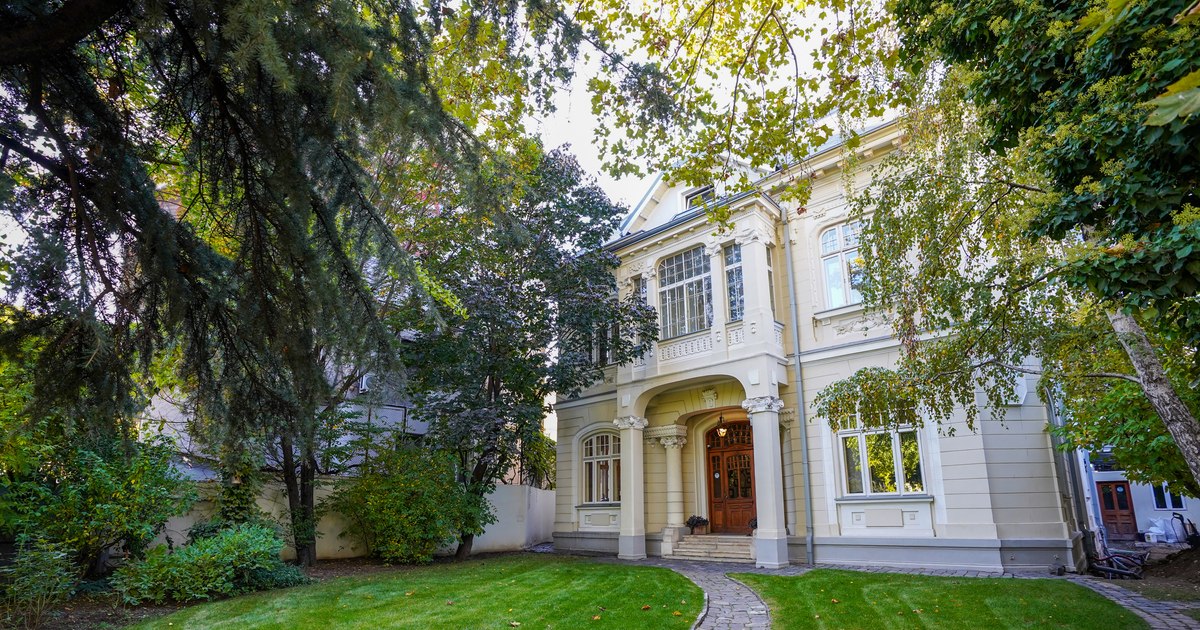
In Bucharest there are urban castles, 19th century palaces and interwar villas signed by important architects, which rarely appear in the real estate landscape of the city, although they are part of its history. They are properties for sale in a segment where price is only a detail, and real value is given by story, location and rarity.
Bucharest has a lot of great properties. Photo Sotheby's
In Bucharest, history did not stop in the museums. It continues to exist in inhabited houses, in discreet villas in central districts and in palaces hidden behind facades that, seen from the street, say almost nothing about their past.
In a city constantly reshaped by modernization, there are still properties that function as fragments of urban memory. Some were designed by royal architects, others belonged to diplomats or influential families of the early 20th century. Today, they are emerging in a niche market of residential heritage, where valuation takes into account not only surface area, but also history, architecture and positioning.
An urban castle born from the modernization of Bucharest
One of the most spectacular residences available today is a construction built at the end of the 19th century, in 1898, associated with the engineer Gheorghe Popovici. The building preserves a silhouette rarely found in the current landscape of the Capital, with obvious influences of the French castles of the Loire Valley.
The project is attributed to Giulio Magni, former chief architect of Bucharest and one of the essential figures of the city's modernization at the beginning of the 20th century, notes Romania Sotheby's International Realty. Formed in Rome, Magni introduced in Bucharest an academic architectural language, adapted to the ambitions of a capital in full transformation.
The interior retains original features such as the monumental spiral staircase, decorative details and period hardware. The property is currently valued at almost two million euros, the value being dictated mainly by its architectural rarity.
The bourgeois palace overlooking the Royal Court
In the historic center of Bucharest, another property maintains a direct link with the beginnings of the city: the visual opening to the Royal Court of Wallachia.
Built in 1890, the French-style bourgeois palace preserves the atmosphere of Bucharest at the end of the 19th century, when the city was known as “Little Paris”. Inside, you can still find the original corner stoves, paneled ceilings and double doors with casement windows.
The bourgeois palace overlooking the Royal Court. Photo Sotheby's
The building has a complex structure, with commercial spaces on the ground floor and 14 apartments on the first floor, which places it in an area with potential for reconversion to hotel or cultural functions.
The street on which it is located had an important role in the urban history of the city, being one of the first paved and illuminated streets in Bucharest and, at the same time, one of the areas affected by the great fire of 1847, which destroyed thousands of buildings.
A residence of the diplomatic elite and royal architecture
In a central area of the Capital there is a villa built in 1914, representative of the neo-Romanian style in its mature form. Designed by Victor Ștefănescu, architect associated with the great projects of the royal period, the building was built for Victor Ionescu, diplomat and ambassador of Romania in Portugal.
The architecture bears the signature of a period when the national style was in full force, combining traditional elements with monumental proportions and elaborate sculptural details.
The villa was built in 1914. Photo Sotheby's
135,000 ultra-rich will relocate this year. What are the best places to live in the world?
The property also includes a private garden of approximately 720 m2, a rare element in the central area of the city. In the following decades, the house was also used as a filming location for well-known Romanian productions, becoming part of the recent cultural memory of the Capital.
Caton Simon House and the academic elegance of the early 20th century
In the Icoana area, one of the most refined historical enclaves of Bucharest, is the Caton Simon House, built in 1908 according to the plans of the German architect Josef Geggerle.
The residence maintains an academic architectural language, with Central European influences visible in the Corinthian columns, the proportions of the spaces and the original finishes. The ensemble includes several building bodies, which allows various uses, from private housing to professional or cultural space.
The restoration project was awarded at the National Architecture Biennale in 2012, confirming its heritage value and the quality of the interventions carried out.
In the market, the property is valued at over three million euros, a level supported by the positioning and the rarity of the ensemble.
Dorobantsi-Capitale: the discreet luxury of an urban elite
In Dorobanti-Capitale, one of the most exclusive residential areas of Bucharest, a neo-Romanian villa preserves the aesthetics of an era when architecture was a language of social status.
The elaborate facade, arches and balanced volumes are complemented by elements that are hard to find in this area: private garden, parking spaces and indoor swimming pool.
In major European capitals, such properties are treated as rare assets, whose value is determined equally by location and built heritage.
The value of the property exceeds the six million euro threshold, reflecting both the exclusivity of the area and the rarity of the configuration.
Cotroceni: between heritage and urban functionality
In Cotroceni, one of the best-preserved historical districts of Bucharest, an interwar villa built in 1927 offers an example of adapting historical architecture to contemporary uses.
First in Romania: An apartment in Brașov was sold for cryptocurrencies
The property can function both as a home and as a company headquarters, professional practice or creative space, preserving the residential character of the area. The yard of approximately 350 m2 is a rare advantage in a central neighborhood where open space has become limited.
Cotroceni remains one of the areas where the interwar architectural fabric is best preserved in Bucharest.
Bucharest as an architectural archive
The market of these properties outlines a distinct reality of the Capital, where historic homes function as architectural documents and as testimonies of successive eras of urban development.
Bucharest can be called an archive of architecture. Photo Sotheby's
In this segment, value is not defined solely by size or functionality, but by the overlap between history, location and the rarity of the remaining constructions.