Romania produces research, but does not transform it into solutions for the economy. Irineu Darău: We need prepared people and institutions


Romania produces research, but fails to transform it into solutions for the economy. This is the conclusion of an analysis that shows that more than 90% of researchers see partnerships with industry as the main urgency, in a system where ideas remain, most of the time, stuck in the laboratory.
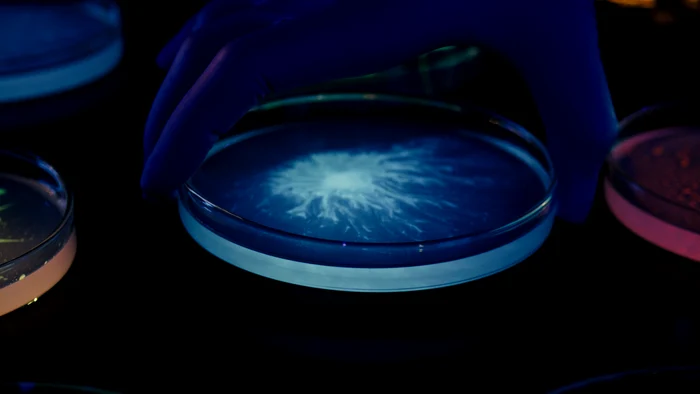
Romania produces research, but fails to transform it into solutions for the economy
“The transformation of Romanian research and its adaptation to market needs are increasingly becoming a strategic need. Without continuous collaboration and coordination, ideas run the risk of remaining in the lab and failing to become solutions for people and companies. Initiatives like Future LAB show that this connection is possible, creating a bridge between research and business. For these projects to work, we need people and institutions trained and anchored to global trends”declares Irineu Darău, the Minister of Economy, Digitization, Entrepreneurship and Tourism, at the launch of the national Future Lab innovation program, which brings together 25 research organizations and proposes an accelerated course of connection with the economic environment, mentoring and applied validation.
Why ideas from the laboratory do not reach the economy
An analysis carried out by Social Innovation Solutions, the organization that coordinates the national program, reveals a major imbalance: Romania does not lack valuable results, but the mechanisms to transform them into products and services.
Researchers point to the lack of collaboration with the economic environment, validation difficulties and limited access to funding as the main obstacles. At the same time, 84% say that aligning research with real market needs is essential.
“The analysis reconfirmed for us a truth that we have noticed in working with the research environment: there is no shortage of valuable results or patents with real potential. What is missing is the bridge between the laboratory and the market – a common language between researchers and industry and concrete mechanisms to make validation possible. Future LAB responds exactly to this need: through skills, connections and applied tools, we build the conditions in which Romanian research can take the step from potential to real impact – in the economy and in society”says Roxana Cojocaru, Executive Director of Social Innovation Solutions.
Basically, without a direct link to industry, research remains theory.
Where does the chain break and what is concretely missing?
The problem is not the lack of ideas, but their transition from the laboratory to reality.
The data shows that most projects stop at the validation phase in the laboratory or in controlled environments (39.5%). The critical threshold is TRL 5 – validation under real-world conditions – where most initiatives stall.
Further, each step towards the market becomes increasingly difficult.
Researchers are clear about why they need real collaboration with industry (96%), assessment of economic potential (92%) and access to public and private funding (88%)
Intellectual property protection and licensing strategies are mentioned by 72%, and communication to non-academic audiences and the business environment by 68%, which shows a clear orientation towards partnerships, the market and the effective presentation of research value.
A major takeaway concerns the path from lab to prototype, testing and market. The typical level of maturation of research results is validation in the laboratory and validation in the relevant environment (39.5%). Also, the comparative analysis shows that TRL 5 (validation in the relevant environment) is the most difficult level to overcome for public research organizations (28%). And each of TRL6, TRL7 or TRL8 is identified as difficult (20%).
What can change in the coming months
In order for the ideas to actually reach the market, the researchers indicate clear steps:
• commercial feasibility assessment (78%)
• additional technical validation (76%)
• partnerships for testing (73%)
• public funding (59%)
• private investments for scaling (46%)
For their part, banks and companies say they need quick and actionable solutions.
Overall, the Future LAB analysis describes an ecosystem that clarifies the priorities and formulates the conditions that the research environment needs to accelerate technology transfer in Romania. Partnerships with industry and society, validation in relevant environments, piloting, interdisciplinary skills and institutional infrastructure are key directions to bring research closer to economic and societal impact.