Fear in the Trump camp. The war in Iran is keeping Republicans awake at night

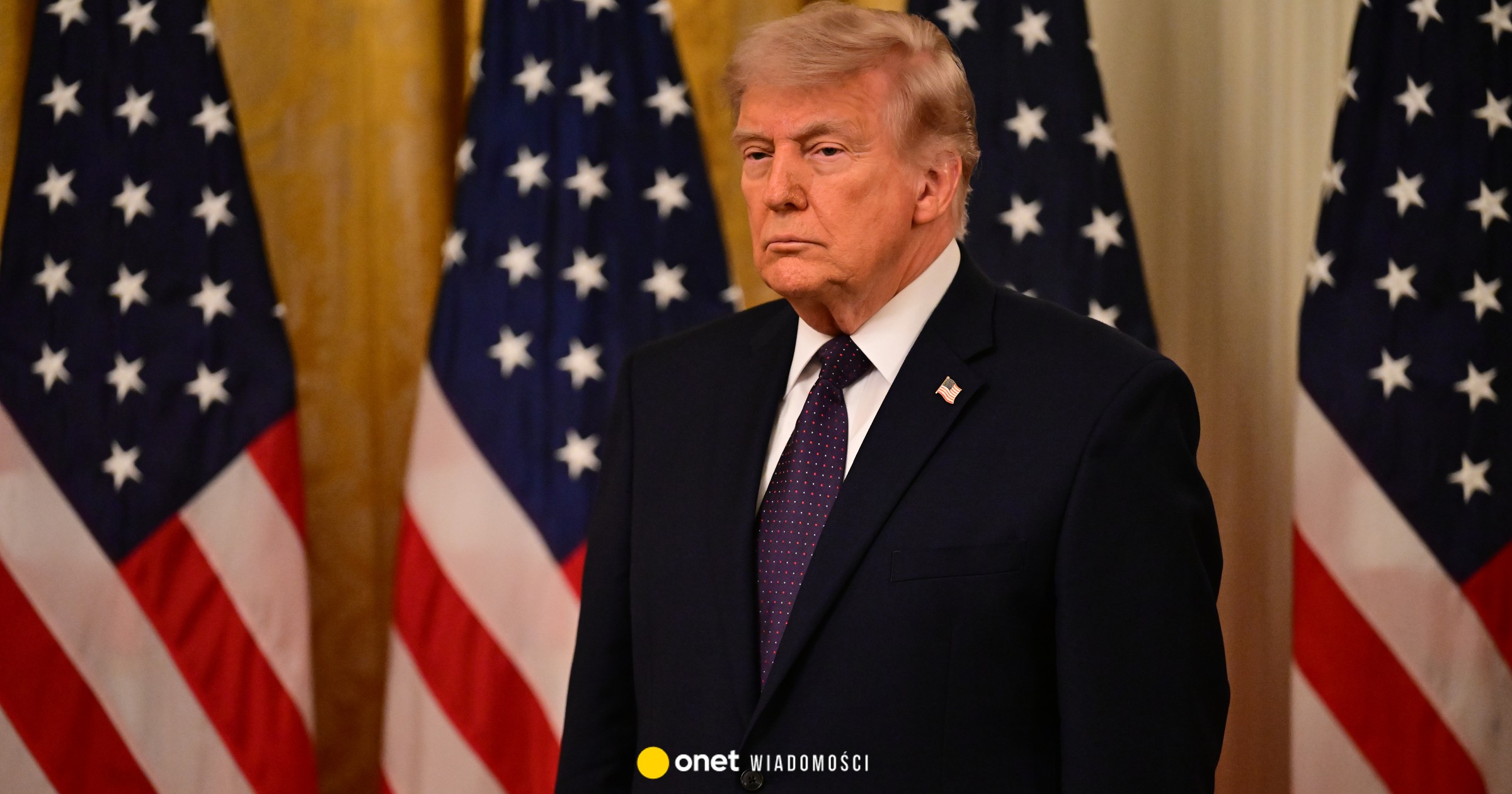
Republicans continue to give Donald Trump more freedom of action on Iran.
They first hoped it would meet the original deadline for ending the war — four to six weeks. Then they gave him 60 days and then until the summer.
Currently, local Republican Party chairmen in key states, campaign officials and strategists agree that the deadline for ending the war should be Labor Day (September 7), according to POLITICO interviews with more than a dozen people.
Although there have been several such dates, the interlocutors claim that this time is different. September is the unofficial start of the election season, when more voters become interested in politics. So the stakes are high.
POLITICO's interlocutors believe that in the face of the growing number of American victims and rising prices of gasoline and fertilizers, the political risk associated with the ongoing war increases as the mid-term elections approach.
“The issue has to be resolved by September 1,” said Dan Naylor, who heads the Republican Party's Lackawanna County chapter, a key House of Representatives district in Pennsylvania. — At this point, we are more focused on the elections and we need to be able to demonstrate a decline in prices.
He adds that he and many other Republicans believe Trump is doing what “should be done” on Iran, and acknowledges that the president is unlikely to set a deadline for an end to action given the complexity of the situation.
“I think voters need some time to see prices come down before Election Day,” said an anonymous Republican Party strategist from Nevada who covers House elections in the most closely contested districts. — If we can sort this out over time, everything will be fine. But if Labor Day approaches and gas is still $5. (PLN 18) per gallon, we will be in serious trouble.
Cracks among Republicans
A senior White House official said on Friday that a tentative agreement with Iran to end the war was close but not final – he put the chances of success at 80-85%. However, the negotiations are accompanied by skepticism. The agreement would bring relief to war-weary Republicans and they believe it will come to fruition. However, this is not the first time that an agreement seemed inevitable, but it did not take place and the war continues.
Fissures in the ranks of the Republican Party have begun to come to light, with some Republicans emphasizing the need to end the war quickly, even as they agree with its initial goals.
Ashley Hinson, a Republican candidate for U.S. Senate in Iowa, admitted at a campaign event late last month that if the war lasted beyond “the next few weeks,” it would become a “political burden.” Sen. Jon Husted, who is running for a term in the key swing state of Ohio, said earlier this month that he wasn't sure how the war would end, but “it has to end.” And Sen. Pete Ricketts, who is running for re-election in Nebraska, said on local radio this week that he wants to reach a “diplomatic solution” to the conflict “as soon as possible.”
In May and June, eight Republican lawmakers sided with Democrats, voting against Trump's war powers [czyli przeciwko jego prawu do wypowiadana wojen bez zgody Kongresu] — these were extraordinary departures from the president's line. This was done by some of the most vulnerable Republicans on the House and Senate electoral maps, such as Maine Sen. Susan Collins, Pennsylvania Rep. Brian Fitzpatrick and Michigan Rep. Tom Barrett of Michigan. (Congressman Thomas Massie of Kentucky and Sen. Bill Cassidy of Louisiana, who also supported the initiative, lost their re-election bids to Trump-backed candidates earlier this year.)
Most of these Republicans, including Congressmen Warren Davidson, Barrett and Fitzpatrick, defended their decision, explaining that it was to defend Congress's authority to decide the duration and scope of military action. Massie has long opposed US military intervention in Iran.
— It would be nice to see more progress in the negotiations, says an anonymous Republican activist involved in the Senate elections. – Goals [wojny] are correct, but of course if this situation continues into late summer or even into autumn, it will be a problem.
The White House did not respond to a request for comment.
Growing concerns
He also said his goal was to seize Khark Island, a key Iranian oil center, in an operation that could put American troops in danger. However, he added that he did not believe that “America has the courage to do this.”
Conservative commentator Tucker Carlson, who wields significant influence over the young wing of the Republican Party, said on his show Thursday that the president “is an unequal commander in chief and is certainly not a diplomat and certainly not a negotiator.”
— What we are unfortunately starting to see are not only the limitations of Trump, but also the limitations of American power – he said. Recently, he has become one of the most famous anti-war voices in the US.
Even if the war ends soon, it could take months for gasoline prices to return to pre-war levels, Republicans and economic analysts warn. And this increases the pressure on Trump to end the conflict as soon as possible.
“Veterans support Trump and what he's doing overall, but the longer this drags on, the more real the economic impact we're feeling becomes,” says Mark Lucas, a Trump ally and founder of Veteran Action. — And that's why we very much support President Trump's pursuit of a peaceful solution [konfliktu] – he adds.
— What good will it do us if September 15 comes and prices drop, but people are ready to vote? says a Republican Party strategist from Nevada.
War without end
Polls show that American support for the war with Iran is decreasing — many say it worsens their financial situation. It's a warning sign for Republicans ahead of the November election, which will likely hinge on voters' concerns about the cost of living. A recent POLITICO poll found that a majority of Americans, including a significant portion of Trump's own 2024 voters, say he has not done enough to protect them from the economic impacts of the war.
A majority of Republican voters still support the conflict, underscoring their continued trust in the president, but the longer the war continues, the more that trust may wane.
– People have short memories. If the problems drag on and become a major issue before the fall, it will be a liability, said Tyler Campbell, a Republican strategist from Iowa. — The urgency is quite high right now, so hopefully a solution can be found.
Since the beginning of the war, Republicans have given conflicting timelines for how long it should last. In March, Trump said the war would be a “short-lived expedition”; he later criticized Americans for their lack of patience, boasting that the war with Iran was much shorter than World War II or the Iraq War.
Republican lawmakers and candidates, faced with increasingly frustrated voters, have been telling them for months that the conflict will end sooner rather than later. In the end, however, it always turns out that they were wrong.
In March, Congressman Juan Ciscomani, running for re-election in his Arizona congressional district, told a local reporter that “everyone wants it to end as soon as possible”adding that this is also his goal. In April, Congresswoman Anna Paulina Luna, who is running for re-election in Florida, said on a podcast that “everything should be over soon.” And in May, Congressman Brad Finstad of Minnesota said on local radio that he hoped the war “would be resolved and ended as soon as possible.”
“We can't fight wars for everyone else,” says Susan Ruch, chairwoman of the Republican Party in Carson City, Nevada. — I don't want this to be an endless war, and I think that the Iranians, if they don't want this form of government, at some point have to figure out how to achieve it.