Dragoș Pîslaru states that thousands of PNRR projects have not materialized. Where does he see a “catastrophe”

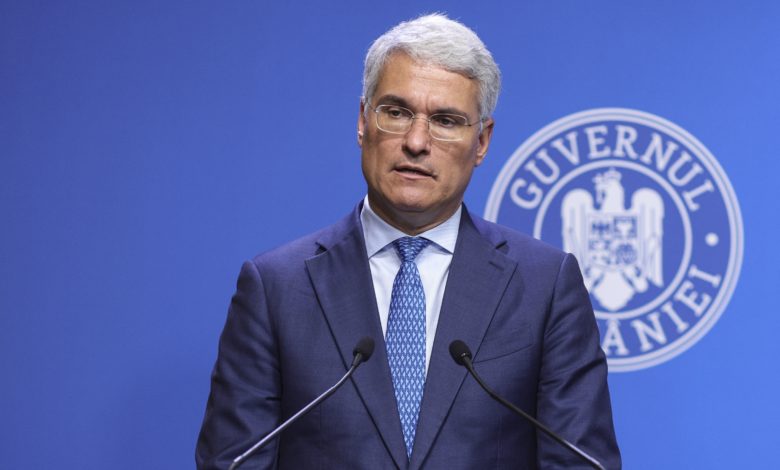
Dragoș Pîslaru, the interim Minister of Investments and European Projects, states that the only way for Romania to modernize is not to rely exclusively on EU funds, but also on the national budget and on investments from the private sector. He makes a gloomy x-ray of the PNRR projects, with European funds, reports Agerpres.
“Romania's choice was to have approximately 21,000 projects in the PNRR. Now we have a stock of 8,000 cohesion projects, very small, very dispersed, very difficult to manage,” Pîslaru said on Friday at the High-Level Conference on Addressing Europe's Labor Shortage and Surplus, organized in Bucharest.
“The only way for Romania to advance is not only to focus on EU funds, but to consider European funds as one third of resources, national money another third, and the private sector the other third. With this 'Trinity' model we can actually have a budget of around 200 billion euros available for the period 2028-2034”, he added.
“It is the only way to advance and through which we can really address problems that are not sectoral, but critical for Romania's development,” the minister emphasized.
Pîslaru, warning also about the employment rate
He also spoke about the main topic of the conference, the workforce.
“The employment rate in Romania is a catastrophe. If you look at the age category between 20 and 64, it is 69%. Romania hopes to reach 74.7% in 2030, against the target of 78% at the EU level. But, there is no specific movement in this direction. (…) This means that almost 40% of the potential people on the labor market are not active. And if we consider migration creates the tension we have now”, he said.
“If we look from the perspective of the employment rate, for men it is 78.2%, and for women 59.5%. There is, therefore, a gender gap of 18.7, one of the largest in Europe”, Dragoș Pîslaru also said at the conference in Bucharest.
He believes that the problem of labor and skills shortages is neither sectoral nor short-term. He stated, in context, that the pressure will increase in the period 2032-2034 when the generation of “decrees” will retire.
“The cost of inaction is actually huge”
“There's no way this country can move forward without investing in human capital. And it's not about spending, it's about investing. It has benefits. And right now, the cost of inaction is actually huge. And we're going to be at a point of no return very soon, especially when you add in the issue of retirement, where a large generation, called the decree generation, is going to retire. That's going to happen in 2032 and 2034. And that's when the pressure will really be on.” huge because there will be a lot of people heading into retirement and the labor market will contract even more,” he said.
According to the organizers, ELA and EURES, labor shortages continue to affect almost all types of occupations in at least one European country. The greatest pressure is felt in health, construction and technical occupations, according to a report by the European Labor Authority.
Overall, the report suggests that Europe no longer only faces short-term labor shortages. In many sectors, the problem is becoming structural and addressing it will require long-term measures, including better working conditions, stronger vocational training and close cross-border cooperation.