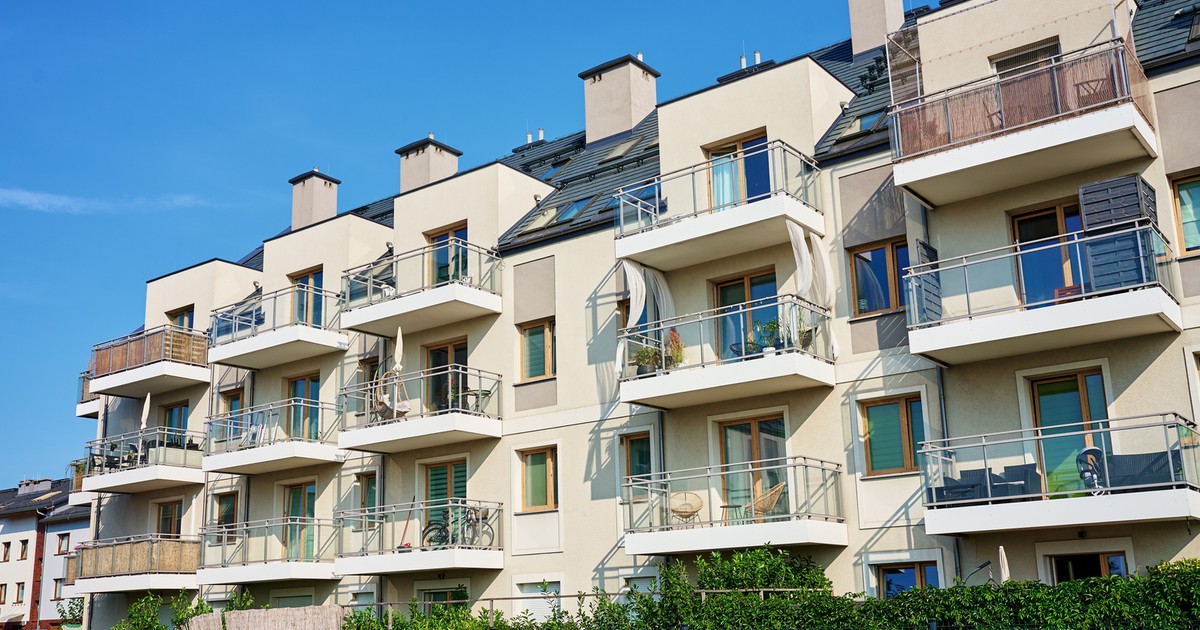
Purchasing on the primary market is first and foremost the prospect of living in a completely new place. As Marcin Drogomirecki, real estate expert of the Morizon-Gratka Group, emphasizes, “the primary market consists of apartments in new buildings, smelling of mortar and paint. These are premises designed in accordance with contemporary trends and the requirements of today's construction law.”
See also: The Polish premium hotel market is growing stronger. These investments will change the industry
Lower maintenance costs and better energy efficiency of new apartments
New buildings are being designed in accordance with current energy efficiency standards. This means lower heat consumption, better insulation and lower bills. Bartosz Turek, a real estate market analyst, points out that “new buildings usually offer better energy efficiency, which translates into lower bills and, in the future, also greater resistance to EU zero-emission standards.”
No PCC – tax benefits in the primary market
When buying a new apartment, the buyer does not pay 2%. PCC tax. This is – especially with high housing prices – a real saving. Turek also reminds that “on the primary market, the notary's bill should be divided between the parties, while on the secondary market, the buyer usually covers it in full.”
Freedom of arrangement and tenant changes
Buyers appreciate possibility of furnishing an apartment from scratch. In the development stage, you can implement the so-called tenant changes: move partition walls, modify hydraulic or electrical points. For many, this is a huge advantage, allowing them to tailor the space perfectly to their needs.
As Daniel Wojda, real estate advisor and owner of Nieruchomości360, notes, “some clients are guided by the possibility of arranging their four walls from scratch – this is a comfort that is often impossible to obtain on the secondary market.”
Disadvantages of the primary market – long journey from purchase to introduction
New investments also bring restrictions that become crucial for some buyers.
Long waiting time to collect the apartment
Purchase of the so-called “hole in the ground” often means waiting for the keys for a year or more. – We have to take into account that the premises will be ready only in a few months, and then we will still have to finish and equip them – reminds Drogomirecki.
For many people, this time becomes a financial burden, especially when they pay rent or loan installments for their current apartment at the same time.
Costly and time-consuming finishing
Finishing a new apartment can take up several dozen percent. purchase price. In addition, there is logistic chaos: teams, materials, deadlines and unforeseen problems. Wojda points out that “frequent problems with the reliability of construction teams and rising prices of materials effectively discourage many buyers.”
The location of new housing estates – far from the center
New investments are most often built on the outskirts of citieswhere land prices are lower. However, the infrastructure there is still developing. Drogomirecki points out that “new housing estates often lack schools, kindergartens or services, and if the investment is multi-stage, you have to take into account noise and dust from neighboring construction sites for years.”
Secondary market – apartments ready immediately and in the best locations
For people who value time and proven urban fabric, the secondary market is a natural choice. Ready-made apartments allow you to move in quickly and often offer a charm that new developments lack.
Location and developed infrastructure – advantages of the secondary market
Used apartments can be found almost everywhere: in very urban centers, tenement houses, blocks of flats from the 1970s or several-year-old apartment buildings. Drogomirecki emphasizes: – Secondary market apartments are available in virtually any location, even where nothing new has been built for years – such as in the Old Town.
Moreover, the area is already fully developed: shops, transport, schools and green areas have been operating for years.
Price lower by several percent. and the possibility of negotiation
On the secondary market, prices are usually 5-10%. lower than in new investments in the same locations. – Most often, the lower purchase price is the reason for choosing the secondary market – says Wojda. He also adds that “the difference between the offer price and the transaction price has increased significantly in recent years, which favors negotiations.” There is usually not such a wide scope for price negotiations on the primary market.
The apartment is ready – refreshment instead of general renovation
Many buyers choose the secondary market because they can move in almost immediately. Turek points out that “second-hand premises often only require refreshing – the costs and time are much lower than the finishing of a developer's apartment.”
Moreover, modern apartments on the secondary market – several or a dozen years old – combine the advantages of new construction with full functionality and a proven location.
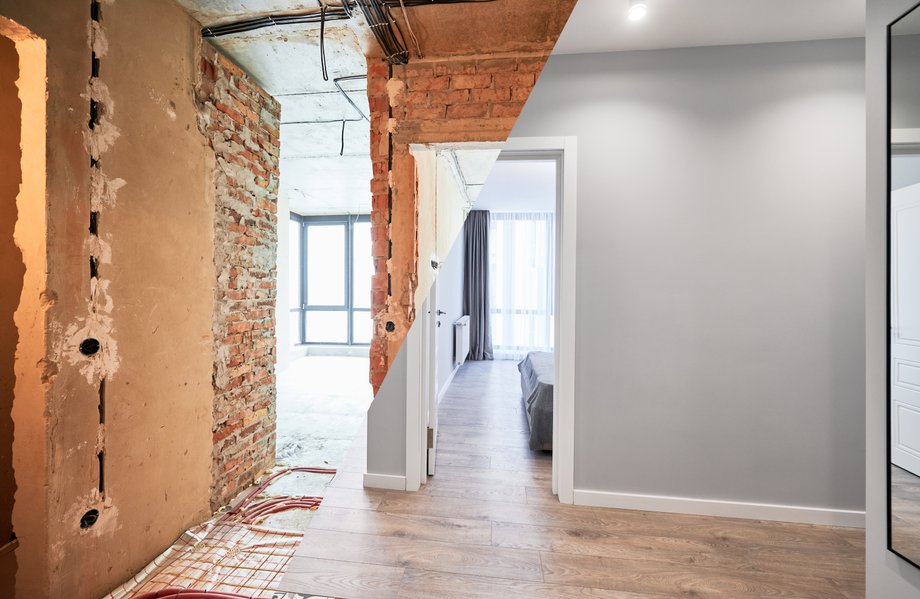
For people who value time and proven urban fabric, the secondary market is a natural choice
|
anatoliy_gleb / Shutterstock
Read also: The Nowa Ruda mine is up for sale. Will the mining tradition survive?
Disadvantages of the aftermarket – PCC, refurbishment risk and technical limitations
PCC tax and no warranty
Buyers on the secondary market have to pay 2%. PCC tax (except for people buying their first apartment). They are also not covered by 5-year protection under the developer's warranty. If defects are discovered after purchase, the cost of repair is the responsibility of the buyer.
Risk of hidden faults and need for renovation
The apartment may look attractive during the presentation, but not disclosed problems only after moving: old installations, moisture, inefficient ventilation or the need to replace woodwork. These are risks that – as Wojda emphasizes – “often encourage customers to choose new apartments, where everything is fresh and covered by a warranty.”
Limitations in arrangement
The layout of an apartment on the secondary market is usually unchanged. Load-bearing walls, risers and installations constitute a permanent element of the building's structure, which means that interventions may be limited or impossible.
Why do Poles so often choose the primary market despite higher prices?
Eurostat data shows that every second zloty spent on an apartment in Poland goes to developers. Turek explains: – The reason for the high share of the primary market is the housing shortage and the standard of the existing stock – he says. The shortage of modern apartments is still felt – Poland has approximately 426 apartments per thousand people, while in many Western European countries the ratio exceeds 560. For this reason, the demand for new apartments will remain high.
Which market should you choose? The decision depends on the buyer's priorities
Experts emphasize that the decision between the primary and secondary markets is a compromise: :
- between location and standard,
- between introduction time and safety,
- between the purchase price and finishing costs.
Wojda notices an interesting relationship: – More and more young couples choose the primary market, guided by modernity and energy efficiency, while seniors and people who value local ties choose the secondary market.
The primary market offers security, modernity and the opportunity to arrange an apartment on your own terms. The secondary market tempts with price, availability and the best locations. There is no one “better” solution – it all depends on the individual needs of the buyer. The most important thing is to approach the transaction consciously and assess which aspects – time, cost, location or standard – are most important at a given moment. Thanks to this, purchasing an apartment becomes a more reliable investment and better suited to future plans.
The material was created in cooperation with Morizon-Gratka Group