The parcels left Cologne towards Ukraine. However, they were clearly not intended to transport goods. Hidden GPS transmitters allegedly recorded every transshipment point and stop on the route through Germany and Europe. According to investigators, the same routes were later to be used to transport incendiary devices capable of causing serious damage.
However, these plans were thwarted in time. From March this year A trial of three alleged agents from Ukraine is underway before the Higher Regional Court in Stuttgart. Germany's federal prosecutor general believes that Russian intelligence services were behind the operation.
For the German security services, this case is part of a trend they have been observing with growing concern for years.
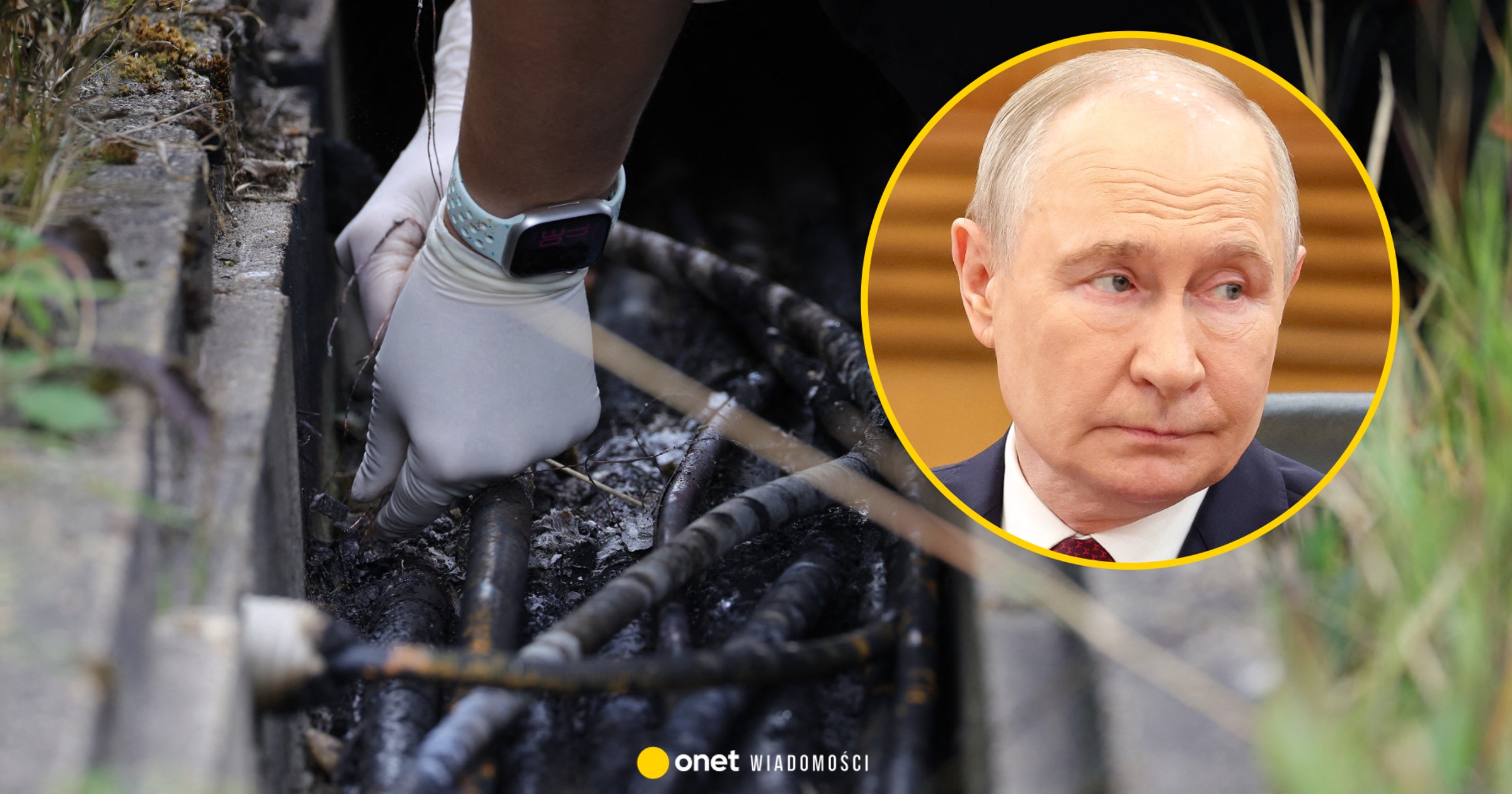
Data and power cables in the Baltic Sea were damaged. Unidentified drones, whose origin is difficult to determine, have been repeatedly spotted over military bases, ports and industrial facilities [w całej Europie]. Disinformation campaigns have emerged on social media platforms that appear to be intelligence-led and aimed at spreading false information.
We publish the text thanks to the courtesy of Die Welt
What may seem like isolated incidents at first glance are part of a bigger picture: a silent war of espionage, sabotage and disinformation.
The German government is now responding to these events by introducing a new security structure. Next Tuesday, the new Joint Center for Defense against Hybrid Threats (GAZ Hybrid) will be inaugurated. The facility will be located at the headquarters of the Federal Office for the Protection of the Constitution (BfV) in Berlin-Treptow. The German Joint Anti-Terrorism Center is also located in the same place. Thanks to GAZ Hybrid, the German security architecture will be adapted to the threat that experts have been describing for years as one of the greatest challenges facing the state, economy and society.
Hybrid threats have long become part of our everyday threat environment. With this new center, we combine the potential of the federal and state governments, police, internal intelligence services and information security authorities. In this way, we secure the stability of our infrastructure and economic base, while protecting our democracy, said German Interior Minister Alexander Dobrindt in an interview with Welt am Sonntag. He added that common situational awareness, information exchange and coordinated actions will strengthen Germany's resilience.
The new center is intended to be much more than just another meeting forum for security agencies. According to the Federal Ministry of the Interior (BMI), cooperation between the participating authorities will be organized in five working groups called Situation Assessment, Operational Information Exchange, Disinformation and Influence Operations, Economy and Analysis and Reporting. The aim is to gather information from across security sectors and develop a common understanding of the hybrid threat landscape.
GAZ Hybrid will not function as an independent agency. Instead, it will serve as a common platform through which federal and national security authorities can directly share intelligence. Participants include the Federal Criminal Police Office (BKA), the Federal Police, national intelligence agencies, national criminal police offices, the Federal Office for Information Security (BSI), the Federal Intelligence Service (BND), the Military Counterintelligence Service (MAD), the General Prosecutor's Office and the General Directorate of Customs.
According to the Ministry of the Interior, the center will support “the effective development of the German security architecture.” Its mission is to detect hybrid threats early, analyze them and improve the coordination of countermeasures. The scope of activities goes far beyond cyberattacks and traditional espionage. Authorities monitor sabotage, disinformation, state-sponsored terrorism, and cross-border repression – that is, the intimidation and persecution of regime critics by their countries of origin. These actions often exceed the threshold of open armed conflict, but can still have serious consequences for the country's security.
The article continues below the video
Germany faces threats that have intensified significantly since the Russian invasion of Ukraine. While a war rages on the battlefield using tanks, missiles and drones, Western intelligence agencies are observing an increase in the number of covert operations targeting European Union and NATO member states. According to multiple security authorities Russia's goals go beyond military benefits. It is also about destabilizing societies, influencing political debates and testing the weak points of Western countries.
Germany, they say, is a particularly important target. It is not only Europe's largest economy, but also a key NATO logistics center and the main military support platform for Ukraine. Troop movements, arms shipments and supply shipments often pass through German territory. In the event of a crisis, Germany is the most important NATO transit country in Europe. This, security experts say, makes the country particularly vulnerable.
For security agencies, however, the real challenge is to connect the pieces of the puzzle. A drone over a seaport, a cyberattack on a government body or suspicious activity around critical infrastructure often seem like isolated incidents at first. Unlike a conventional attack, there is often no clear beginning, no visible enemy, and no defined front line. Cyberattacks can be launched from thousands of kilometers away. Disinformation spreads on social media in minutes. It is often difficult to clearly attribute acts of sabotage to a specific country. Perpetrators deliberately operate in the gray zone between war and peace.
I’m Ashley Davis as an editor, I’m committed to upholding the highest standards of integrity and accuracy in every piece we publish. My work is driven by curiosity, a passion for truth, and a belief that journalism plays a crucial role in shaping public discourse. I strive to tell stories that not only inform but also inspire action and conversation.