Central banks are massively buying gold. Demand remains strong despite price corrections and high interest rates

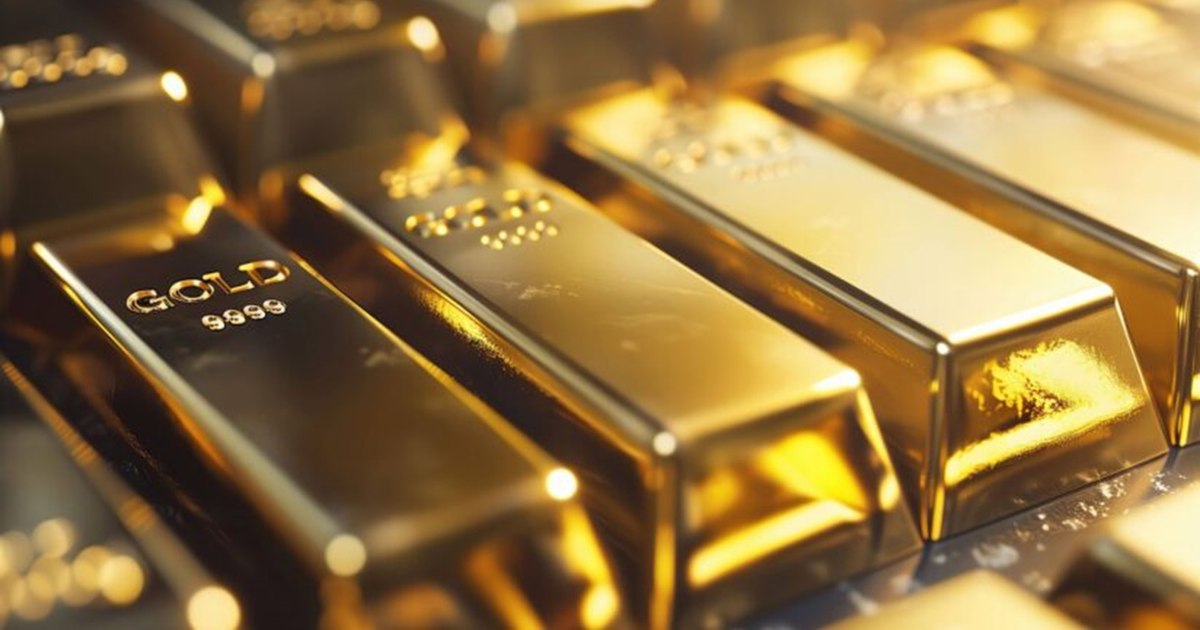
Central banks around the world continue to increase their gold reserves at a sustained pace, reinforcing one of the most important trends seen in financial markets in recent years. Despite the attractive yields offered by US Treasuries and recent corrections in the price of the precious metal, monetary institutions remain steady buyers amid geopolitical uncertainties and concerns about the stability of the international financial system.
Central banks are massively buying gold. Profimedia photo
Data from the first part of 2026 show that gold continues to play a central role in sovereign reserve strategies, even as factors traditionally unfavorable to the yellow metal have failed to reverse the accumulation trend.
Almost 250 tons bought in a single quarter
The evolution of the gold market in the first half of 2026 can be divided into two distinct stages. The first three months of the year were characterized by strong investment demand and the continuation of the upward trend that supported prices in recent years. In the second quarter, the market entered a period of consolidation after quotes went through a correction and investors became more cautious awaiting clearer signals on the direction of the global economy and US monetary policy, according to experts.
In this context, central banks continued to buy gold at a brisk pace. In the first quarter of 2026 alone, they purchased nearly 250 tons. If the current pace holds, total purchases could reach around 900 tonnes by the end of the year, confirming one of the strongest periods of accumulation in recent history.
High interest rates have not dampened interest in gold
The persistence of demand is all the more remarkable as 30-year US Treasuries are yielding around 5.1%, among the highest levels in years. With inflation of around 3.8%, investors benefit from a positive real return, a situation that traditionally reduces the attractiveness of gold.
However, central banks continue to privilege the safety and diversification of reserves. For many states, gold is a strategic asset that does not depend on the economic policies of a particular country and is not exposed to the risks associated with holding financial assets issued by other governments.
“This demand is exactly what has driven the record prices seen in recent years and will continue to be a key element of the long-term bull market for precious metals. The fact that central banks continue to buy gold in a high-interest-rate environment sends an important signal to the market. These institutions are not looking for short-term gains, but are looking for long-term protection and stability in an increasingly volatile geopolitical context.”said Victor Dima, Tavex manager.
The recent correction was fueled by US economic data
After the highs reached at the beginning of the year, gold went through a period of correction. According to an analysis published by Goldprice, one of the most important price pressures came from better-than-expected economic data from the United States.
According to the source cited, the US labor market report for May indicated the creation of 172,000 jobs, above analysts' estimates, which led investors to reduce expectations of further interest rate cuts by the Federal Reserve. Following the release of the data, gold fell more than $125 an ounce intraday, falling to around $4,340 an ounce, the lowest level in three months.
Goldprice analysts say markets have interpreted strong data from the US economy as a signal that the US central bank could keep interest rates high for longer, reducing gold's near-term appeal.
The relaxation of geopolitical tensions reduced part of the risk premium
Added to the pressure from economic data was a temporary easing of geopolitical tensions. According to the same Goldprice analysis, the 60-day extension of the truce between the United States and Iran helped reduce some of the geopolitical risk premium that had supported gold near the $4,500 an ounce mark.
Although the effect on the market has been visible, analysts stress that a temporary easing is not enough to remove investors' concerns about global geopolitical stability. Further, regional conflicts, economic fragmentation and risks associated with global supply chains are factors supporting interest in gold.
China, Poland and India continue to accumulate reserves
Among the most active central banks are still those of China, Poland and India. These countries have steadily increased their gold reserves in recent years as part of strategies to diversify assets and reduce dependence on the US dollar.
For many emerging economies, gold is seen as a hedge against external shocks and a way to build long-term financial stability.
The trend is also confirmed by a recent report by the European Central Bank (ECB), which shows that gold has become the most important reserve asset worldwide.
At the end of 2025, about 27% of central bank reserves were held in the form of physical gold, up seven percentage points from the previous year. At the same time, the share of US Treasuries fell from 25% to 22%, while euro-denominated assets maintained a share of around 15%.
The data reflects a significant change in the structure of global reserves and confirms that more and more countries consider gold a strategic asset in a period of economic and political uncertainty.
The lessons of 2022 continue to influence the market
One of the factors that accelerated this trend was the freezing of part of Russia's foreign reserves in 2022. For many states, that episode demonstrated that financial assets held in foreign jurisdictions can be affected by political decisions and international sanctions.
Since then, gold is increasingly viewed not only as a hedge against inflation, but also as a form of defense against geopolitical and macroeconomic risks.
“High interest rates aren't just a competitor for gold. They also raise another question: Why do the world's largest economies have to offer such high yields to attract capital? For many investors, this is increasingly perceived as a signal of risk, not stability.”Victor Dima added.