The CSM “indictment”. Over 3,500 judges denounce “an unprecedented attack in the post-revolutionary history of Romania” and name those who criticized the judiciary

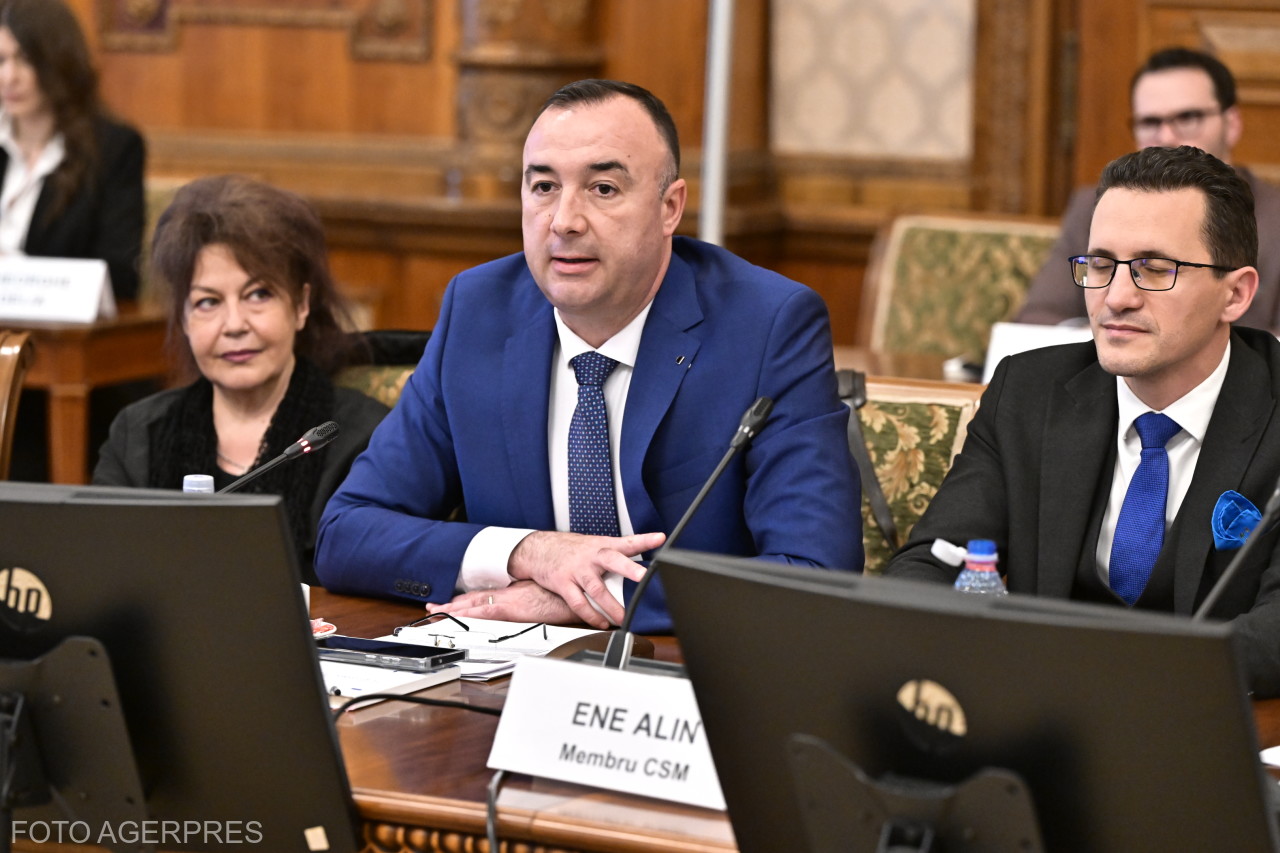
Several politicians, NGOs, and publications are accused by the Superior Council of the Magistracy of running a campaign to discredit the judiciary in the last year. The SCM names the “culprits” in a more than 70-page document, saying it has the support of 3,580 judges. The approach is unprecedented.
- The Superior Council of the Magistracy published on Wednesday the decision of the Section of Judges, by which it found “the existence of an unprecedented attack on the independence of the judiciary” and also decided to refer international institutions. In the 76-page document, the CSM details the entire crisis period and makes a list of “culprits”.
- The CSM says that this decision was based on the consultation of all 239 courts in Romania, which met in general assemblies, and 3,580 judges – 98% of those present, which represent 84% of the total – denounced “the constant degradation of the rule of law in Romania through the sustained attempt to subjugate the judiciary by the political power”.
- For the first time since the initiation of the phenomenon of prescriptions, which caused extensive debates in the public space, the CSM also comes with clarifications and says how many files have been closed. The judges of the CSM point the finger at the prosecutors and accuse that many of the files were already time-barred when they arrived in court.
The judges accuse “an operation to destroy the reputation of the entire justice system”
“Starting from July 2025, the judicial power is subject to an unprecedented attack by the political power represented by some of the parties in the governing coalition, by launching an operation to discredit, to destroy the reputation of the entire justice system as a whole, likely to affect its functioning, started by denigrating and insulting individual judges, especially those with high management positions (the president of the high Courts of Cassation and Justice, presidents of the Superior Council of the Magistracy, members of the Council, presidents of some courts or even judges without leadership positions), accentuated by the propagation of untruths related to the retirement system of the magistrates, followed by the amplification of a campaign through accusations of corruption and systemic abuses”, reads the decision published on Wednesday by the CSM.
The Council states that the decision was adopted with the support of 3,580 judges, representing 84% of the total number of judges serving as judges in Romania, who participated in the general assemblies and “denounced the constant degradation of the rule of law in Romania through the sustained attempt to subjugate the judiciary by the political power”.
“List” of politicians, NGOs and publications accused of “demonizing” justice
The Superior Council of the Magistracy accuses that the judicial power has been demonized during the last year through “disinformation media campaigns against the fundamental institutions of the judicial power” and “through the excessive exposure of some trials in the press with the aim of incriminating the persons and institutions mentioned above, and not by pointing out some legislative issues not imputable to them”.
The Council complains about the Government's measures to change the status of the magistrate without effective consultation, as well as the legislative proposals regarding retirement and salary, arguing that the judicial power is placed at the level of some “public officials at the local level (city hall), without taking into account the rank of the judicial power”.
“The campaign was based on constantly repeated lies by a part of the coalition today at
governance, especially by the political part under the authority and influence of the prime minister,
their media vectors, as well as NGOs that are traditionally associated with the messages
to them:
The judges of the CSM point to “politicians of the governing coalition, especially from USR and PNL” as the authors of the campaign to denigrate justice.
The prime minister is also invoked, but without giving his name:
“The campaign was based on constantly repeated lies by a part of the coalition today at
governance, especially by the political part under the authority and influence of the prime minister,
their media vectors, as well as NGOs that are traditionally associated with the messages
them”.
Dominic Fritz, president of USR, Ana Birchall, former minister of justice, former adviser to the president, former adviser to the prime minister, Dominic Fritz, Cristian Ghinea (USR), Laurenţiu Ştefănescu (USR) and other USR members, as well as former investigative journalist Ionel Stoica, are listed. Several of their posts on social networks are indicated in the CSM decision.
Deputy Prime Minister Oana Gheorghiu, Ruben Latcau (Deputy Mayor of USR Timisoara), Diana Mardarovici, PNL councillor, Cătălin Teniță (USR) complete the list.
In this decision, which the CSM says it will also communicate to international bodies, the Council also complains about the “malicious attitude of a part of the media” and gives G4Media as an example, accusing that in the last year the publication wrote 405 “negative” articles about justice. The Recorder publications, through the documentary “Captured Justice”, and PressHub also appear on the list.
About the Recorder documentary: “A new episode in the concerted campaign against judges”
The Recorder documentary is also criticized, the Council referring to the CSM decision of February 5, which established that “none of the accusations presented in the press material entitled “Captured Justice”, aimed at influencing the solutions handed down in the criminal cases of the Bucharest Court of Appeal, were confirmed by the checks carried out”.
The CSM accuses that the Recorder documentary was “a new episode of the concerted campaign carried out recently against judges” and that it was aimed at “discrediting them and the taking over by the political factor of control over the judiciary”.
NGOs, criticized for protests
Three non-governmental organizations, Declic, Funky Citizens, Corruption Kills) are accused in the CSM decision of having organized protests with the support and direct involvement of politicians, members of a party in the governing coalition, close to the prime minister.
“During these demonstrations, the president of the High Court of Cassation and Justice and the president of the Superior Council of Magistracy were demonized and presented in caricature, explicitly. Placards, printed banners and materials (logos, etc.) were used,” the Council complains.
Over 12,000 prescribed files
In the ruling on the defense of the independence of judges, the SCM also addressed the issue of the prescription of criminal liability, a phenomenon that has affected the judiciary in recent years.
Against the background of the debates generated by the issue of prescription, the Superior Council of Magistracy made an analysis with the object of centralized statistical data from all Romanian courts regarding the files in which the decision to terminate the criminal process was ordered as a result of the intervention of the prescription of criminal liability
Following the analysis and centralization of the data after June 2022, sent by the courts, 12,531 files were identified in which the solution to terminate the criminal process was pronounced as a result of the intervention of the limitation of criminal liability, covering 14,584 crimes.
“A first statistical finding of indisputable legal relevance is that, for a number of 3,079 crimes (21.11%) of the total analyzed, the statute of limitations for criminal liability had already expired when the court was referred. This means that in more than a fifth of all cases, the courts had no contribution to the expiration of the statute of limitations, because it had already expired at the time the file was submitted to them forwarded for resolution, and the exclusive responsibility for these cases rests entirely with the criminal investigation phase. In addition, for 878 crimes (6.03%), the prosecution was ordered after the content of the CCR Decision No. 358/2022 was known and it was obvious that the limitation period was to be fulfilled in the next period, preferring that this be ascertained during the trial phase, and not during the criminal investigation phase.” specifies the CSM.
Thus, accuse the judges of the CSM, “the formal solution to terminate the criminal process was publicly entrusted to the courts, although the files had practically spent the entire relevant duration of the limitation period in the criminal prosecution phase”.
“In public perception, the court thus became the apparent owner of the responsibility for the prescription, although the statistical analysis proves that it intervened, in reality, against the background of the almost complete consumption of the term in the stage before the trial”, the CSM decision also states.
The council also says that, although solutions were given to terminate the criminal process as a result of the intervention of the prescription of criminal liability, the courts ordered the recovery of damages, the total amounts being 400,000,000 euros.
“The independence of the judiciary is not negotiable and cannot be the object of political experiments or forms of obtaining easy electoral gains. When judges become vulnerable to the pressure of political power, it is not the magistrates who lose first, but the citizens, who are left without the most important guarantee of their fundamental rights and freedoms. An intimidated or subordinate judiciary no longer belongs to the rule of law, but represents the first step towards its abandonment”, concludes the CSM in the decision regarding the defense of independence.
The full decision of the CSM can be read here.