
Russia, affected by sanctions, is earning more and more thanks to high oil prices, but this does not mean that its economy will soon accelerate dramatically, according to an analysis by Goldman Sachs.
Read also: The war business is swelling. The value of the ten largest companies exceeded one trillion dollars
Russia is making money from the closed Strait of Hormuz
On Tuesday evening, futures contracts for Brent crude oil, the international price benchmark, were trading around $92. per barrel – approx. 30 percent higher than at the beginning of the war with Iran. This is a favorable situation for Russia, the world's third largest oil producer and exporter after the United States and Saudi Arabia.
Unlike many other oil exporters Russia does not depend on the Strait of Hormuz for shipping its supplies. Thanks to this, the energy giant has become one of the few beneficiaries of the recent disruptions on the global oil market.
The problem, however, is that the Russian economy has little room to expand production further, limiting the impact of additional oil revenues on economic growth, Goldman Sachs economist Clemens Grafe wrote in a note on Tuesday.
“Despite weak growth and the availability of financial resources to stimulate the economy, we do not foresee a demand-driven acceleration” wrote Grafe.
Goldman Sachs forecasts that the Russian economy will grow by only 0.9 percent this year. This means a slowdown compared to the growth rate of 1%. and 4.3 percent in 2024 and 2025.
Still, the additional oil revenues are significant.
Read also: The cheapest and largest market in the world. How to start making money from China's growing power? [ANALIZA]
More money, poor economic growth
Goldman estimates that Russia's current account surplus – a broad measure of trade and income flows between the country and the rest of the world – will almost double from 1.7%. GDP in 2025 to 3.2 percent GDP in 2026
Public finances also benefit. According to Grafe, each increase in the price of oil exported by Russia by $10. increases budget revenues by approximately USD 21 billion.
But additional cash does not translate into faster economic growth.
“There is no significant unused production capacity in Russia,” the economist wrote.
The labor market remains extremely tight, with unemployment remaining near record lows. Productivity growth has weakened, and a approximately 2 million workers are no longer available on the labor market due to military service, war losses or emigration related to the war in Ukraine – Grafe estimates.
As a result, pumping more money into the economy is unlikely to lead to significant increases in the production of goods and services. Instead Russian policymakers may view additional oil revenues more as an inflation threat than as an opportunity for faster economic growth.
“Higher energy prices will not remove the underlying constraints to growth,” Grafe wrote.
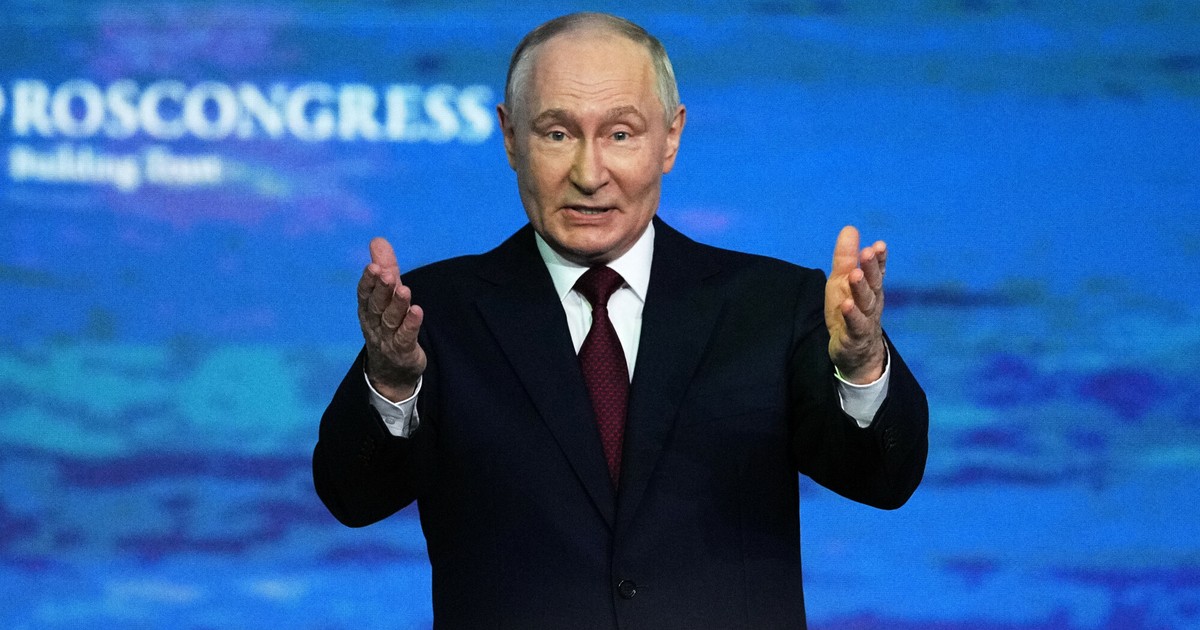
In April, Russian President Vladimir Putin criticized top officials after the country's economy contracted earlier this year. He demanded that proposals be presented for “additional actions aimed at reviving growth.”
In January, Putin ordered a “significant increase” in the efficiency of tax collection and tax compliance this year as the economy stagnated.
The above text is a translation from the American edition of Business Insider


