What is the “Dragon's Eye”, the unique natural phenomenon that attracts thousands of tourists from all over the world to the top of a mountain in Japan

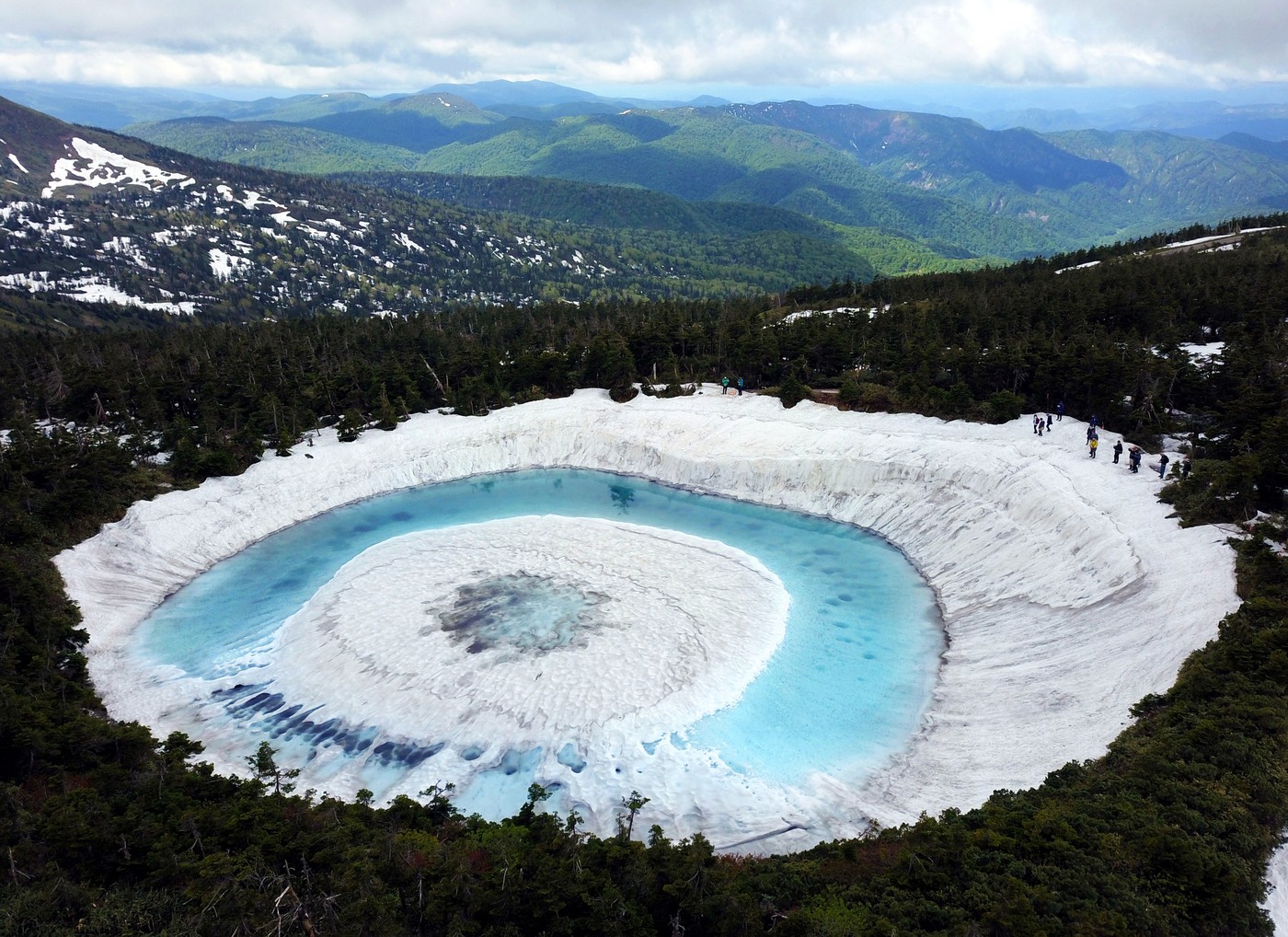
A peculiar phenomenon draws curious people from all over the world to northern Japan in late spring, when the snow begins to melt on the 1,613-meter peak of Mount Hachimantai, located on the border between Iwate and Akita prefectures.
The appearance of the so-called “Dragon's Eye” is a sign that summer is approaching, according to the Japanese government agency that promotes the Land of the Rising Sun as a tourist destination.
Towards the end of May, Lake Kagami-numa, located near the summit of Mount Hachimantai, begins to thaw, but this happens unevenly.
The outer part of the lake melts before the center, leaving an island of snow in the middle. This phenomenon combined with the rays of the sun that make the water reflect the clear blue sky gives the feeling that the lake begins to resemble the eye of a dragon.
The “Dragon's Eye” is only visible for about two weeks, from the end of May to the middle of June, and is among the unmissable sights of Hachimantai.
The lake on Mount Hachimantai can be reached by car or bus up to near the top, then after just a 15-minute walk tourists can see the azure blue eye of the dragon.
Photojournalists from news agencies immortalized the phenomenon, but also tourists who go to Kagami-Numa during this period to see the “Eye of the Dragon”.