The US and UK are rotting from the inside. Overthrowing leaders won't change anything

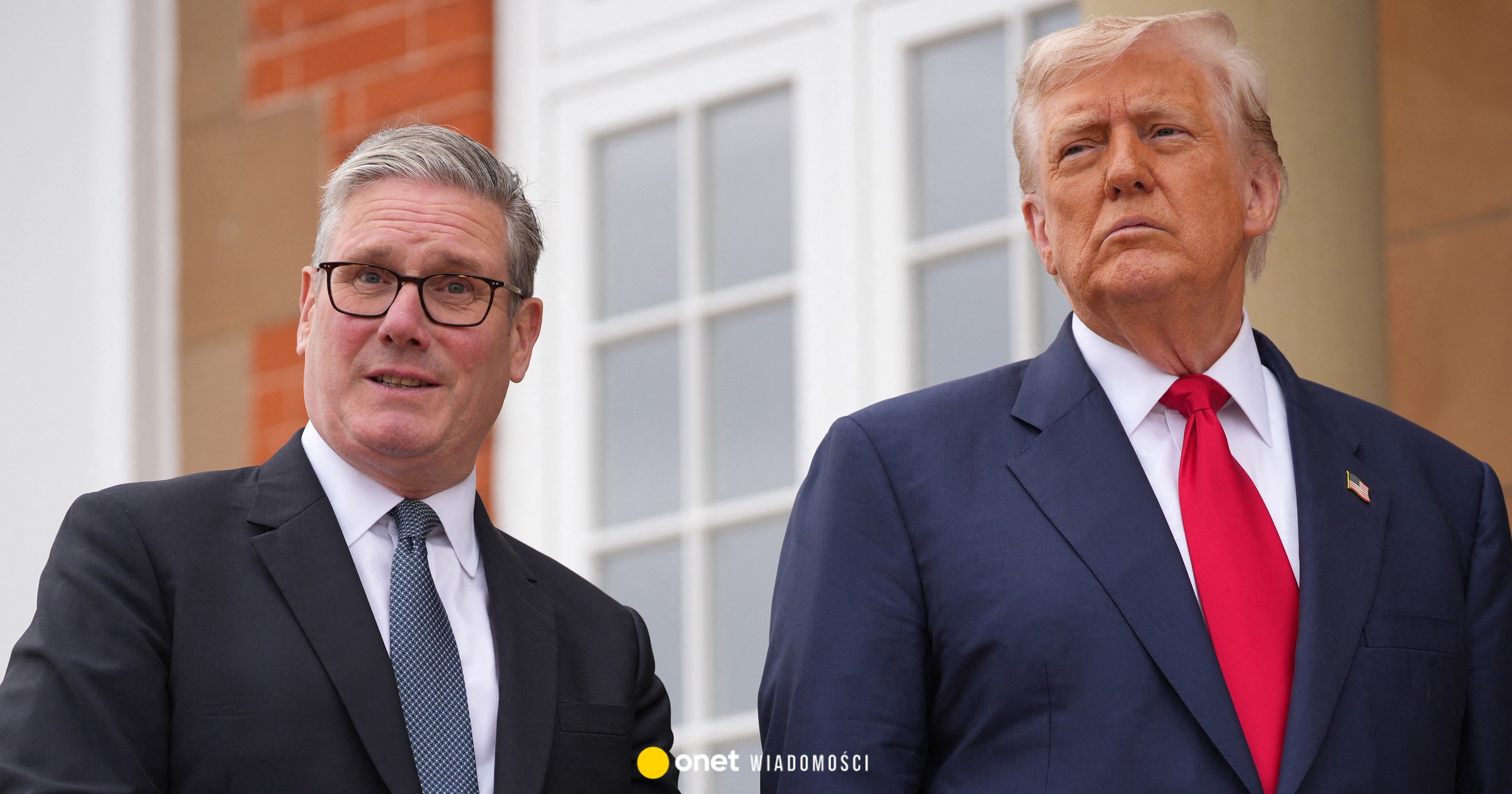
People will never associate Donald Trump and Keir Starmer in the same way as the political duos of Ronald Reagan and Margaret Thatcher or Bill Clinton and Tony Blair. However, both may be remembered as having left behind the same legacy – showing that their countries are in desperate need of cleansing.
Starmer faces a revolt within his own party (Labor) and may be removed from power by a man who is not yet even a member of Parliament. And if Trump had submitted to a secret confidence vote conducted by senators from his party (the Republican Party), he would likely have suffered a similar fate.
The British Prime Minister and the American President are also unpopular with general voters in their countries. Their predicament, however, is not just a reflection of the downfall of a lackluster lawyer and a rampaging reality TV star, which is a coincidence, but rather of a deeper rot in the UK and the US.
There is a crisis of confidence in both countries. A decade ago, voters resorted to extreme measures: Brexit in the United Kingdom and Trump in the United States. However, none of these forms of political shock therapy brought salvation, much less proved to be a panacea.
As a result, these two flagships of Western democracy keep changing their captain.
In the decade since [referendum dotyczącym] Brexit, the British had five prime ministers [sześciu, jeśli liczyć Davida Camerona, który ustąpił ze stanowiska w 2016 r. na skutek referendum]and a sixth may join them later this year [siódmy]if Manchester Mayor Andy Burnham wins the by-election at the end of the month and becomes Prime Minister. By comparison, in the 30 years before Brexit, the UK had just four prime ministers.
PAUL ELLIS / POOL / AFP
Andy Burnham
Americans will soon have three consecutive single-term presidents. At least one chamber of Congress has changed hands in every federal election since 2018, and that streak is likely to continue this November.
Voters in both countries are impatient, irritated and deeply skeptical of traditional leaders and almost all major institutions.
Wealth gaps continue to widen, and technology has simultaneously accelerated cynicism and expectations. People want a quick solution to the high cost of living, and when they don't get it, their distrust grows, leading to subsequent choices that only restart the “wash, rinse, repeat” cycle.
And now comes the AI revolution, which, as Democratic strategist James Carville notes, is “the perfect topic for our times.” Why? Because the AI is screaming, “They're going to f*** me off,” says Carville, who worked on elections in both countries. “They” in this case means the same powerful, yet amorphous (shapeless, difficult to define) forces that are blamed for society's remaining ills.
Those reading this might think I'm too pessimistic.
Well, in healthy countries there is no situation where only 17 percent citizens trust their government, the Pew Research Institute found last year regarding Americans. Nor is there a situation where nativist groups openly demonstrate on the streets of the capital in the tens of thousands, as was the case in the UK when far-right activist Tommy Robinson and his supporters appeared in London (of course, a proud but defensive Briton may point out that multiple assassination attempts on the president are not indicative of a well-functioning society, nor is the surprisingly widespread belief that these events were staged).
The governments in both countries have become tragicodies.
Starmer's Labor Party happily watched the Conservatives descend into chaos, producing four prime ministers in eight years. But the same factional divisions and voter resentment that plagued the Tories are now consuming Starmer. Those jokes about Prime Minister Liz Truss not lasting [na stanowisku] longer than a head of lettuce, won't seem so fun if the next potential tenant at 10 Downing Street, Burnham, loses this month's by-election and Labor goes back to square one.
Ten years after Britain voted to leave the European Union, the country remains just as dissatisfied and divided. Any long-time observer of British politics can recite the reasons, as many did when I was there last month: the lack of real economic growth, stagnant wages and the turmoil caused by successive waves of Covid, wars in Ukraine and now Iran.
Added to this are more subtle but undeniable cultural divides over immigration and identity that have fueled the populist backlash. Not only has Brexit failed to make Britain great again, it has only deepened public cynicism. The economy did not recover. And while separation from the continent may have made migration more difficult for the Polish plumber, it did not stop the influx of non-white Muslims whose arrival radicalized central England.
Just look at the reaction of the right in the Brexit decade: from Boris Johnson to Nigel Farage to, now, Rupert Lowe and his Restore party, which believes that Farage's Reform party is too lenient on immigration. Not to mention Robinson and his shock troops waving Union Jack and St. Patrick's Day flags. George as subtly as American segregationists once raised the banner of the Confederacy. You may deride Lowe and Robinson as representatives of the far right, but the richest man in the world, Elon Musk, does not disregard these two – he helps finance them.
There is perhaps no better evidence of deeper structural problems than Starmer's fall, less than two years after his party returned to power. He lacks charisma and vision, but is as harmless and phlegmatic a character as possible. But it has become the epitome of inept government, drawing so much ridicule and contempt that I had a hard time understanding it until a bright political science student explained it to me: They're algorithms, stupid.
Smartphone culture, which former U.S. Sen. Lamar Alexander calls “digital democracy,” has accelerated and brutalized politics, distorting the culture of incentives for elected officials and the press trying to keep up with change, while pushing ordinary voters deeper into isolation.
Burnham, if victorious, will face the same fundamental challenge as Starmer. But before Farage starts cheerfully raising a pint, he should consider his own challenge that awaits him in 2029, when the next general election must be held. If Labor could be torn apart in local elections, wouldn't the Reform Party suffer the same fate if Farage took on the burden of leadership and tried to forge an electoral coalition between working-class Labor defectors, ex-Tories and the fringe Restore faction?
This brings us back to America.
As my country approaches 250 years of independence from the Crown, it faces a similar dilemma as our British cousins. In fact, this is the same powerlessness that both sides faced half a century ago, in the year of the bicentennial of American independence.
We can't seem to get inflation under control, no matter who is in power, and traditional voter skepticism is turning into nothing-is-right nihilism.
Trump felt the effects of the former – an overprice crisis made worse by a war of his own choosing – and saw his approval ratings plummet to 30 percent. But he benefited from the latter – everyone does it! — because the frauds of his friends and family are either ignored or excused by shrugging voters.
But just as the untamed British Isles seem to be crying out for massive structural change in the style of the 1976 International Monetary Fund crisis, America seems to be heading for reforms in the style of those that followed the Watergate scandal. Voter gerrymandering, campaign financing, an out-of-control executive branch all beg for a deep clean-up.
The difference between the current situation and that 50 years ago, however, lies in the voters themselves. Vietnam and the Watergate scandal disillusioned Americans, but the post-World War II media and cultural consensus continued to dominate.
Now it's all fragmented, and the results scream in neon letters: patriotism, religion, having children, community involvement – the arrow points down over the last 30 years as voters are asked which values are very important to them.
Both major U.S. parties have benefited from voter desperation and the bonding power of negative partisanship in a two-party system that rewards the opposition with new power every two years. However, this also means that neither party is able to maintain a lasting, united government. There is no question of a mandate when a significant part of the country sees politics as a matter of identity and will therefore never vote for the other side.
Through his personality and conduct, Trump united the Republican Party and, just as importantly, he did the same for Democrats.
But reshaping the Republican Party in his own image has created challenges for the party he will leave behind. Just as Farage is now finding it difficult to contain a movement built on grievance, Trump's potential heir will have difficulty forming a coalition with Bush-era Republicans, MAGA enthusiasts and a far-right that is isolationist, nativist and anti-Israel.
As my colleague Alex Burns noted last week in his column about a former reality star running for mayor of Los Angeles [chodzi o Spencera Pratta znanego z programu “Wzgórza Hollywood”]the biggest threat to JD Vance may not be a former Republican, but an entertainment wing candidate created on the internet and for the internet.
Such a candidate might achieve results similar to the reality star's performance in the first round of the mayoral election, but the difference is that Vance will need these far-right voters in the general election.
At the same time, he will need traditional Republicans who are outraged by Trump's behavior. You know this type of voter.
But enough about Republican senators.
Seriously though, 2028 is shaping up to be a tough year for the Republican Party, and not just because Trump chose to spend most of his second term focusing on vanity projects and cleaning fountains while Americans paid over $4 a gallon for gas.
Democrats will try to take advantage of all this simply by… not being the latter. That's the same way they won in 2020 and in almost every election without Trump on the ballot in the last decade.
This could work, and they could regain full control of the government in 2029, when America, ironically, could raise the banner of Western liberalism should Britain, France and Germany fall to the far right.
But I don't need to tell you how this story ends — and what could easily happen in 2032 if Democrats fail to address the country's fundamental inequities and tame tribalism.
Just ask Keir Starmer.