Decisive parliamentary elections for the future of Armenia. Armenians decide to turn to the West or depend on Russia

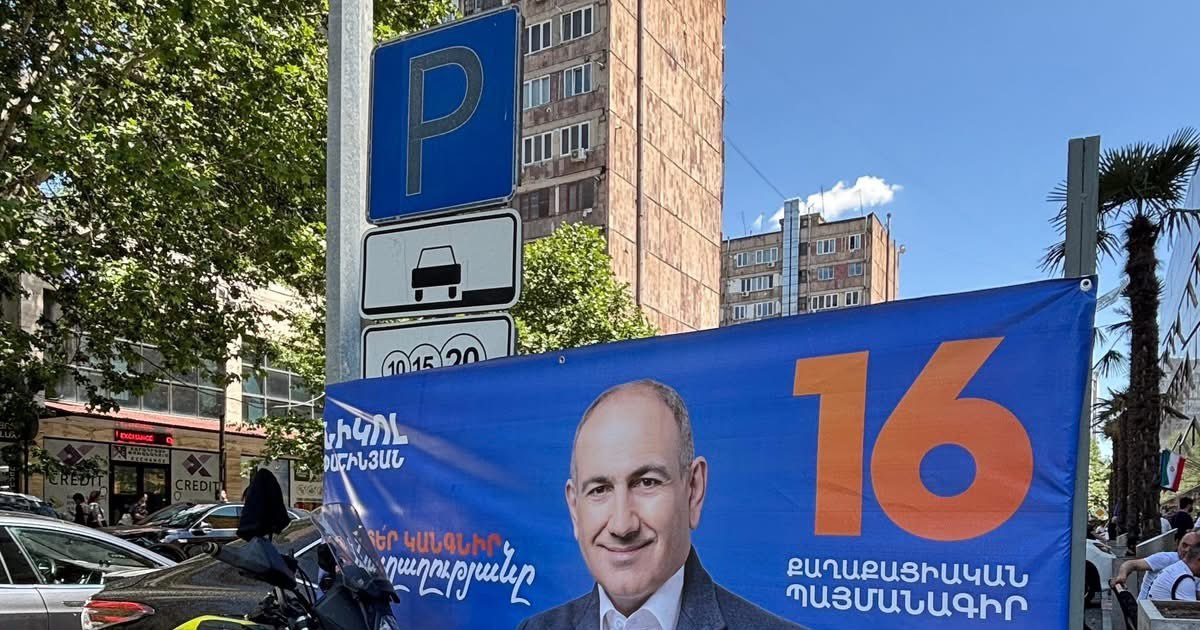
The citizens of Armenia started voting on Sunday, June 7, in the parliamentary elections considered crucial for the strategic direction of the country. The stakes of the election go beyond internal political competition, with the opposition presenting the vote as a real referendum on the policy promoted by Prime Minister Nikol Pashinian, which aims to reduce dependence on Russia and strengthen relations with the European Union and the United States.
The main favorite remains the ruling party “Civic Contract”, led by Nikol Pașinian
According to Bloomberg, the outcome of the election will show whether Pashinian will receive a new mandate to continue the process of reorienting Armenia to the West, at a time when relations between Yerevan and Moscow are going through one of the most tense periods in recent decades.
The polling stations opened at 8:00 a.m. and will close at 8:00 p.m., with the first results expected during the evening. 18 political formations compete for at least 101 seats in the National Assembly. The electoral threshold is 4% for individual parties, while electoral alliances must obtain between 8% and 10% of the votes, depending on their composition.
Almost 2.5 million citizens have the right to vote. In the view of the opposition, the election is a test of the future of Armenia's foreign orientation and its positioning between Moscow and its Western partners.
The main favorite remains the ruling party “Civic Contract”, led by Nikol Pașinian. His opponents include the “Strong Armenia” bloc, led by Russian-Armenian billionaire Samvel Karapetian, and the “Armenia” alliance, led by former president Robert Kocearian.
Karapetian advocates maintaining close relations with Russia, Armenia's main energy supplier and one of the most important markets for Armenian exports.
In recent years, Pashinian has promoted an increased rapprochement with the West and a progressive distancing from Russia, long considered the main guarantor of Armenia's security. This change of direction caused the displeasure of the Kremlin. At the same time, the prime minister is criticized internally by a part of society, which accuses him of making too many concessions in the peace negotiations with Azerbaijan.
Opinion polls show a clear lead for the “Civic Contract”, credited with up to 32% of voting intentions. In second place is the pro-Russian formation “Strong Armenia”, with approximately 11%.
The Armenian Prime Minister also benefits from external support. US President Donald Trump has expressed his support for Pashinian, the leader who came to power following the 2018 Velvet Revolution.
Against the background of Yerevan's approach to the European Union, Russia last month began to introduce restrictions on some imports from Armenia. In response, Brussels increased financial support to the Armenian government and eased some of the trade restrictions on Armenian products.
In parallel, Armenia would play an important role in a new regional infrastructure project. The transport corridor named “Trump Route for International Peace and Prosperity” is designed to connect Azerbaijan with the Nakhichevan exclave. Armenia's involvement in the management of this route would create significant economic interests for the United States in a region of major strategic importance.
Before the elections, there were also accusations regarding Moscow's possible involvement in the electoral process. According to Reuters, Western intelligence sources and government officials claim that the Kremlin is conducting disinformation campaigns in favor of pro-Russian candidates and is preparing to mobilize large numbers of Russian-Armenian citizens to participate in the vote.
The messages sent by Moscow in recent months suggest that Armenia can no longer continue the policy of balancing East and West. Trade restrictions, energy pressures, information campaigns and support for pro-Kremlin political forces are turning the current election into a decisive test of Russian influence in the South Caucasus.
In this context, the parliamentary elections in Armenia are being closely watched both in Moscow and in Western capitals, as their outcome will influence the geopolitical balance in the region for years to come.