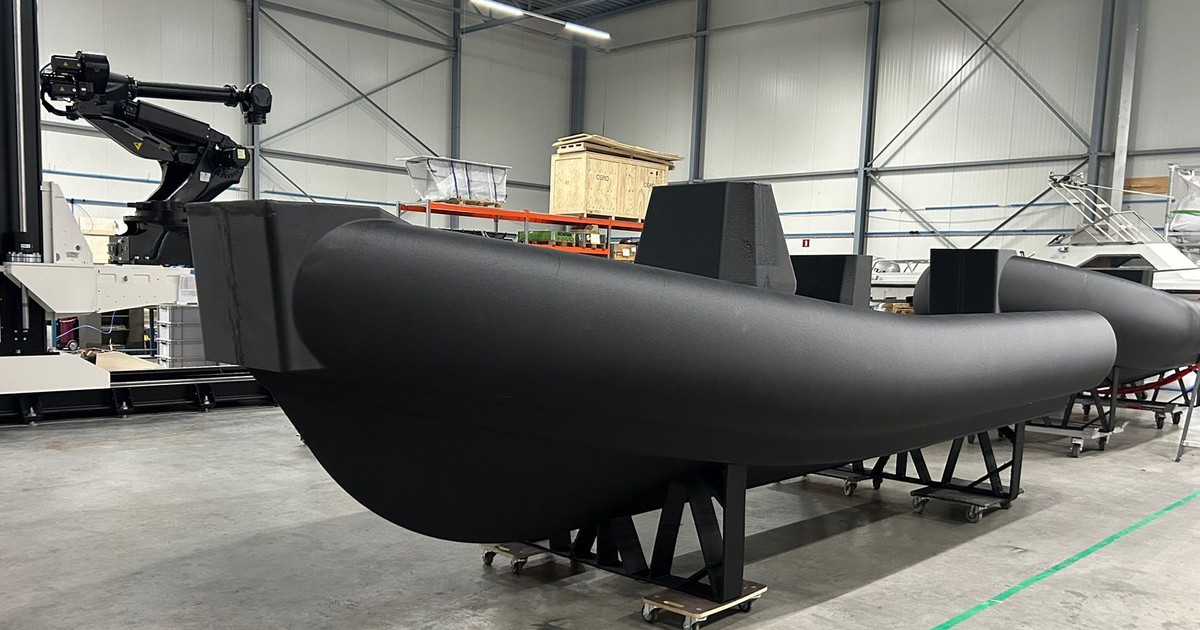
Solutions based on 3D printing are increasingly finding their way into the defense sector, but most projects focus on the production of single components. Hawaiian start-up Voltage Vessels wants to go a step further. The company submitted its design for a six-meter hard-bottom motorboat hull (RHIB type, for Rigid Hull Inflatable Boat) for evaluation by the US Department of Defense, which was printed from basalt using a large-format 3D printer and additive manufacturing technology.
For clarification: additive technology (additive manufacturing, AM) is a method of producing objects through adding material layer by layeraccording to the digital 3D model. The most famous example of additive technology is 3D printing. In comparison, traditional production methods are often subtractive – they involve removing material from a larger element, for example by milling, turning or drilling.
additive printing – 3D
|
The International Journal of Advanced Manufacturing Technology
The hull was printed on an industrial printer
- Used for the production of the hull large-scale additive system developed by the Dutch company CEAD. Devices of this type are already used by various contractors operating in the defense market to produce large composite structures, including elements with sizes corresponding to the hulls of vessels.
- Read also: Elon Musk ignites investors' imagination. We can see a great flight of capital
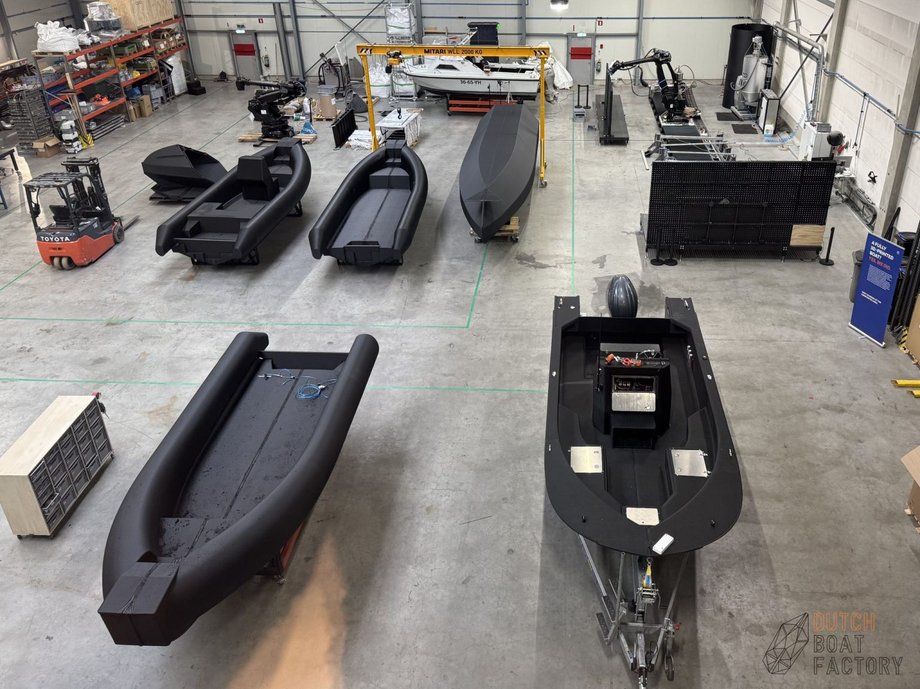
Various 3D printed RHIB boat hulls
|
C.E.A.D
CEAD is a well-known company that has been operating on the market since 2014. The company set itself the goal of transferring 3D printing technology, which was then used mainly in desktop printers, to industrial applications. The systems it has developed enable the production of components for the shipbuilding, automotive and even space industries.
Although CEAD had previously created solutions enabling the printing of individual elements of a boat, only now has it been possible to develop a technology enabling the production of the entire hull. New device, named Faber Navaliswas presented at Formnext 2025 at the end of last year.
It is the first comprehensive solution ready to implement which allows for the automated production of heavy, industrial boat hulls using 3D printing technology.
- Read also: Investors are betting on AI. 24 stock exchange giants on the verge of being overbought
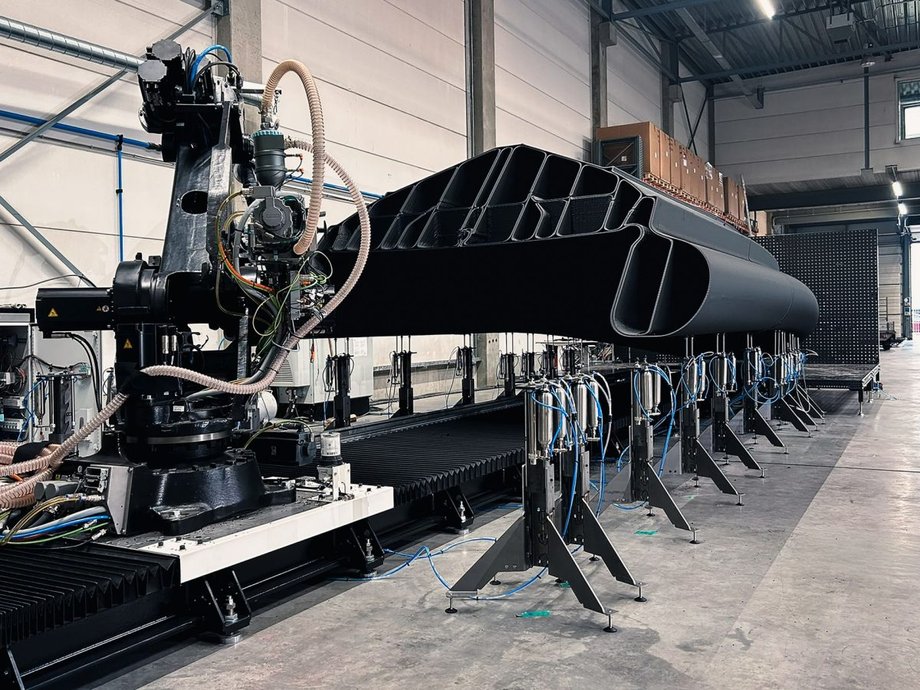
Cross-section of the hull of a RHIB boat printed in 3D technology
|
C.E.A.D
Voltage Vessels
According to the company's founder, Sam Young, his project is based on two basic assumptions.
The first is to demonstrate that it was developed by the enterprise Eclipse X9 material offers better mechanical parameters and higher resistance to marine conditions than currently used composites for 3D printing.
The second is to prove that it is digital hull production in dispersed plants throughout the Indo-Pacific may be more efficient than the traditional model of building units in permanent American shipyards and then transporting them to their destinations.
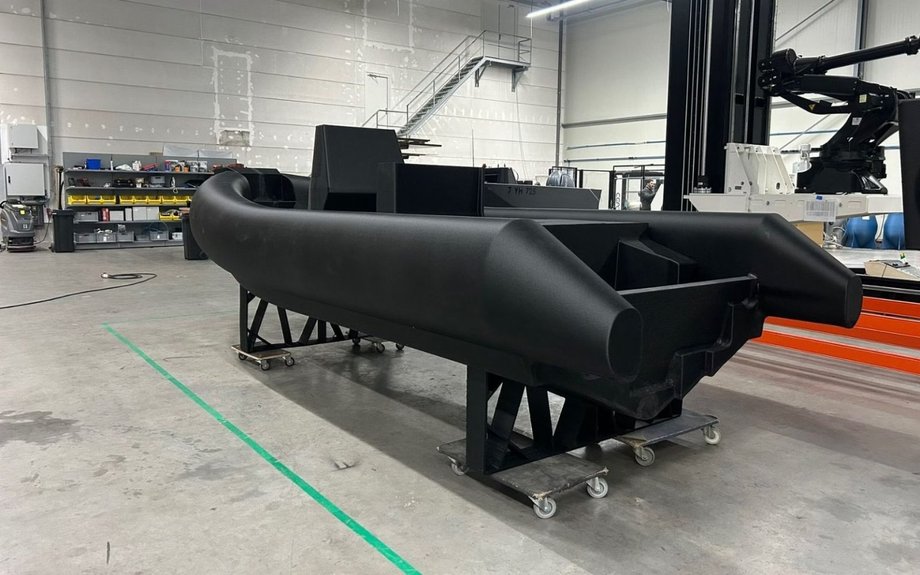
RHIB boat hull 3D printed in the factory
|
Voltage Vessels
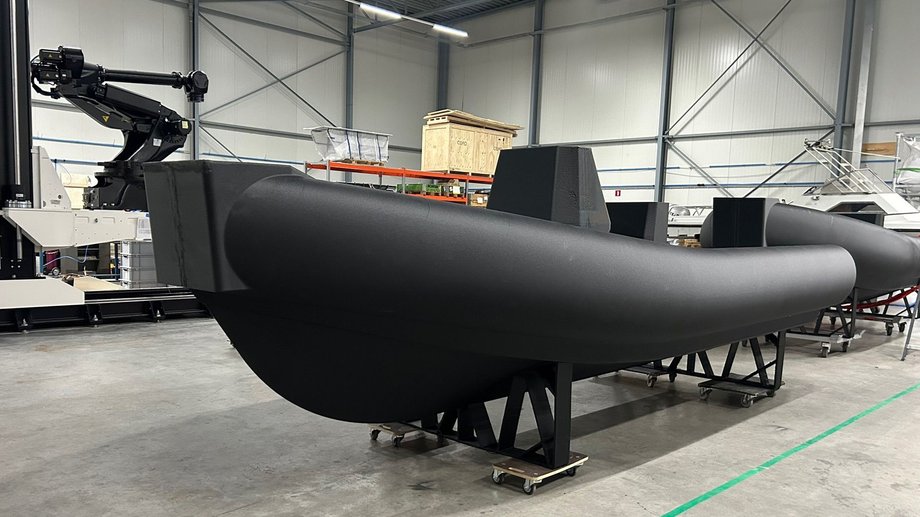
The hull of a 6-meter RHIB boat printed in 3D technology
|
Voltage Vessels
Eclipse X9 – Composite of basalt and recycled PETG plastic
However, the key element of the start-up's project is the original material Eclipse X9. The composite is made from combination of recycled PETG plastic and chopped basalt fibers.
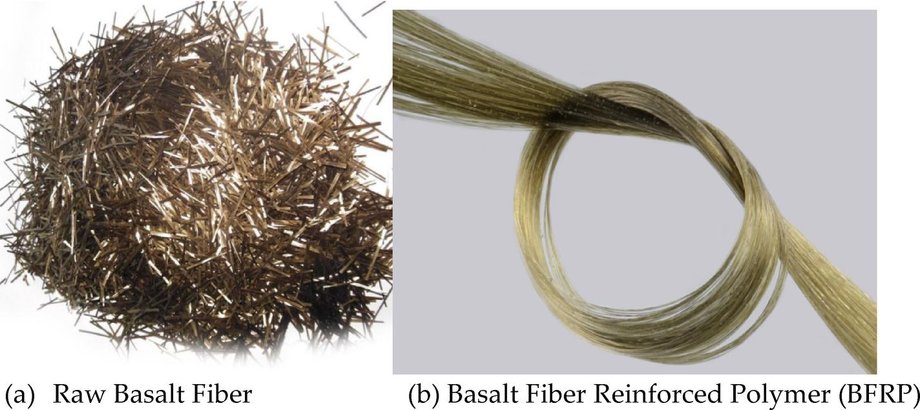
Raw basalt fiber and basalt fiber reinforced polymer
|
nature.com
Basalt is a rock of volcanic origin, esp common in Hawaiiwhich is additionally consistent with the local nature of the project.

Basalt colonnades in a solidified lava flow along the Wailuku River on the island of Hawaiʻi
|
James Anderson/UH-Hilo
The material was developed both in the form of a filament and granulate intended for large-format 3D printing systems.
- Read also: Chinese giants reach for people from OpenAI and Google. This is a new strategy in AI
Endurance test results
The properties declared by the manufacturer have been verified by a facility at the University of Maine. Tests have shown that the tensile strength in the direction of the printing layers reaches approximately 108 MPa. In the direction perpendicular to the layers, this value was 36.5 MPa.
For comparison, HDPro, an established composite material for printing marine vessels, achieved 49.2 MPa and 9.7 MPa, respectively. This means that Eclipse X9 has more than twice the tensile strength in the print axis and almost four times the strength between layers.
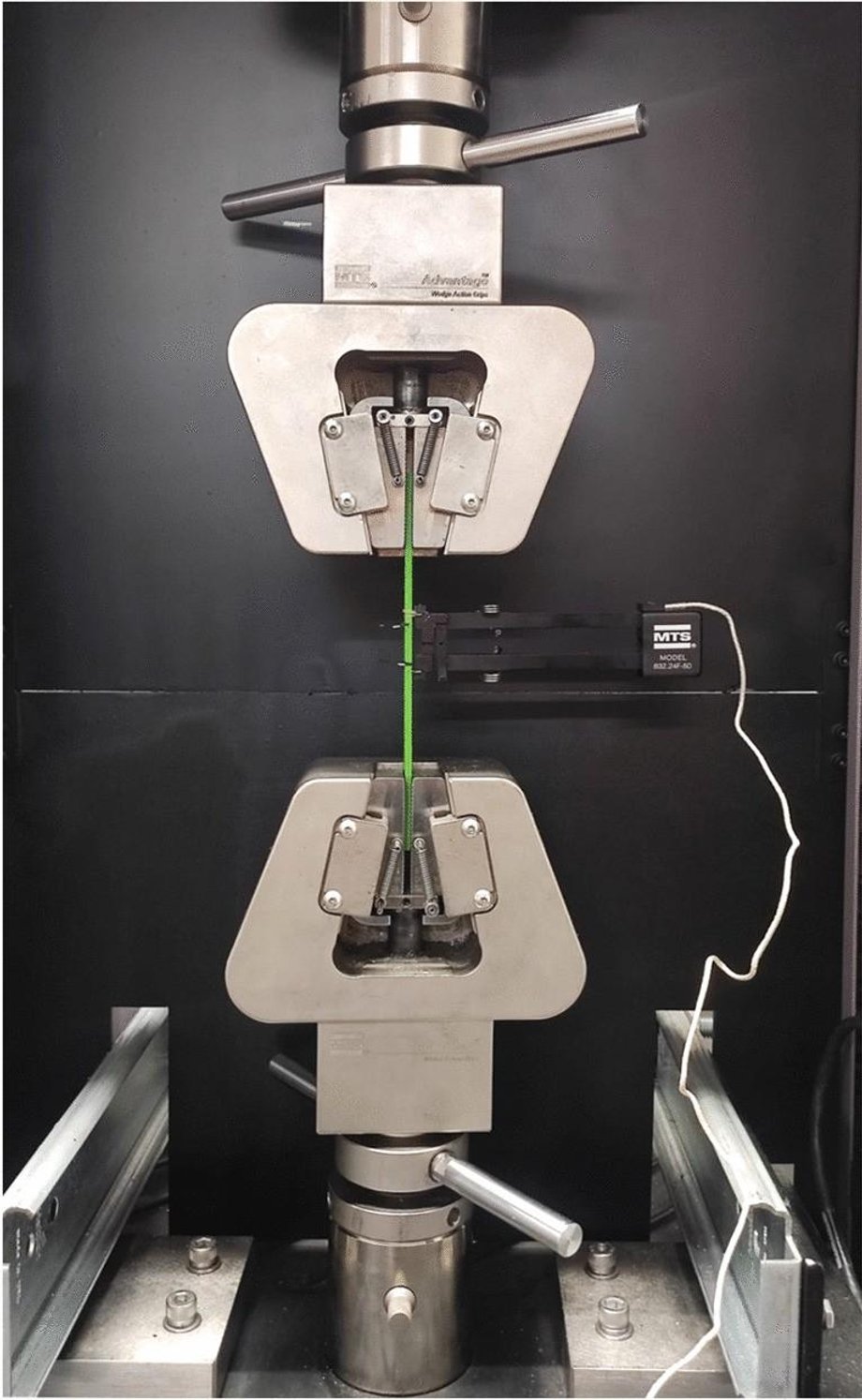
Tensile test of 3D printed samples
|
researchgate.net
Bending tests were equally favorable. The bending strength in the main load direction reached 112.98 MPa. For comparison, a common alternative – PETG composite reinforced with wood – achieved a result of 60.40 MPa. Meaning that Eclipse X9 provides more than twice the flexural strength.
Resistance to the marine environment was also an important element of the research. After 24 months of continuous immersion in salt water the material has retained over 90%. its original properties endurance. At the same time, water absorption remained below 0.4%.
Radio properties
The creators of the project point out that the advantages of the material are not limited only to mechanical parameters. Basalt fibers do not conduct electricity, therefore Eclipse X9 is characterized by a low dielectric constant. In practice this means this limited reflection of radar energy and less impact on radio signals used by autonomous surface units.
- Read also: They will clean your apartment for free. On one condition
This is important for the systems responsible for navigation, communication and the operation of on-board sensors. This may constitute significant operational advantage compared to structures made of aluminum or carbon fiber. However, the company emphasizes that a full assessment of the material's radio transparency for specific frequency ranges is still subject to further analysis.
Distributed production instead of transporting ready-made hulls
The company also promotes an alternative model of production organization. Instead of building the units in plants located in the continental United States and then transporting them across the ocean, the company proposes creation of a network of regional production hubs located in the Indo-Pacific area.
In such a model hulls would be printed locally directly from uploaded files with the project, using locally produced Eclipse X9 material. The company declares that the potential production capacity of the system can be scaled to 15,000. tons of material per year.
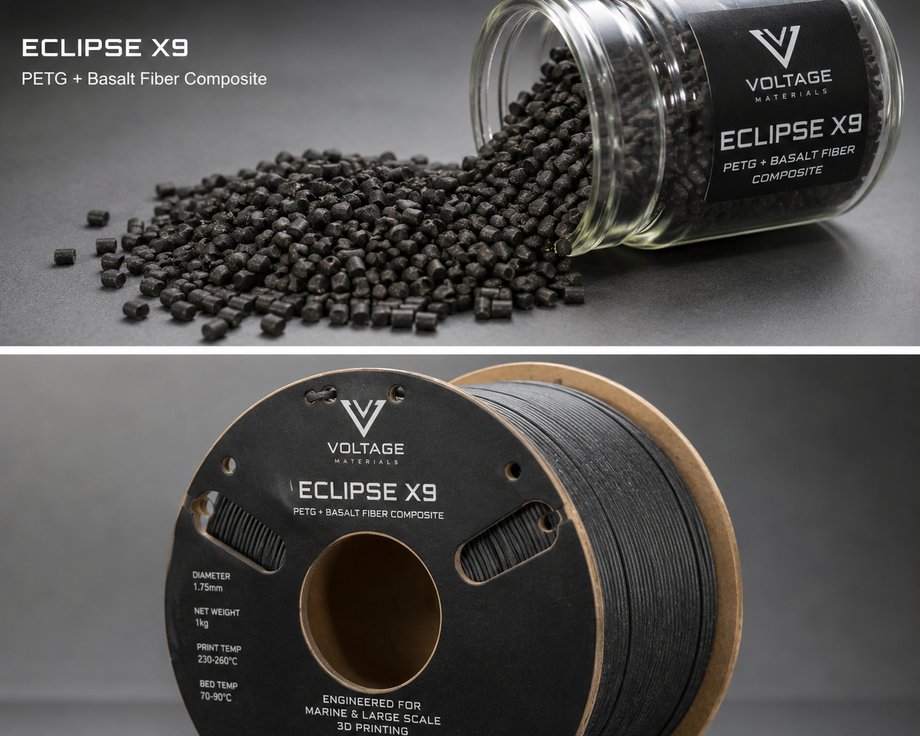
Eclipse X9 granules and a spool of filament
According to the company, such an approach could significantly shorten delivery times, simplify logistics and increase the resilience of supply chains in strategically important regions.
The US Navy is increasingly relying on additive technologies
The Voltage Vessels project is part of the… a broader trend observed in the US defense sector. Interest in additive manufacturing methods is no longer solely the subject of research, but is reflected in specific programs financed by the military.
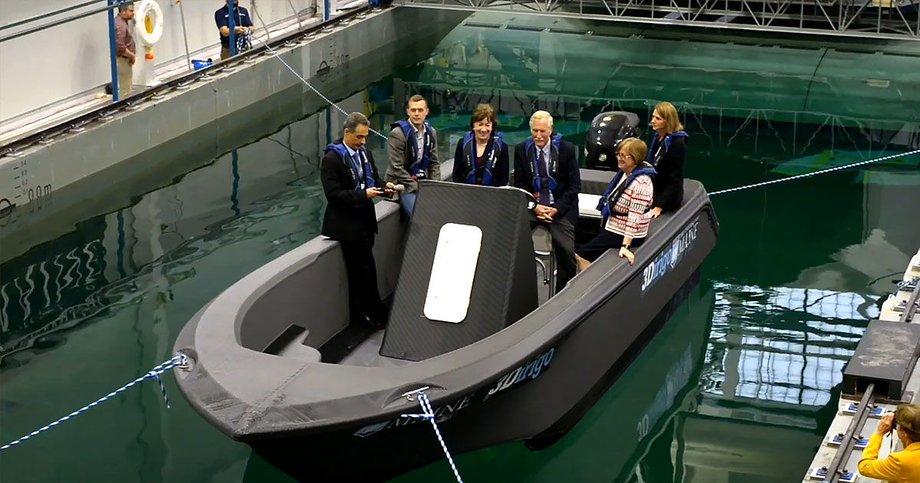
In 2019, the world's first 3D-printed boat took to the water
|
Off the Hook Yachts
Recently, Blue Ops started cooperation with HADDY, a company specializing in robotic production systems. The aim of the project is to integrate large-format 3D printing with the process of building military-grade unmanned surface units. According to the partners' assumptions, the implementation of this technology will allow for even doubling the current production capacity.
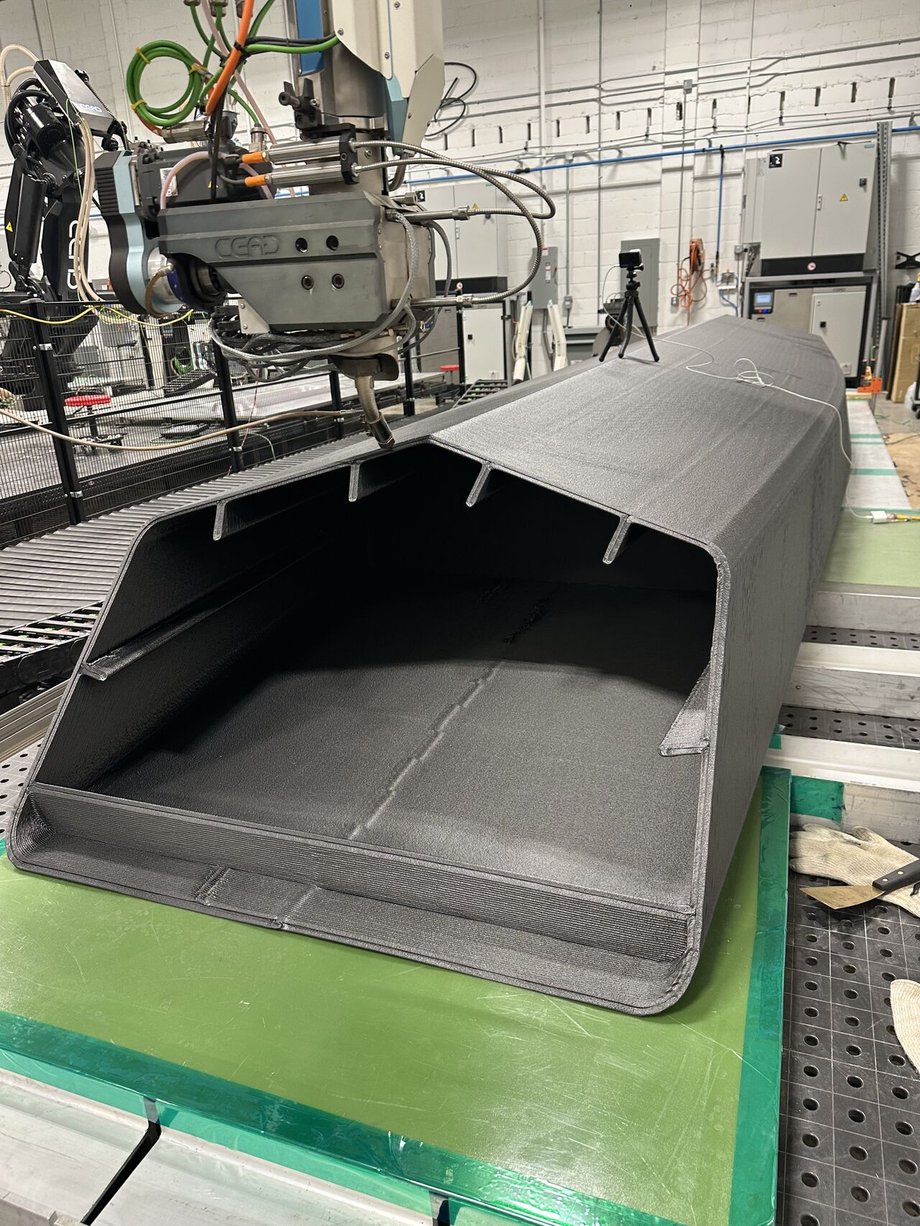
HADDY – from the design phase to the sea trials phase in 9 days
|
HADDY
Voltage Vessels is responding to the same signal from the defense market, but with a focus not on individual parts, but on entire ship hulls.
Entire hulls instead of just components
This difference could be crucial for the future of the project. The US Navy previously issued a letter of intent to AML3D, presenting a plan to deploy even 100 large format 3D printers for metal under the Maritime Industrial Base program.
The initiative aims to achieve a production capacity of approximately 1,600 additively manufactured components per year by 2030. However, this program focuses on parts and components, not full-size vessel hulls.
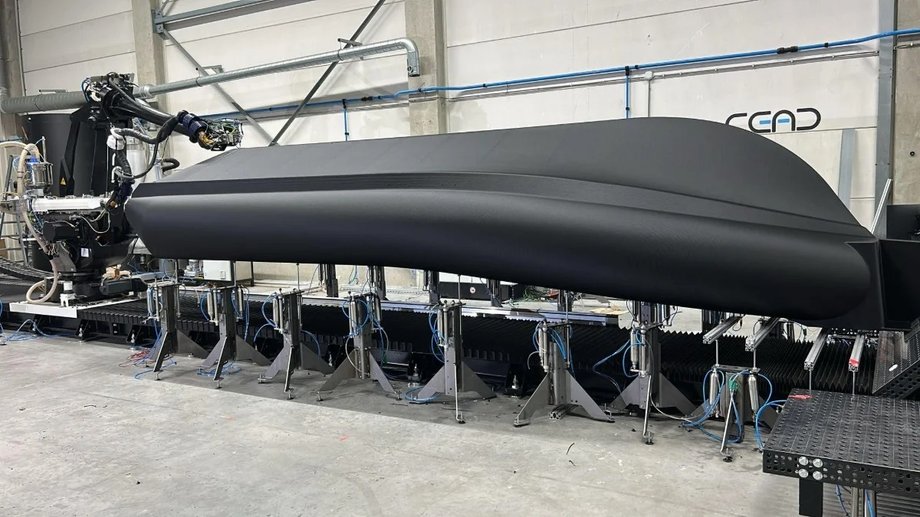
Inverted RHIB boat hull with printing robot arm
|
Voltage Vessels
In practice, this means that Voltage Vessels is expanding a solution ahead of the current direction of major investments Navy in additive technologies. Ultimately, however, the success of the project will be determined not only by technology, but also by the readiness of the military procurement system to implement such a production model.
For now, it is not known whether fully 3D printed hulls will find their way into actual purchasing programs of the US defense sector. If that happens, then could mark the beginning of a significant change in the way light naval vessels used by armed forces are designed, manufactured and delivered.