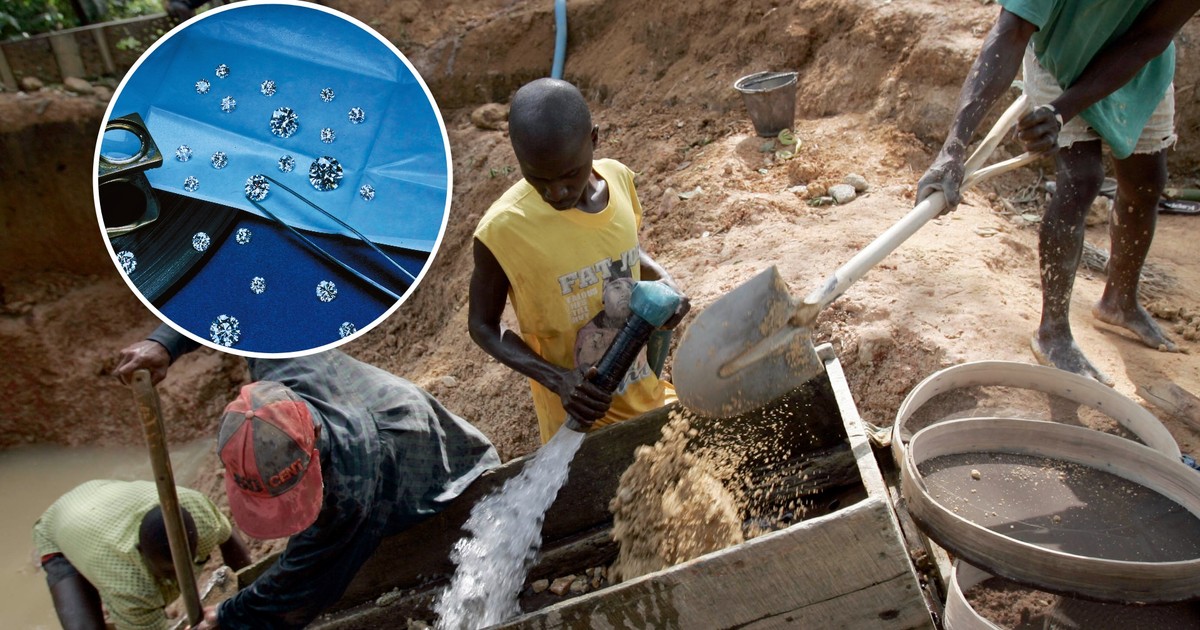
In the Kono region of Sierra Leone, where diamond mining has fueled the local economy for decades, the situation has changed dramatically. More and more residents, like Daniel – a foreman in one of the informal mines – are looking for their luck in the mud, often with no results. “I haven't made much money doing this yet. Sometimes you don't get anything all year, he admits in an interview with the BBC.
The situation was worsened by the closure of the country's largest mine, Koidu Holdings. Officially, the reasons were the costs of a labor dispute and safety issues, but employees also point to a decline in the profitability of mining.
It is estimated that about a thousand people lost their jobs. For a region where diamonds are the main source of income, this is a serious blow to the local economy.
Laboratories are taking over the market
The key change is the development of the synthetic diamond market. Stones produced mainly in India and China are up to 70 percent cheaper. cheaper than natural onesand practically indistinguishable chemically and visually.
Stone certificate
|
Patrick Landmann/Getty Images
They are created in the HPHT (High-Pressure High-Temperature) and CVD (Chemical Vapor Deposition) processes, which allow obtaining an identical crystal structure as in nature – only faster and cheaper.
— Lower diamond prices have reduced miners' incomes, limited investment and weakened the local economy admits Kono Governor Augustine Shekho.
Read also: Bars buried under an apple tree. The customer couldn't find the cache
The difficult legacy of the industry and an attempt to change the narrative
Economic problems are compounded by historical burdens. The Kono region was one of the epicenters of Sierra Leone's civil war, financed in part by the diamond trade. The conflict claimed over 50,000 lives. victims.
Although the Kimberley Process system is intended to prevent trade in the so-called blood diamonds, the industry's reputation remains an issue.
Among other things, he is committed to improving the situation. DeBeers. The global industry giant has launched the GemFair program in Sierra Leone, which is intended to improve the situation of local miners and increase transparency of the origin of stones. – The idea is to create access to markets, provide support and training – explains Raymond Alpha, representative of GemFair.
At the same time, it is an element of the marketing strategy. – We see growing interest from consumers who want to know the source of their purchases, says David Johnson from De Beers.
Read also: Investors spend a fortune on it. A safe investment in uncertain times
Diamonds from the laboratory win over nature
Proponents of lab-grown diamonds, such as Rohit Mehta of Forlink Ventures, highlight them lower price, ethicality and potential environmental benefits. “People are becoming more and more aware of climate change and the exploitation of the Earth,” Mehta points out.
However, experts such as Stanley Mathuram point out the enormous energy consumption in the production of these stones.
Despite this, the laboratory diamond market is growing dynamically. In 2023, its value was USD 29.5 billion, and forecasts indicate an increase to USD 91.9 billion. in 2034
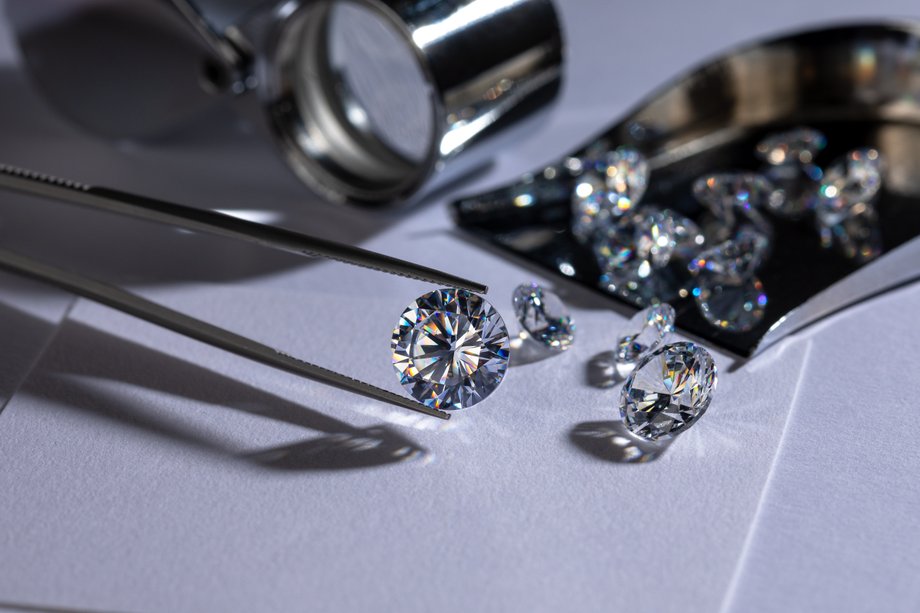
Laboratory diamonds
|
EgolenaHK / Shutterstock
The change in preferences is especially visible in the USA – according to research by The Knot, already 61 percent engagement rings contain a stone from a laboratory.
– What matters is the shine and the size that the customer can afford – admits Doug Meadows, co-founder of the David Douglas Diamonds jewelry store.
Read also: How much should an engagement ring cost? The expert answers without hesitation
Is the future of natural diamonds in question? Selling natural diamonds is becoming more and more difficult. — Trying to convince a customer of the value of a natural diamond is a new challenge. “I don't know how to do it yet,” Meadows admits.