The British government has a plan to reduce inflation with EU help. “Best deal”

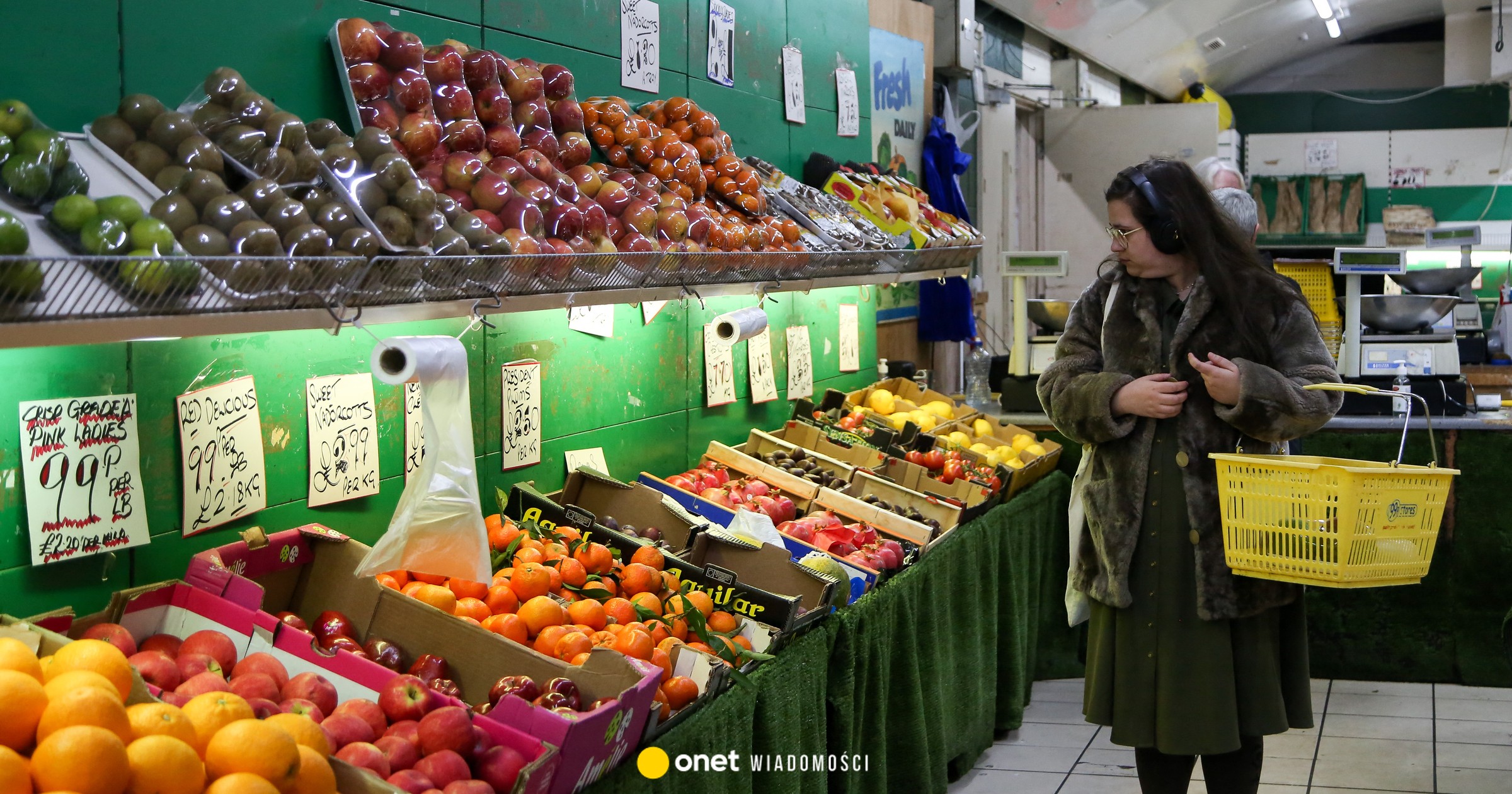
By concluding an agreement with Brussels on adapting to EU animal and plant health regulations, the government will “facilitate trade, which will reduce the burden on businesses, and this will, of course, translate into lower prices,” Starmer argued.
But many of the food companies that are expected to benefit from the deal are skeptical about it – warning that despite all its ambitious assumptions, the plan may turn out to be just wishful thinking at a time when the conflict with Iran threatens to increase food prices even further. Others say the deal could do more harm than good.
“The government is issuing statements that are at best wrong and at worst grossly untrue,” says Nigel Jenney, chief executive of the Fresh Produce Consortium, an organization representing the UK's fresh produce supply chain.
At the center of the dispute is the claim that compliance with EU sanitary and phytosanitary (SPS) rules will eliminate difficulties at the border. But Jenney says the government is “annoyingly” using fresh produce as a prime example, even though most fresh produce from the EU is currently not subject to controls.
While costly inspections and documentation requirements for products such as crops, meat and dairy were introduced in 2024, plans to introduce controls on fruit and vegetables have been suspended pending an SPS agreement, meaning there are no costs to remove.
Meanwhile, most controls on food and plants arriving from Ireland through ports on the UK's west coast have also never been introduced, meaning that again there are few recoverable costs.
EU rules in UK are 'an act of economic self-harm'
In a recent open letter to ministers, Jenney warned that switching to EU SPS rules could have a damaging knock-on effect on food imported from non-EU countries, which he described as an “act of economic self-harm”.
In pursuit of a deal, the government appears ready to adopt “unnecessarily stringent” EU SPS controls on imports from non-EU countries, Jenney said.
This risks causing “thousands of additional and unnecessary delays at borders, many more checks, more paperwork and congestion at ports – and each additional layer represents an additional financial penalty to trade,” he warned.
An analysis by the Fresh Produce Consortium — obtained by POLITICO — suggests that tightening border controls on non-EU products could negatively impact many of the staple foods that (British people) buy on a regular basis — from Moroccan cucumbers and Indian mangoes to South African citrus fruits and American sweet potatoes. The consortium estimates that this will increase supply chain costs by approximately £400 million (almost PLN 2 billion).
In addition to imports, companies also warn that the SPS agreement threatens to impose costly burdens on domestic producers, who will be forced to apply EU standards even if they do not plan to export to the EU.
On March 9, the government presented the proposed scope of the SPS agreement, covering areas such as food safety, packaging, labeling and pesticides. Announcing the plans, Environment Secretary Emma Reynolds said they would make “trade easier and cheaper, and bring real benefits to British businesses.”
CropLife, an organization representing the plant science industry, fears this could backfire. In a recent report, an industry association warned that simply adapting to the EU regulatory system for agricultural pesticides could reduce profits for British farmers by £810 million (almost PLN 4 billion) in the first year, which would impact food prices.
More than a trade agreement
The Food and Drink Federation (FDF), which represents UK food and drink producers, is among those now calling for a change in the narrative around the deal, which they say goes far beyond the scope of a trade deal.
Kate Halliwell, FDF's scientific director, described the government's narrative around the deal as “somewhat misleading”.
While the government says the SPS deal will cover 76 EU regulations, the FDF said it has identified more than 400 pieces of food and drink legislation that will be aligned with EU rules under the deal.
— This isn't really a traditional trade deal. It's not about tariffs, it's not about barriers and it's not just about SPS rules, says Halliwell. — This is truly a change in our national law – and that means all food businesses must be aware of its coming.
One clear example that could be affected is breakfast cereals produced from UK farms using pesticides, the use of which is currently banned in the EU.
— These crops have been grown, stored and then processed into, among others, breakfast cereals that have a fairly long shelf life, Halliwell explains. — Therefore, knowing the current regulations regarding fertilizers and plant protection products that can be used… becomes really important.
The government has stated that it aims for the agreement to enter into force in mid-2027. — although Reynolds confirmed that the government is considering separately targeted transition solutions for sectors that will find implementing the changes challenging.
Negotiating the transition period is “really important” for food producers, who “need to ensure that the crops that are currently being planted actually get made into food and are available to people,” Halliwell says.
Though the SPS agreement may help stabilize food prices over time, it “certainly” will not cause them to fall – he adds.
Andrew Opie, director of food and sustainability at the British Retail Consortium, says he is “very supportive” of alignment with EU SPS rules, which will strengthen supply chains and increase food security.
He adds, however, that the impact on prices will be “negligible”, pointing out that 70-75 percent food comes from Great Britain. “Anything that cuts costs is good,” he says. — But compared to things like energy costs, labor costs, regulatory costs… it's very little.
A government spokesman said the SPS deal would “generate billions for British industry” which would lead to “fresher food appearing on supermarket shelves faster and less friction, helping to put downward pressure on price inflation”.
According to the government, the deal will eliminate a number of costs for companies trading with the EU, including export health certificates worth up to £200 (PLN 980), phytosanitary certificates costing around £25 (PLN 122), as well as at least £127 60 pence (PLN 624) in inspection fees and organic certification averaging £35 (PLN 170). In addition, it would reduce port sanitation fees, which amount to approximately £31 (PLN 150) per cargo, and sample collection costs, which can reach £1,200-1,400 (PLN 5,870-6,845).
The government reported that since 2023, companies have submitted applications for over 1 million 80 thousand. export sanitary certificates, the cost of which ranged from 90 million to 210 million pounds (from 440 million to 1 billion 26 million PLN).
Price shock caused by the war in Iran
But retailers and food manufacturers warn of cost pressures from other sourcesin particular the impact of the war in Iran on energy prices.
On Wednesday, the UK inflation rate rose to 3.3%. overall as a direct result of the conflict, with food and drink price inflation reaching 3.7%.
It looks like the situation is going to get worse. FDF predicts that food price inflation may reach at least 9%. by the end of 2026, mainly as a result of war-related energy market and supply chain shocks.
The government stressed that it takes the effects of the war “very seriously” and “actively monitors the potential impact of the conflict on the food and agricultural sectors.”
During Tuesday's press conference, the organization's chief economist, Liliana Danila, said the war “has caused a price shock that is already too large for producers to fully absorb.”
While the impact on prices will take time to fully manifest, she cautioned that “it's only a matter of time.”
For manufacturers, long-term contracts with suppliers and retailers mean it could take up to a year for higher costs to fully reflect. However, for less processed goods or where supply chains are shorter, prices are expected to rise faster.
In this situation, FDF calls on the government to urgently intervene before the effects are felt. It calls on ministers to introduce a special, time-limited energy support program for the food sector, modeled on the energy relief program introduced after the invasion of Ukraine, including, among other things, limiting energy prices for food and beverage producers.
— The government can take action and is listening to our concerns. However, I'm concerned about the pace. By the time inflation hits food prices, it will be too late, said FDF chief executive Karen Betts.