Over the last 10 years, the United States has provided Israel with almost $40 billion. (approx. PLN 146 billion) military aid. Now Prime Minister Binyamin Netanyahu wants to give up this money. “We want to stand on our own two feet,” he said, according to Republican congressman Marlin Stutzman, during a meeting in late May in Jerusalem.
This information was obtained by The Washington Post. When Stutzman presented Netanyahu with a proposal to end US military aid, he reportedly replied: “This is a direction I have long wanted to take.”
Netanyahu voluntarily gives up billions of dollars from the US? Not really – There is a cunning political calculation behind this new decision.
The mood is changing
The political situation is currently extremely tense. For decades, support for Israel was considered sacrosanct in Washington. However, the war in Gaza has shaken this confidence. According to the latest Pew Research Center survey, 60 percent Americans currently have a negative opinion of Israel. A year ago it was still 53%. Even among Republicans under 50, 57 percent currently expresses a negative attitude – seven percentage points more than last year.
Criticism has long ceased to come exclusively from the left. Also in the Trump camp opposition is growing against billions of dollars in foreign aid. For many Americans, the question increasingly arises: why should American taxpayers allocate $3.8 billion every year? (approx. PLN 14 billion) for Israel's defense?
Jim Watson/AFP / AFP
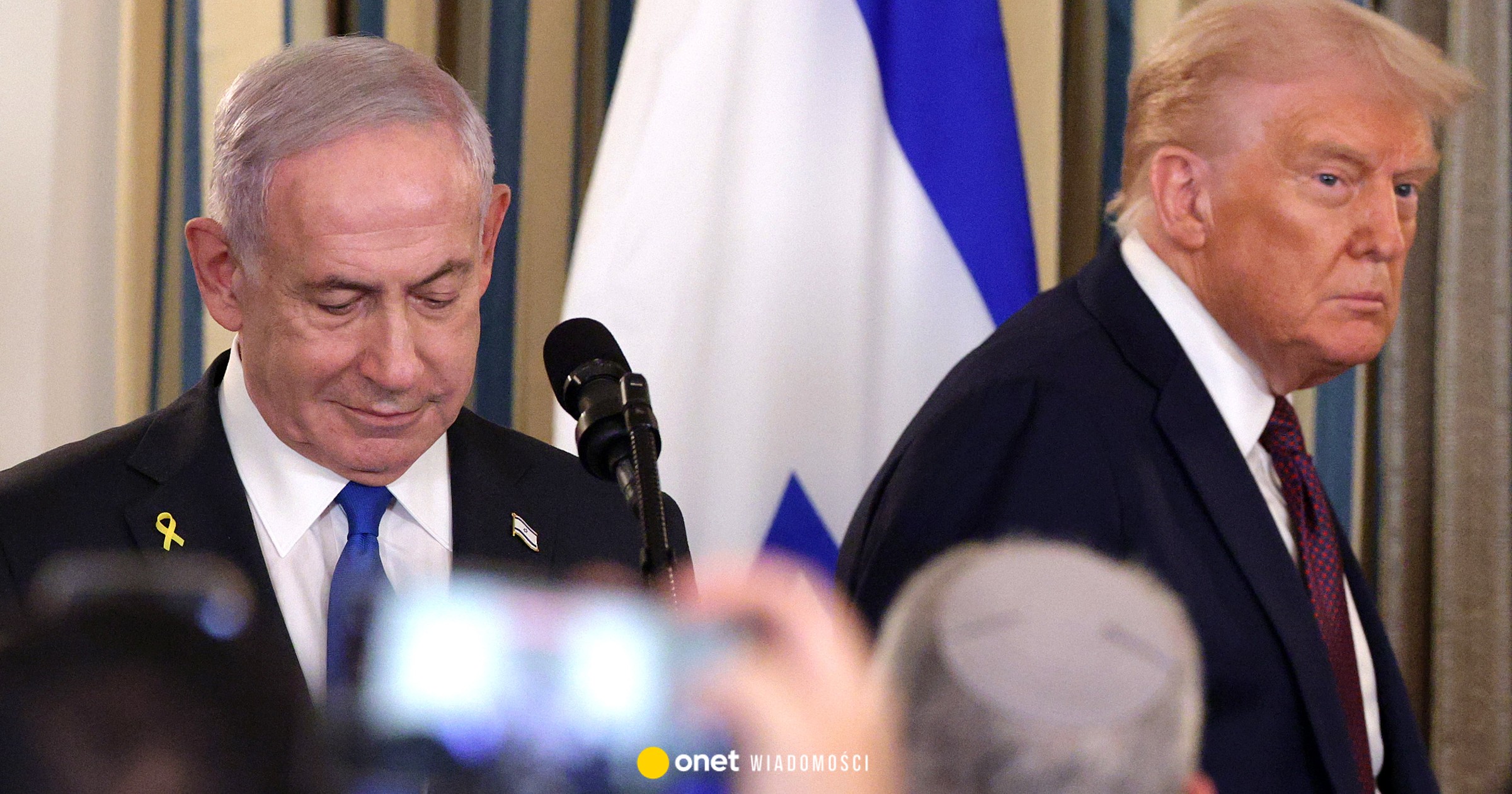
Israeli Prime Minister Binyamin Netanyahu and US President Donald Trump in Palm Beach, Florida, December 29, 2025.
Netanyahu seems to realize that this change in mood may, in the long run, prove more dangerous than any political dispute with a specific government. That's why he tries to stay ahead of the developments.
“From aid recipient to partner”
“The time has come to move from a recipient of aid to a partner,” the Israeli prime minister wrote this week in a letter to Congress. This word – partner – is crucial.
While the debate on military aid continues, the US Congress is already working on a second bill. Section 224 of the new Defense Act for 2027 would significantly deepen military cooperation between the two countries. Joint research, joint weapons production, joint technological programs and stronger integration of military systems are planned. Cooperation is to be expanded from artificial intelligence, through drones, to cyber operations.
The alliance is solidified
According to The Washington Post, former US diplomat Josh Paul sees it as something much bigger than just a technical detail. The goal is to embed these relationships so deeply into the U.S. defense industry “that they can no longer be torn out of it,” he says.
So far, the alliance has been based on money transfers and weapons supplies. In the future, it could be based on common economic and technological interests. Israel would then no longer be the recipient of American aid, but part of an interconnected security and weapons network.
The article continues below the video
For Netanyahu, this would have several advantages: relationships would be less dependent on changing majorities in Congress. At the same time, Israel could refute the accusation that it lives on American taxes. U.S. Ambassador to Israel Mike Huckabee summed up this new logic well: the future agreement will no longer be based on “aid” but on “trade.”
It is not yet known whether this plan will succeed. Critics are already warning against even closer ties between the two military apparatuses. Supporters, however, talk about partnership on equal terms.
One thing is certain: if Israel actually gives up $3.8 billion. (approx. PLN 14 billion) annually, this does not automatically mean less influence in Washington. Perhaps the opposite will happen.
I’m Ashley Davis as an editor, I’m committed to upholding the highest standards of integrity and accuracy in every piece we publish. My work is driven by curiosity, a passion for truth, and a belief that journalism plays a crucial role in shaping public discourse. I strive to tell stories that not only inform but also inspire action and conversation.