The race for the Anthropic and OpenAI stock exchange. Who will dominate the AI market first?

OpenAI and Anthropic have been competing for years for talent, money and creating the most powerful AI models. Now the competition has moved to Wall Street.
Anthropic's confidential IPO filing turned their competition into a new race: which of these companies would go public first.
Being first could mean easier access to investor demand, liquidity for workers and the ability to define how Wall Street values the AI boom. On the other hand, it also means the first collision with public control and gives OpenAI a chance to observe the market reaction before its own debut.
- Read also: PewDiePie is committed to digital sovereignty. “The war on big tech is beginning”
Race to the stock exchange. Anthropic and OpenAI already in the starting blocks
Last month, Business Insider and other media reported that OpenAI was preparing to submit a confidential Form S-1 to the US SEC. Anthropic then surprised the industry on Monday morning by announcing that it had filed a confidential S-1 draft in preparation for an IPO that could be one of the largest in history.
Since the document is confidential, it is possible that OpenAI also filed its Form S‑1 but did not announce it. The company did not respond to Business Insider's request for comment. Anthropic also declined to comment.
Anthropic currently has 82% on the Polymarket platform. chances of being the first to go public – which, according to the traditional approach, gives a big advantage.
“It gains priority access to public capital, liquidity for workers and early investors, and can command a premium valuation when the AI hype is fresh.” – said Mike Alves, founder of the VIDA Vision Fund. “The market may only have appetite for one massive AI IPO at a time, and the second company risks being perceived as a copycat or facing investor fatigue, especially if the first company first rises and then falls.”
Paige Hedley, who worked at OpenAI in the late 2010s and now runs the AI security monitoring organization Guideline AI Standards, said the way the IPO is presented is a first-mover advantage. According to her, the first company can “suggest what is important in a way that highlights its strengths and minimizes its weaknesses.”
- Read also: This country relies on ChatGPT in banking. However, there are dangers
Is being first really an advantage?
There is also a strong argument that it is better to wait – says Harrison Rolfes, an analyst covering late-stage companies at Pitchbook.
“Anthropic has just voluntarily assumed all the risks associated with data disclosure, and OpenAI has been given a free option to observe the reaction of institutional investors to the audited financial results of AI companies before setting its own valuation” Rolfes wrote in a research note on Monday.
“If Anthropic's margins disappoint, OpenAI may quietly change its narrative ahead of the roadshow. If the offering is oversubscribed, OpenAI will benefit from market momentum without the risk of downside.”
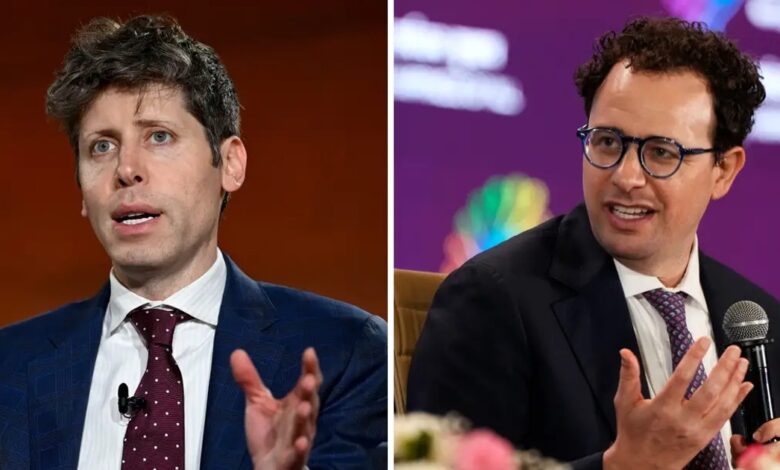
OpenAI CEO Sam Altman appeared on CNBC immediately after Anthropic's announcement on Monday and downplayed the importance of the competition, saying he didn't think there was a race to go public first.
“I think there's a race on to deliver the best technology and build the best business,” Altman said. “However, going public is a financial event and we are not focusing on its timing. We will do it when we think it makes sense.”
He also added that he expects huge demand for AI, which will allow a “multi-vendor system” to function, rather than one dominant winner.
According to The Information website, Altman spoke cautiously about the IPO during a conversation with employees in May, emphasizing that the submission of documents is not tantamount to listing on the stock exchange, which will only take place when the company is ready.
According to Rolfes, if OpenAI is already deep into the SEC review and bookbuilding process, it may be too late to make major changes.
“The two offerings may be close enough in time that OpenAI will not be able to make a significant course correction before it needs to set a price range.” – he wrote.
The article is a translation from American edition of Business Insider