Romania, without a government and in recession. A banker says what we can do with money in the worst period in years


Romania is in the midst of a political crisis, with double-digit inflation and a local currency that has depreciated against the euro by around 3% since the start of the year. BCR is the latest credit institution that “sees” a contraction of the economy for the whole year, after Romania has been declining economically for three quarters.
BCR revised down its GDP growth forecast for 2026 to -0.3% from +0.3% previously.
The bank says in a recently published report that GDP contracted by 1.7% compared to the previous year and by 0.2% in the first quarter of 2026 compared to the previous quarter, according to preliminary estimates published by the National Institute of Statistics. Despite some revisions to the quarterly series, Q1 2026 marks the third consecutive quarter of contraction.
“The nearly three-month-old war in Iran continues to have negative effects and create panic and uncertainty, with its impact particularly felt in energy markets.
Morale in services fell to -4.0 in May, the lowest level in five years, from -1.8 in April, with managers reporting the worst economic situation “past, previous demand and expected demand. In trade, enthusiasm fell to -4.1 in May from -3.4 in April. Managers reported lower trade activity and higher inventory levels,” the BCR report said.
Recession is the baseline scenario
BCR is the latest banking institution to talk about the contraction of the economy for the whole of 2026. BRD has signaled since the middle of the month that the question is no longer whether we will have a recession, but how strong it will be.
“The recent overlap of crises (energy, political) has further eroded an already fragile confidence environment, while economic activity was already in decline (GDP in Q1 2026 fell by 1.7% year-on-year). The levers that could have supported marginal positive growth – external stability, continuity of reforms alongside correction of imbalances and absorption of PNRR funds – have progressively weakened or become uncertain”, says a BRD internal report.
According to the document, the contraction in private consumption is intensifying, investment decisions are being postponed and major trading partners are facing their own economic difficulties.
“Therefore, the question now is the magnitude of the contraction, rather than its likelihood. We believe that the adjustment recorded in Q1 2026 (of 1.7%) could represent the midpoint of the range associated with the GDP correction in 2026,” the authors of the report add.
UniCredit is one of the “optimistic” banks, still betting on 1% growth
The European Commission revised up real GDP growth for 2026 to 0.1% (from 1.1% previously), reflecting a stronger-than-expected contractionary impact of fiscal consolidation and a further inflationary shock, mainly through energy prices, UniCredit Bank economists note in a report.
They remind that the NBR revised the forecast upwards compared to February. “The peak is expected in mid-2026, and by the end of the year, inflation should fall to 5.5% – a level 'much worse' than the previous forecast of 3.9%. The return to the 2.5% target is “pushed” to the fourth quarter of 2027. The main culprit: expensive energy due to the conflict in the Middle East,” the quoted document says.
Private consumption enters the red, real wages fall by 5.4%, and unemployment rises to 6.8%. The only sources of growth, according to the authors of the report, remain public investments and European funds. UniCredit estimates a budget deficit of 6.2% of GDP in 2026, and the public debt reaches 64.6% of GDP.
How do we protect our money in a recession?
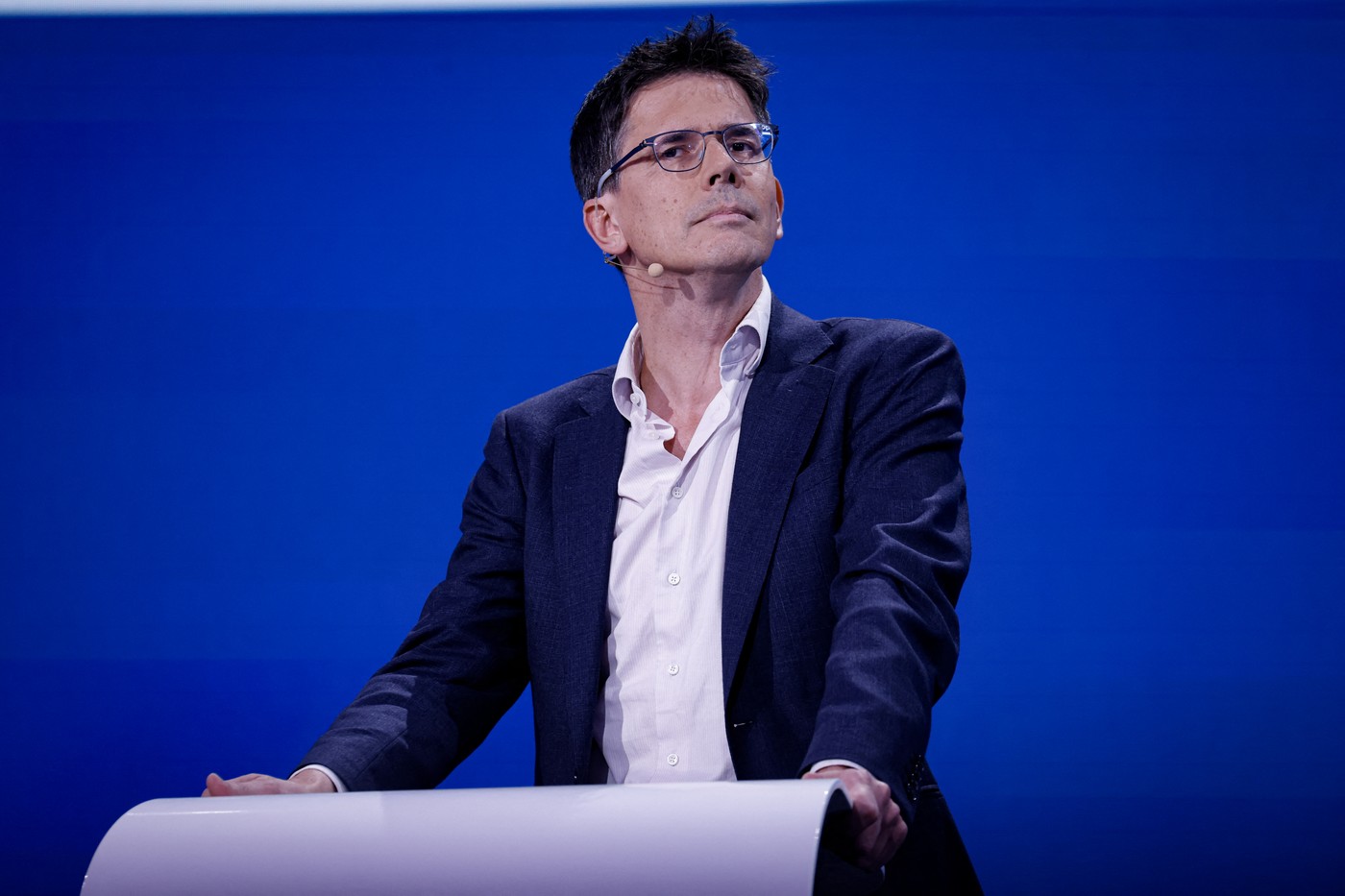
Depending on everyone's financial situation, long-term plans and risk tolerance, decisions can be shared, BRD Chief Economist Florian Libocor explained in a discussion with HotNews.
Is it a good time to buy a home?
If there is a solid down payment and stable income, people can take advantage of the offers in the real estate market, says Libocor, who also highlights a scenario that should not be ignored:
“If you have a solid advance and stable income, you can take advantage of the existing offers on the real estate market, where interest rates on fixed-rate mortgages have fallen. On the other hand, the scenario that the leu may continue to depreciate should not be ignored, which could affect living costs and credit rates. Last but not least, political and economic uncertainty can negatively influence the real estate market.”
If the decision is to take a home loan, the banker's recommendation is that the loan be in the currency in which the income is collected. With a loan in lei, the currency risk is eliminated, with predictable rates if the income is in lei.
“However, the interest rates can be higher compared to those in euros, but they offer stability. The loan in euros comes with interest rates that can be lower, but you are exposed to currency risk. If the leu continues to depreciate, the lei equivalent of the loan rate in euros will increase.
Thus, if your income is in lei, a loan in lei with fixed interest for as long as possible can be a safe option in the current context. If you have income in euros, you can consider a loan in euros, but you must be aware of the associated risks”, says Libocor.
Savings of 50,000 lei. Need to change into Euros, Swiss Francs or invest elsewhere?
With 50,000 lei, the choice between currency exchange and other forms of investment depends on everyone's goals, time horizon and risk tolerance, our interlocutor believes.
“The purchase of foreign currency can be aimed at ensuring protection against the depreciation of the leu, especially now, when the euro exchange rate has exceeded the psychological threshold of 5 lei/euro,” says BRD's chief economist.
But, warns Libocor, the following must also be taken into account:
- The money sits, but produces no return until the depreciation continues (often accompanied by a depreciation in the purchasing power of the depreciated currency which can cancel out, even exceed, the gain from the favorable exchange rate difference),
- The conversion may bring losses if the leu strengthens in the future,
- There is a difficult variable to predict, in other words “the good moment”, when is that moment? If, however, a currency is chosen, it is recommended to choose a liquid and well-known one such as the euro.
However, there are also other types of alternative investments, such as:
- Bank deposits or government securities, the yield of which is not taxed. They are instruments without currency risk, with yields of around 5-7% annually, which offers partial protection against inflation.
- Mutual funds or ETFs. These instruments offer potentially higher returns (8–10% or more), but with risk. It provides international diversification but requires minimal knowledge and a medium-term exposure horizon.
- The gold. It is a good asset in the context of inflation and uncertainty that can be bought physically or through ETFs (eg Gold ETF). This asset does not produce income unless its price increases but retains its value.
Libocor says that, given the current volatility, taking immediate measures to protect savings is a prudent decision, and he recommends consulting a financial advisor.
“One of the first decisions would be to diversify your investments by spreading your savings across multiple asset types to reduce risk. Then there is the choice between currencies (which carry exchange rate risk), gold (considered a safe haven in times of economic uncertainty) and real estate (property can provide stability and protection against inflation but the required exposure period is longer).
We also have the so-called emergency funds, which assume the maintenance of a liquidity reserve equivalent to 3-6 months of expenses, for possible unforeseen situations.
Last but not least, there is the possibility of investing in mutual funds or ETFs, which offer diversification but must be adapted to each person's risk profile.