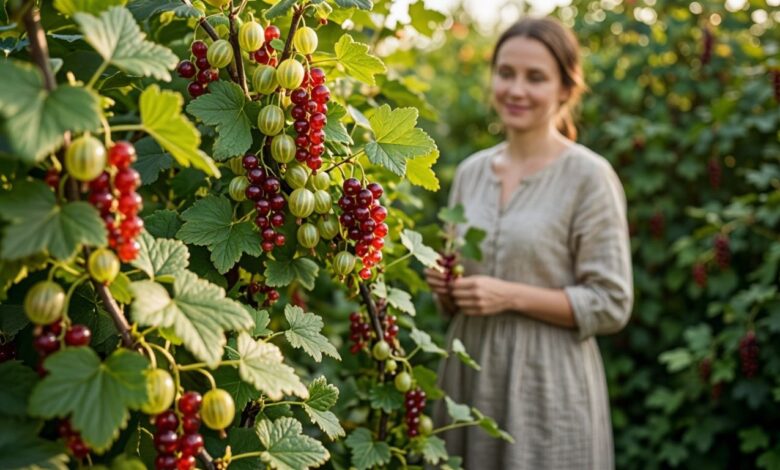
Currants and gooseberries often produce small, sour berries, not because of a poor variety, but because of a nutritional imbalance. Understanding which element is needed in each growth phase helps you double your yield without extra costs.
Nitrogen, phosphorus, potassium and boron
Each element works in its own time. Nitrogen is needed for the growth of leaves and shoots in the spring, but in the second half of May its excess causes “fatification” – the greens grow, and the berries become smaller. Phosphorus activates flowering and setting. Potassium is responsible for the transport of sugars from leaves to berries – it is he who makes the fruits sweet. Bor critical for pollen germination: without it, flowers fall off and berries grow deformed.
Step-by-step feeding scheme
- First feeding: calcium nitrate (15–20 g per 10 liters of water) + magnesium sulfate (5 g) + potassium humate. Watering at the roots in damp soil. Nitrogen in nitrate form is quickly absorbed even in cold soil.
- Second feeding (beginning of June, flowering phase): monopotassium phosphate (10–15 g per 10 l) + potassium sulfate (10 g) + boric acid (1 g). Potassium and phosphorus switch resources to berry formation, boron ensures fruit set.
- Third feedinga (June, fruit filling phase): potassium sulfate (15–20 g per 10 l) + ash infusion (200 ml). Potassium enhances the sugar content and density of the berries.
Nuances for different cultures and regions
Black currants are particularly sensitive to boron deficiency. Red and white currants require a precise balance of phosphorus and potassium. Gooseberries require a high content of potassium and calcium for dense, non-cracking berries.
In the southern regions, potassium is intensively added. In the middle zone, root and foliar feeding is combined. In the North-West and Urals, the priority is chelate forms and foliar treatments.
Personal experience
My blackcurrants always hurt and the berries were watery. I read about potassium feeding in June – I added potassium sulfate and ash. The berries became dense, sugary, and the bush noticeably came to life. My neighbor tried it and now she also fertilizes it this way.