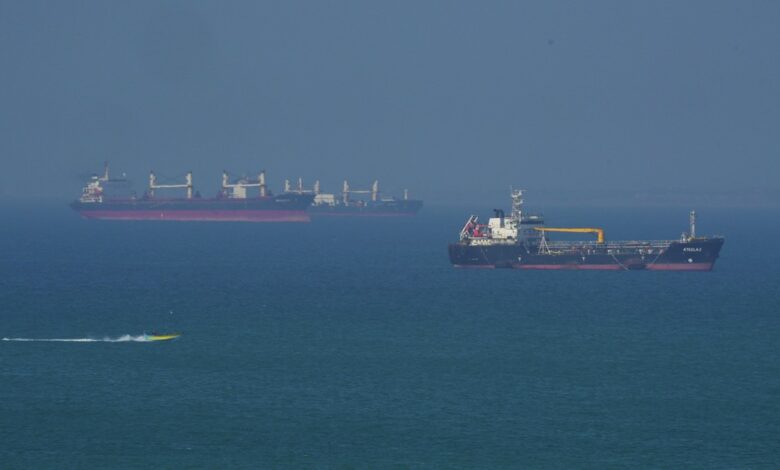
According to the Norwegian business portal E24, ships immobilized in the Persian Gulf after the outbreak of the war between Iran and Israel and the USA are increasingly overgrown with local marine organisms.
Read also: Lviv kicked the Polish company out of the construction site. Control Process wins in the courts, but loses on the ground
The warm and fertile waters south of Iran create ideal conditions for the development of underwater life. Microorganisms quickly settle on the steel hulls of gigantic vessels.
— The warmer the water, the faster fouling occurs. The longer the ship stands, the more it grows and the more difficult it is to remove, explains Lasse Kristoffersen, head of the shipowner Wallenius Wilhelmsen, in an interview with E24.
For ship owners, this is a gigantic purely economic and technical problem. Freighters with broadsides offer much greater resistance in the water. This directly translates into a drastic increase in fuel consumption and higher transport costs, and in extreme cases, a thick layer of crustaceans may even lead to the weakening of the structure of the units themselves.
Protective systems are failing
It turns out that modern technology was not ready for such a specific geopolitical crisis. Kristoffer Ramstad from the Norwegian shipowner Odfjell admitted in E24 that modern antifouling systems used to cover hulls are simply not designed with such a long stay in this particular region of the world in mind.
Read also: Poland impresses Europe with low unemployment. The Czech Republic and Germany are left behind
— This is an area with high sea temperatures, high salinity and good growing conditions for marine organisms – emphasizes Ramstad.
However, the real crisis will come when the political situation improves. Restoring normal ship traffic through the Strait of Hormuz could bring disastrous consequences for marine ecosystems in many remote corners of the globe. Alien species attached to the sides will find themselves in completely new environments, where they can easily dominate and destroy the local fauna and flora.