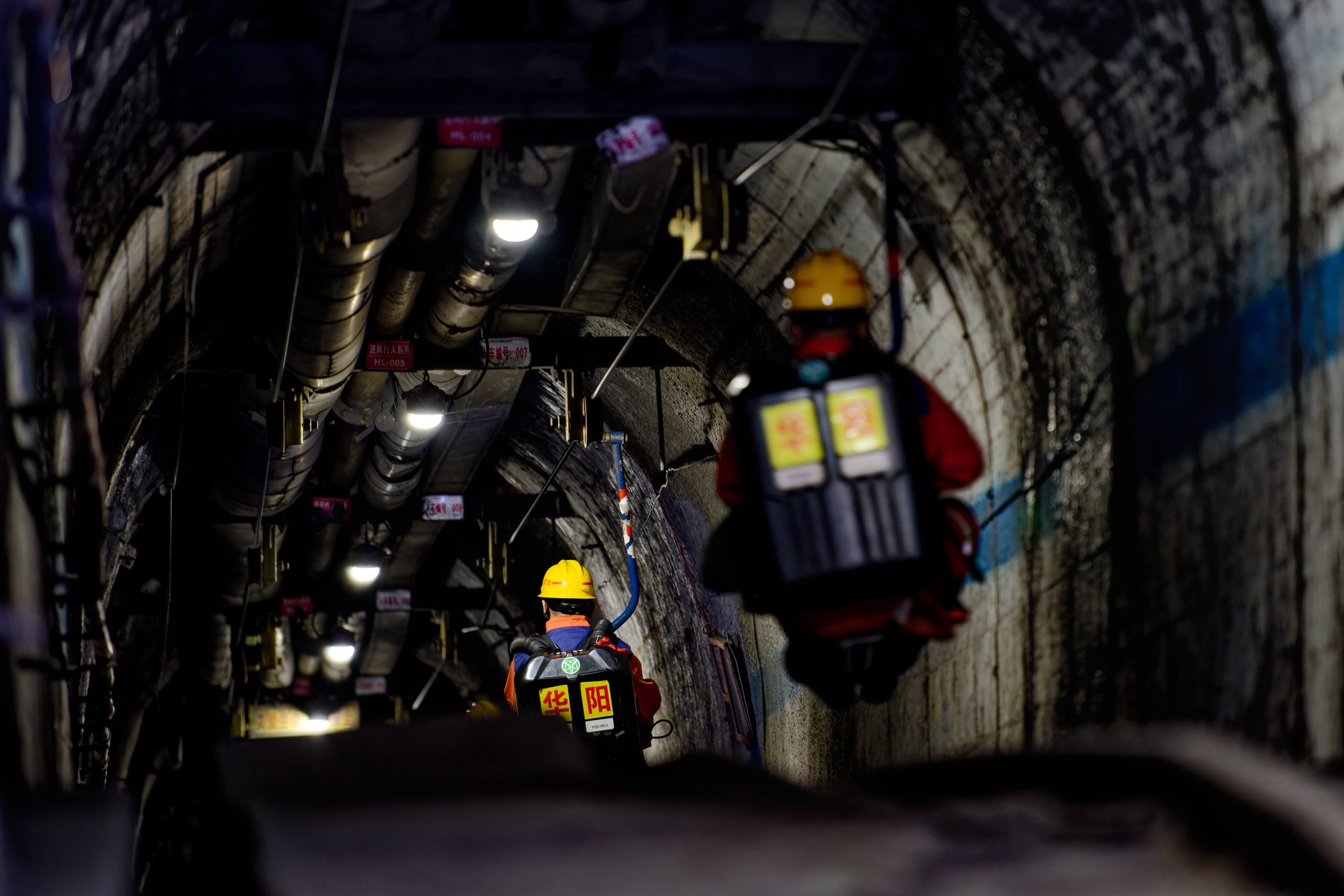
In Shanxi, the province at the heart of China's coal mining industry, there has long been a saying: “You only go down a coal mine when you have no other way out.”
For decades, life in the mine was intertwined with tragedy, writes the BBC.
From that saying derived others: about how miners “traded their lives for money” or “staked their lives for tomorrow” when they ventured into underground tunnels where they died from gas explosions, floods and shaft collapses.
Over the past decade, safety reforms have gradually erased the industry's dangerous reputation — until May 22, when an explosion at the Liushenyu coal mine in Shanxi killed 82 people and injured more than 120 others.
China's worst coal mining disaster in 15 years comes as the country continues its ambitious transition to green energy – a reminder that it is still struggling to wean itself off dependence on an industry that has proved dangerous so many times in the past.
“Everyone knew this was a mine with high methane content,” says Chen, a miner who previously worked at the Liushenyu coal mine for two years.
“My feeling is that there must still be miners inside. The underground tunnels are intricate and intersecting. There are hidden galleries.”
With a mine like this, Chen says, “it was only a matter of time” before disaster struck.
“This accident should not have happened”
Hopes of finding survivors were almost completely dashed at the Liushenyu coal mine.
“The explosion hit the entrance and knocked us all down. We couldn't see anyone; the dust was incredibly thick,” a survivor later told Chinese state news agency CCTV. “After running for more than 10 minutes, I was almost unconscious. I was terrified.”
Authorities have not yet confirmed the cause of the explosion, but experts told the BBC that such explosions usually occur when a build-up of methane gas or coal dust comes into contact with an ignition source.
And even in inherently risky mining environments, human error most often proves to be the fatal factor: management failure, faulty safety systems and breached protocols.
A properly designed coal mine is “fully capable of preventing an explosion through systematic safety measures,” explains Hong Chen, a professor at Jiangnan University's Institute for National Security and Green Development.
“Based on the technical and safety management systems in coal mines that we have in place today, let me be very clear about this: this accident should not have happened.”
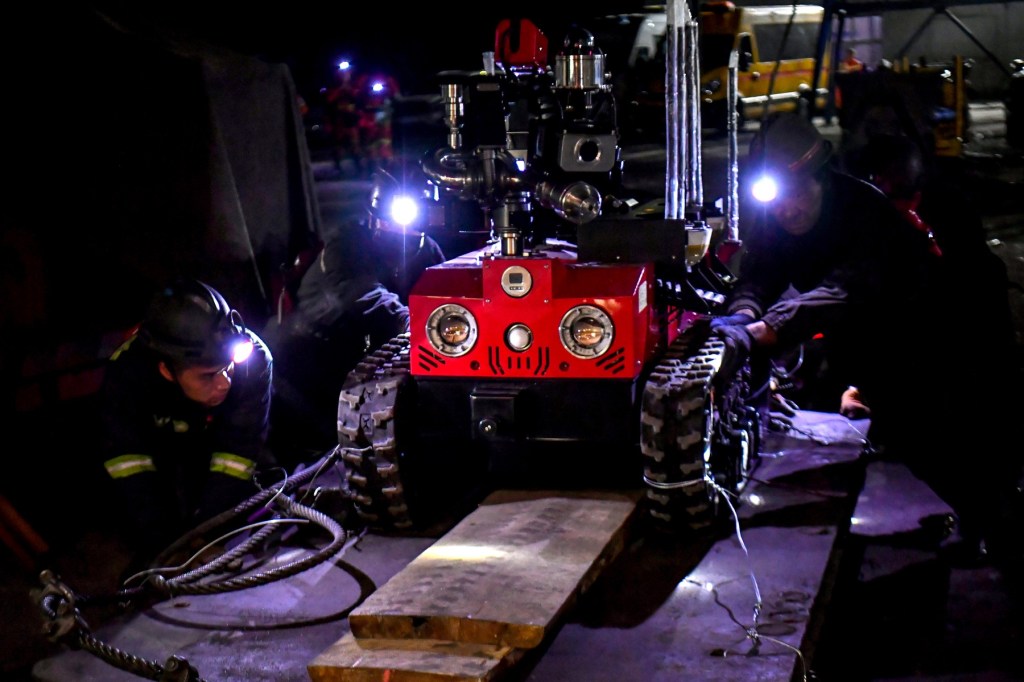
Initial findings show Tongzhou Group, the company that operates the private coal mine, committed “serious illegal violations,” authorities said, without specifying what they found. The company has not responded to the allegations and previous attempts by the BBC to contact it were unsuccessful.
State media reports painted a picture of rampant safety violations at the mine: a notice board at the site suggested that only half of the workers underground on the day of the disaster were officially registered; many mine workers did not have mandatory tracking devices; secret tunnels, along with an inaccurate plan, which complicated rescue efforts.
A Liushenyu coal mine worker told the Chinese publication Lengshan Record that the company did not allow workers to enter the mine with tracking devices because they were illegally mining unapproved coal seams. “Tracking devices would have confirmed this,” he said.
The Liushenyu mine had also already been flagged for safety violations, appearing on a 2024 list by China's National Mine Safety Administration of “severe risk” coal mines. The following year, the Tongzhou Group was penalized twice for safety violations, state media reported.
Authorities investigating the explosion have placed Tongzhou Group executives under “control measures” and halted operations at the company's other mines.
Fatality rates in China's coal mining industry have fallen by more than 90 percent since 1990, thanks to a package of safety reforms. But according to Professor Chen, the recent tragedy shows that “just because we've made progress across the board, it doesn't mean we can afford to let our guard down.”
The changing role of coal
The Liushenyu tragedy has brought back into focus the troubled history of one of China's most critical and dangerous industries.
When China's economy reopened in the 1980s, coal production skyrocketed, becoming the cornerstone of its industrial ambition.
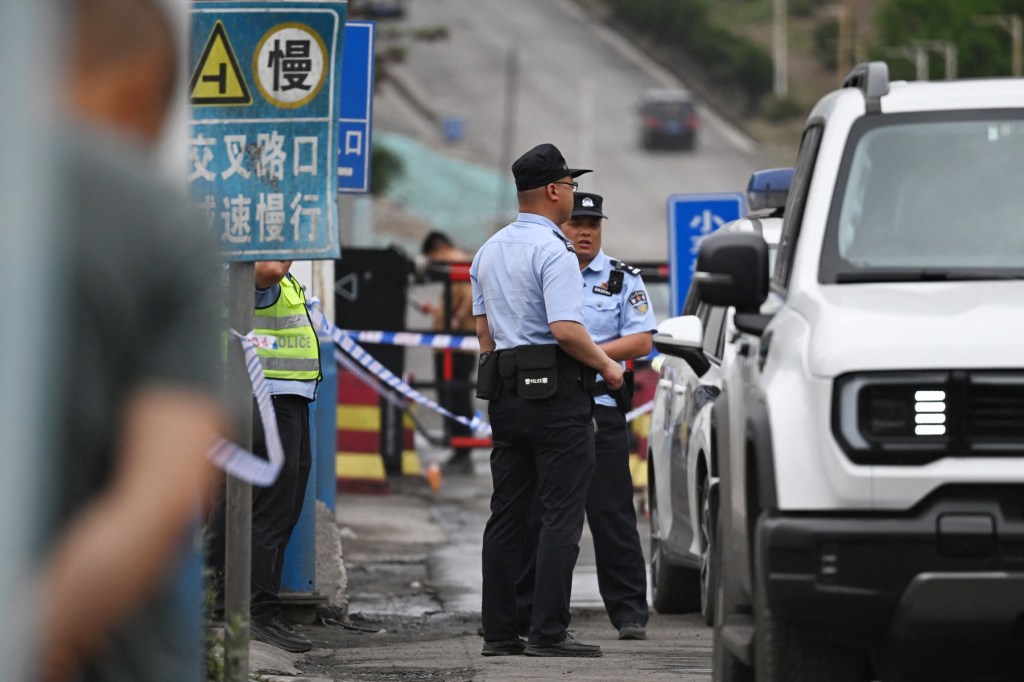
At the heart of the boom was Shanxi province, home to vast coal deposits rich in coking coal – one of the most prized fuel grades – and a developed industrial base dating back to the early 20th century. Today, the province accounts for nearly 30% of China's national coal production.
At the turn of the century, Shanxi's coal industry was making huge profits as demand was growing – but there was a human cost. A report by state-run Xinhua at the time bluntly described the development as “a blood-stained GDP”.
In pursuit of productivity and revenue, local mine owners bribed officials to turn a blind eye to unsafe labor practices, Nie Huihua, an economics professor at Renmin University of China, wrote in a 2020 article.
“When economic growth was more important than social stability, the central government relaxed its guard against this kind of 'complicity'. At such times, coal mine production increased, and coal mine accidents also increased.”
The horror of mining disasters has often been brought before a national audience. In 2010, people across the country watched as rescuers rushed to free more than 150 workers trapped in the Wangjialing coal mine in Shanxi after it flooded underground.
Rescuers managed to save 115 workers, but many others were not so lucky.
Between 1980 and 2010, an average of 5,853 people died annually in China from coal mine disasters, but in 2018, however, this number had dropped to 333, even though coal production doubled.
The dramatic recovery came after authorities tightened regulations and introduced better gas monitoring systems and clearer accountability mechanisms. They also closed thousands of small private mines that operated outside regulatory oversight.
Technology has been part of the safety campaign as traditional labor-intensive workflows have favored mechanization and automation.
“The ideal safety condition of coal mines in China can be summed up as: 'Less people, more safety; no people, absolute safety,'” says Professor Chen.
“The green transition is exactly what is pushing the industry away from the old model of manufacturing growth and towards a new paradigm.”
Green energy, black gold
Increasing renewable energy production is a top policy priority for China, as detailed in its latest Five-Year Plan. The country has set an ambitious goal of doubling its clean energy supply by 2035 and achieving net zero carbon emissions by 2060.
The solar panels and wind turbines that have sprung up on sun-drenched stretches of land from the Tibetan Plateau to the deserts of Xinjiang are part of that vision. The plan is for power lines to channel this green energy to the megalopolises of Guangzhou, Shenzhen and Chongqing.
Still, there is a stark contrast between China's world-leading renewable energy ambitions and its lingering dependence on coal.
The importance of coal is gradually decreasing. The country's coal-fired electricity production fell last year for the first time in a decade. Last year, profits in the mining and coal washing sector fell by 41.8%, according to official data.
But China remains the world's largest producer of coal, accounting for just over half of global production in 2024, when it produced 4.8 million tonnes.
The government has often called coal “the keystone” of China's energy security: a reliable anchor in an often uncertain global energy market.
While other Asian countries were dealing with the oil crisis, China's coal supply helped insulate its economy from the worst impacts.
“China's push towards green energy has not made coal disappear; it has changed the role of coal,” says Roc Shi, professor of energy and environmental economics at the University of Technology Sydney. “Coal is moving from being the engine of growth to being a guarantee of energy security and reliability of the energy system.”
Coal has long been the black gold of China's economy and remains indispensable to maintaining energy supplies for its 1.4 billion people.
In Shanxi, it is also a breath of fresh air for those who have few other options.
“I will continue to do this work, because in our county, apart from working at the mine, it's hard to find anything else. Otherwise you have to leave home and go somewhere else,” a miner told the BBC.
He is an electrician and works on the surface, which makes his job less risky than those who venture into the mines. When he heard about the Liushenyu disaster, he says, “his mind just went blank.”
Another worker says his only thought after the tragedy was: “Ordinary people's lives are miserable.”
Still, even for an industry so fraught with dangers and pitfalls, Chen, the miner who previously worked at Liushenyu, suggests there will always be desperate people willing to try their luck in the mines. As he points out, “the miners all work voluntarily” to “feed their families.”
The Chinese government has vowed to hold those responsible for the Liushenyu incident accountable. But for miners like Chen, it's “too late.”
“The state attaches great importance to this. But can miners who have died come back to life?”