Is conscription back? Alarm signal raised by a NATO general: “If this test fails, the political class must decide”

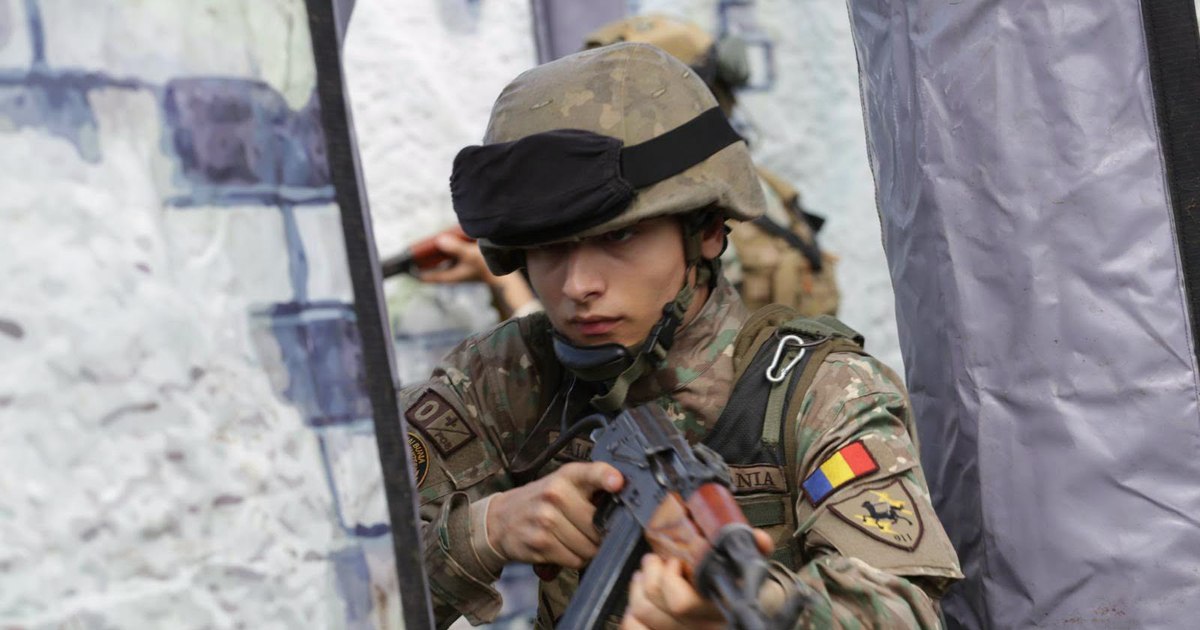
Young Romanians may have to join the army, just like their parents did. General (r) Virgil Bălăceanu warns, in an interview for “Adevărul”, that depending on what will happen in 2026, the decision to reintroduce mandatory military training could be made later.
Young people could once again be forced to join the army. PHOTO: MApN
The reintroduction of compulsory military service in Romania depends on the success of the new volunteer program for 3,500 soldiers within the deadline, warns General Virgil Bălăceanu. If young people refuse voluntary conscription, the political class will be forced to vote for conscription, amid the critical aging of the military reserve.
The truth: The situation seems increasingly complicated globally and regionally, and more and more voices in the military claim that there are difficulties with attracting young people, but especially with regard to the military reserve. How interesting is the army in 2026 for young people in Romania and where would you identify problems?
General Virgil Bălăceanu: We should not say that it is not interesting, because, of course, with certain differences, the number of candidates for places – whether we are talking about the national military colleges, whether we are talking about the academies of the categories of forces, the military schools of military foremen and non-commissioned officers, the Military Technical Academy, the Military Medical Institute and so on – remains relatively high. We could not say that we are at a critical point. There are certain areas that are not well covered, such as the number of candidates for military majors. And it would also be an explanation, because it is a technical field, or there are a variety of technical fields that belong to military foremen, and the trainees are also sought for other offers on the labor market.
The test of the 3,500 volunteer soldiers in the term
And what should be done here?
We should consider the differences that may arise. And here there should be a sociological study that, unfortunately, the General Directorate of Human Resources Management – the minister, after all – does not order. Because we had remarkable results from the moment when it was accepted that the recruitment and selection process for soldiers and professional ranks should not only be carried out by the zonal, county and sector military centers of the city of Bucharest, but also by the military units. And then the number of candidates, and the quality of these candidates increased, I could say, considerably, not to use the term exponentially.
How are things regarding the reserve of the Romanian Army?
If we talk about a challenge, it is that of the Romanian Army reserve. I can say this because there have been problems with this for two years. This is the second year that the voluntary reservist law does not apply. When she applied, two years ago, there were 3-4 candidates for each officer position, under one candidate for warrant officers and non-commissioned officers, and for enlisted and enlisted volunteer reservists, I think the number was around 0.30-0.25. As such, there were also differences in the corps of volunteer reservists. The pursuit of becoming a reserve through voluntary military service is geared more toward the officer corps than toward the enlisted and noncommissioned corps.
As a result, we really have a challenge that we are no longer addressing, because we are very busy with the political crisis and debating, which is not bad, the SAFE programs. But SAFE programs mean both strength and human resources. Whenever we talk about the Romanian Army, we also talk about the reserve part.
The reintroduction of compulsory military service, a variant
There are soldiers and military policy analysts who insist that Romania should consider other methods to solve the problem of reservists, and some believe that it would be necessary to reintroduce mandatory military training for young people. Is this a possibility, and if so under what conditions could this happen?
From the latest information we received, it would appear that this year the Ministry of Defense is trying the process of recruiting and selecting 3,500 soldiers and volunteer graduates within the deadline. It is an extremely important thing. If we get a selection rate of, say, 75%, that means we don't have to think about reintroducing conscription. But if we will have a selection rate compared to the number of approved places of 10% or below 10%, the political class must already think about the need to reintroduce compulsory military service in Romania.
On the other hand, an emergency ordinance was being prepared, which was not completed, it was in decisional transparency and in the meantime the government was dismissed, regarding the amendment of the law of the voluntary reserve, which introduced new elements. On the one hand, to boost the recruitment and selection of Romanian citizens, with an age change in the corps of officers, military foremen and non-commissioned officers, from 55 to 44 or 45 years old, with a provision that also needs to be analyzed: so that those who have had a military career and are already in reserve as military pensioners, being already in the operational reserve of Romania because, don't they, they have a military qualification after completing professional military service.
What would be the big challenge in this situation?
I believe that we should focus our attention not only on the recruitment and selection programs for the corps of soldiers and professional ranks, for the future training of officers of all types, of military foremen and non-commissioned officers – an important thing -, but on the other hand we should go in connection with what it means to restore Romania's operational reserve, that is, definitively, to replace the reserve of those who did military training until 2007, on the principles of volunteering. We discuss the entire recruitment and selection process for the active forces separately, forgetting that the active forces cannot accomplish their mission without reservists.
What solutions do Romania and the EU have to avoid a huge economic crisis at the last moment. “It's a time bomb”
As such, we have two issues that need to be kept in mind. See the defense industry, see how the SAFE contracts will be signed and if they will be valid, taking into account the referrals to the Constitutional Court, the fact that a dismissed minister must approve a memorandum to delegate the signing of the contracts to the director of Romtehnica. However, we must bear in mind, in addition to the elements of the defense industry – restart… of course, the objective of the SAFE programs is to increase the capabilities of the Romanian Army by continuing the endowment process – but at the same time we must also analyze the issue of human resources from both perspectives. Both from the perspective of the active forces, of those performing active military service, but also of those performing military service in reserve.
Army of 120,000 active military
The Strategic Analysis of Romania's Defense states that in the coming years the number of active military personnel should be increased to 120,000. Are these numbers realistic?
It is absolutely necessary, not only realistic. The figure of 120,000 is an older figure and we must reflect on it. But, I repeat, when we talk about the defense capability and we talk about the human resource, we have to say from the very beginning that it is no secret. We must have 120,000 soldiers in the active forces and a number of 50-60,000, as determined by the Strategic Defense Analysis, or even a larger number of reservists in the operational reserve, with an appropriate degree of training. Because currently MOBEXs do not provide training, only a record check, how to match data for individual equipment and a single firing session with infantry weapons, which does not mean the full general military training for what a reservist needs and, of course, some specialized training.
General Virgil Bălăceanu. PHOTO: MApN
As for the operational reserve, 50-60-year-old people were summoned to the last military exercises, and obviously most of them are totally out of shape at this age. Are there solutions for rejuvenating this reserve?
I think first and foremost about volunteering. That's why we should go for what it means, isn't it, a success of restoring the operational reserve on the principles of volunteerism. And, I repeat, let's see the effectiveness of the program “voluntary service – soldier/graded in time” this year. There are 3,500 seats. It means quite a lot.
Romania, “player” for the first time in history in Washington? Diplomacy expert: “There are costs if we want our voice to be heard”
As for the military, are there enough reasons in 2026 for young people to choose a career under military uniform?
Well, we'll see. The motivations seem quite appealing. The motivations regarding the allowances that those in the voluntary reservist corps receive are attractive. A good level was reached, even very good, from the point of view of material advantages. But we still need a strategy at the level of national communication. We must have an effort by the media, an effort by institutions, an effort by employers to encourage people to come to the operational reserve. But somehow the employer will have to agree that employee X will have to do his compulsory military service, when such a military service is introduced, if we are not successful with voluntary military service. And better communication, as I said, from the authorities.
Why MOBEX mobilization exercises go unnoticed and where the authorities go wrong in communication
There has always been a problem here, the poor communication of the authorities, not only regarding the army. Should politicians do more or is there already enough involvement?
We now have a concern related to SAFE and it is very good. The problem is that in Romania nothing is discussed anymore about the issue of the reserve. We do not have any feedback related to the MOBEX from Alba and Hunedoara. It went unnoticed in the media. Last year we had a whole campaign related to the MOBEX in the Bucharest-Ilfov region. And with interpretations, I would say tendentious. They are topics that stay in our attention for a short period of time, then disappear.
The same is happening at the political level. Politically, SAFE is a concern from all perspectives, but nobody at the political level is talking to us about what we want to do with voluntary military service, voluntary military reserve service. No politician talks about how the Ministry of Defense should be supported to succeed, because in the first year this program of voluntary service is applied – soldier/military graduate in term. And we need a contest of all institutions and, above all, of the political class. We cannot just leave this to the Ministry of Defence, because then the politicians will be the ones who have to decide on the reintroduction of compulsory military service, because the voluntary service to restore the reserve has not been successful.