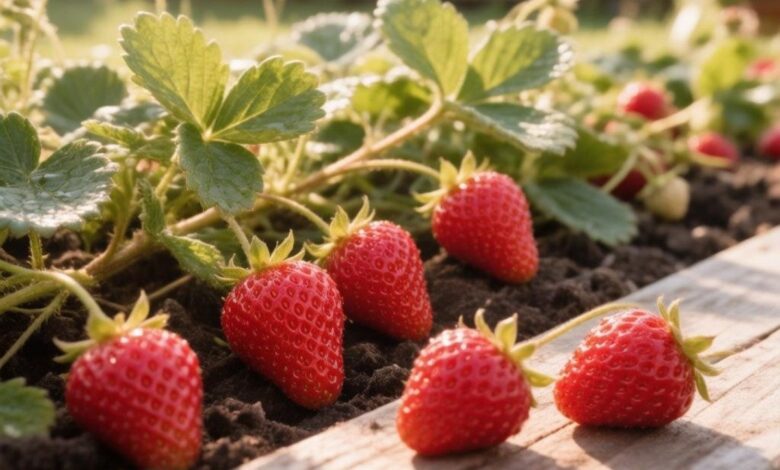
Strawberries are a demanding crop, and you need to care for them with understanding. In June, it switches from active flowering to fruiting, and this moment should not be missed. While the early varieties are already producing their first harvest, the middle and late ones are just forming ovaries, and right now the plants are especially sensitive to lack of nutrition.
That is why strawberries especially need support in June. The bushes spend a lot of energy on forming berries, and if resources are not replenished, the fruits will turn out small, watery or sour. But it is important to maintain a balance: excess nitrogen will provoke leaf growth to the detriment of the harvest, and a lack of potassium will make the berries tasteless.
In June it is important to feed your strawberries for size and sweetness. Nitrogen is needed to maintain green mass and healthy roots. You can use nettle infusion, mullein or urea in small doses. Potassium is responsible for the sugar content and density of fruits. Ash, potassium sulfate or monopotassium phosphate are suitable. Strawberries love moisture, especially during the berry-filling period. Without regular watering, even the best fertilizing will not work. Water at the root, avoiding water getting on the leaves to avoid causing rot. It is also important to remove the first tendrils: they take away nutrition from the fruiting bushes.
Use organic infusions to support growth. Fill the nettle with water 1:5, leave for 5–7 days, then dilute 1:10 before watering. Dilute mullein 1:10, chicken manure – 1:20. For the sweetness of berries, the best choice is wood ash: pour a glass of ash with a liter of boiling water, add a teaspoon of vinegar for better absorption and leave for a day. Ash contains potassium, calcium and trace elements, but if your soil is alkaline, use potassium sulfate instead of ash – strawberries prefer a slightly acidic environment.
Do not overfeed strawberries with nitrogen during the fruiting period. Otherwise, you will get lush bushes without berries. Water regularly, especially in hot weather. Without moisture, the berries become smaller and crack. Remove weeds around the plantings: they compete with strawberries for food and water.
If you follow these simple recommendations, your strawberries will definitely delight you with large, aromatic and sweet berries.