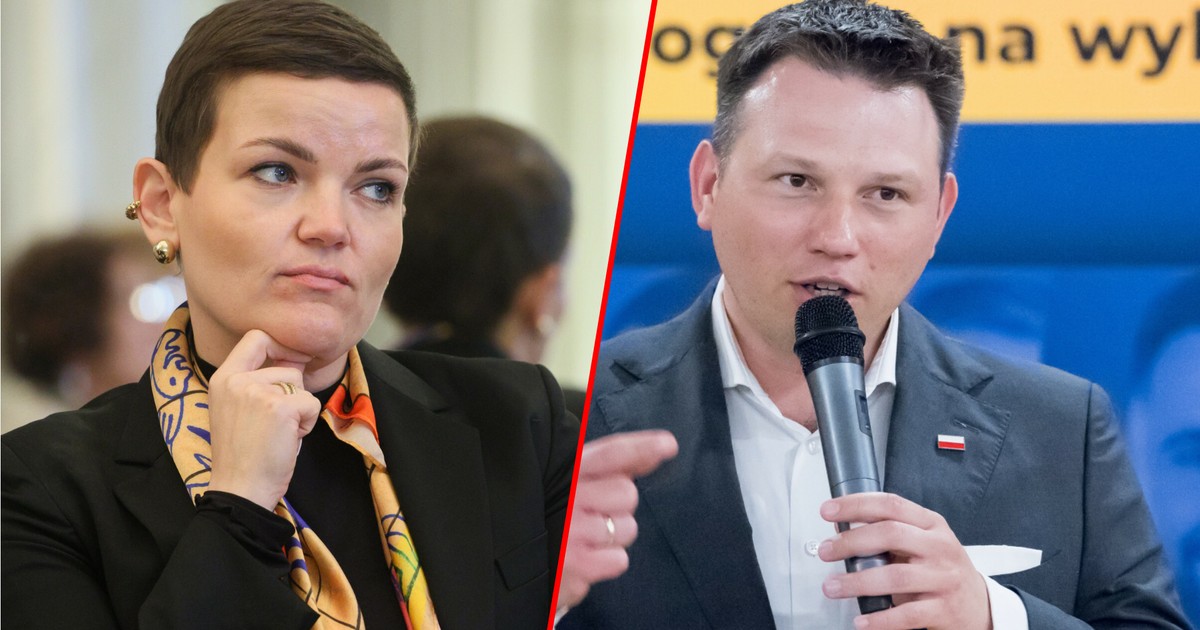
“If you want our money, create art that we will be willing to pay for ourselves. Paint nice pictures, record good songs, create good films and performances,” writes Sławomir Mentzen on X, commenting on the government's act on social security for people practicing artistic professions.
I'll give you a hint – freak fights are breaking popularity records on PPV. Maybe artists should follow the example if people are willing to pay for it? What absurd logic.
In Business Insider, we faced the facts and myths regarding this act. More in this text.
Culture will always lose on the free market
Culture – especially the kind we want to promote and popularize among our children – escapes the free market. It's not that “unprofitable” shows are weak, art-house cinemas show worse films than multiplexes, and chamber orchestras play worse than singers filling stadiums and auditoriums.
Often it is exactly the opposite, because in culture – if anything – a different economic principle operates. The Copernican theorem that “worse money drives out better money“. And that's why philharmonic halls do not break popularity records, few theaters can compete with reality shows, and the above-mentioned freak fights beat the viewership of rhythmic gymnastics.
And that – in principle – is fine. The point is not to stigmatize disco polo listeners, to insult fans of mass culture (of which I am one), or to ridicule hard-working people who prefer light entertainment after work. Celebrities who do this seem to be saboteurs of their own environment.
Regardless of their superior, outrageous tone, it must be admitted that Polish high culture will not defend itself. Theater classes in county towns will not survive when local actors take taxis in search of money. Cultural centers will not be able to defend themselves when animators move to the largest centers to look for work that will allow them to survive and start a family. Books and exhibitions important for local communities will not be created if fascinated artists are pushed only to the metropolis, because only there will there be someone who will be interested in them, when they create their 100th publication aimed only at those who can afford to pay them.
A full free market in culture means that creativity will move even more to where it already exists – to the largest agglomerations; artists will write about what those who set an example and find clients are already writing about. However, the state – taking care of the fair development and identity of the entire country – is responsible for trying to balance this tendency. And support those areas that are valuable but cannot count on a mass audience.
The fight for high culture is, contrary to appearances, not a clash of elites against ordinary people. In fact, it is quite the opposite – the question is whether a young person from outside the rich families of “creative circles” will be he could do something positive for the community and make a living from it. For now, it often cannot, but the government's idea will not solve it.
Let artists earn money. The government act does not address the problem
The problem is that the government bill, intended to help, creates another exception for another group – this time artists – and extinguishes the fire with gasoline, while revealing the hypocrisy of the state.
If “junk” that influences low premiums is so bad, why the idea of contributing them to the entire labor market was abandoned? After all, such an idea was even included in the KPO and was ultimately abandoned. If low contributions result in starvation pensions and the government treats it as a social problem, why does the labor market ignore B2B contracts that should be transformed into full-time jobs? After all, the reform of the National Labor Inspectorate was recently thrown out because its competences in this area were supposed to be too broad. Ultimately, these regulations were significantly relaxed.
The state, instead of supporting artists by creating demand where it does not exist, or perhaps should exist, builds a wall between them and the rest of society.
Because, in fact, it is difficult to find any rational argument why – hypothetically – disco polo artists from large cities (who in theory could apply for support) were to be more privileged in terms of insurance compared to – let's assume – a locksmith or the ex-owner of a bankrupt shop unsuccessfully looking for another job in his commune. Even when it's hard to disagree with that low-earning artists deserve sickness benefits and maternity leaveit is equally difficult to demonstrate that they should have more just because of their profession.
The intrusive argument of some celebrities that all artists are a unique group in this context is caricatured and only increases the wave of outrage. At the same time, the proposed solution reduces trust in the entire pension system and encourages people to look for picks. And the bureaucratic overhang planned in the act additional verification committees exposes this idea even more.
Moreover, people in their immediate surroundings have not seen poor, passionate artists for a long time. If only because, due to many years of lack of support, these few have long since disappeared. And paradoxically, this is also – I think – the opposition of some Poles to this law.
Grzegorz Kowalczyk, journalist of Business Insider Polska