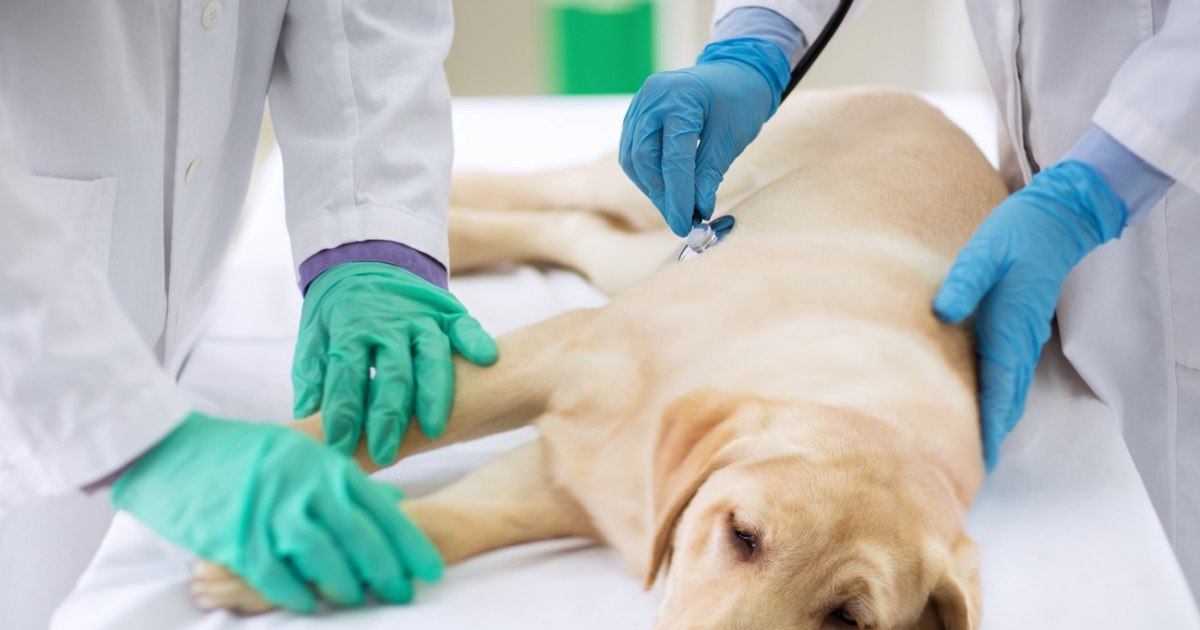
Behind every veterinary consultation there is an emotional charge that is too little talked about. Vets work with pain, pressure and emergencies every day, and more and more say they find it increasingly difficult to manage this multitude of experiences on their own. In parallel, the specialized literature increasingly describes a phenomenon distinct from classic burnout: compassion fatigue. That is, the emotional exhaustion specific to people exposed daily to the suffering of others. In this context, therapy and psychological support should become a normality in the veterinary system, draw the attention of numerous voices in the field.
PHOTO: Shutterstock
Emotional exhaustion faced by veterinarians
Mental health professionals define compassion fatigue as a specific form of emotional exhaustion that results from constant exposure to the suffering of others. In the case of veterinarians, it develops over time, through repeated contact with sick or suffering animals, but also through the pressure of difficult decisions and the emotional burden. Unlike burnout, which is mostly associated with professional overwork, this form of exhaustion is more difficult to recognize and address.
“We charge ourselves, somehow we take it upon ourselves. Why? Starting from the idea for which I chose this job: to help. I wanted to do Medicine to help the animals I loved. From puppy, cat, to mouse, anything. And in college, for example, we save mice from experiments. In my day, they still worked on mice. And I was bringing them home. So the idea was to try to help as much as I could. And I went to Medicine. I arrived here, where I encountered suffering. The surprise was that I had to help animals that were already suffering. And already my soul ached for them. In addition, the pressure: if I do what I do well and help enough, i.e. if I have enough knowledge to be able to solve the case. So from the beginning we burden ourselves with suffering.
After that, the entire stage that the animal goes through until it is cured is again a suffering that we take over. And at some point it's too much,” says Dr. Raluca Zvorăsteanu, president of the Romanian Society of Oro-facial Surgery and Veterinary Dentistry.
Added to all this are cases of negligence or situations in which animals arrive too late at the office: “The pain is even greater knowing that the animal could have been helped in time and wasn't.”
He has been practicing this profession for 22 years. During this time, medicine dedicated to animals has developed rapidly: access to information, modern equipment, specializations and international courses is incomparably greater than in the past. However, the workload has also increased, but so has the pressure.
“The work does not end when we leave the office. If we have a complicated case, we are in ituh search. We go home, look for another study, call another colleague. All this takes all our resources“, says Dr. Zvorăsteanu.
Dr. Raluca Zvorăsteanu PHOTO: Personal archive
A Greek island is looking for volunteers to care for stray cats. What they offer for free instead
The subject has recently also reached the European agenda, during the conference “Veterinarians' mental health: a cornerstone of the One Health concept”. According to Eurostat data, the pet population in Europe will increase by 35 million between 2021 and 2024. The increase equates to, on average, around 100 more animals for every European veterinarian.
76% of vets say they have a hard time managing the emotional demands
The results of a study carried out by Purina show the picture of a profession under constant pressure:
-
78% of vets say they need support for mental health and well-being;
-
71% say they thought about leaving the profession because of stress;
-
76% say they find it difficult to manage the emotional demands of the job;
-
57% say that professional pressure has increased in the last two years.
Despite all the difficulties, the vocation remains: 76% of veterinarians stated in the study that they still enjoy their job, and 92% would recommend this profession to young people.
Risks: from depression to suicidal thoughts
A study conducted in 2026, in Spain, and published in the journal Veterinary Sciences analyzed the hard part of being a veterinarian. Research shows that constant exposure to stress, overwork, and distress can contribute to depression, emotional exhaustion, and suicidal thoughts.
“We get to a stage where we effectively don't manage anymore. And in a trivial case that didn't go our way, we end up not thinking clearly anymore. (…) We don't know how to limit what we should do, what we shouldn't do, what we take on”emphasizes Dr. Zvorăsteanu.
In her opinion, psychological support should become an integrated part of the veterinary profession:
“A must, from my point of view. I don't know who would be able to implement it. From the faculty, after that the College, the offices where we work. It would be, from my point of view, mandatory. We don't know how to manage, we don't know how to unload. We burden ourselves with so much pain that we no longer know how to manage our lives.”
Clashes between activists and police at a farm where 2,000 beagles are kept. He intervened with rubber bullets and tear gas spray
The therapy is beginning to enter the discussion in veterinary medicine as well
In recent years, programs dedicated to the mental health of veterinarians, ranging from emotional support lines to psychological counseling and support groups, have started to appear in several European states.
In Romania, the campaign “Thank You Vets” includes a pilot program carried out together with the Social Psychotherapy Center, through which veterinarians can have access to one month of therapy, within a cumulative 100 hours of therapy.
“Athis project means much more than a psychological support program. It means acknowledging an under-discussed reality: Behind every veterinarian is a human managing pain, emergencies, difficult decisions, and a lot of emotional pressure while trying to stay strong for those around them.
We believe that mental health should not only become important in times of burnout, and that vets in turn need safe spaces where they can be heard, supported and understood.” says Sonia Tudoriu, manager of the Social Center for Psychotherapy.
Enrollment in the program begins in June.