
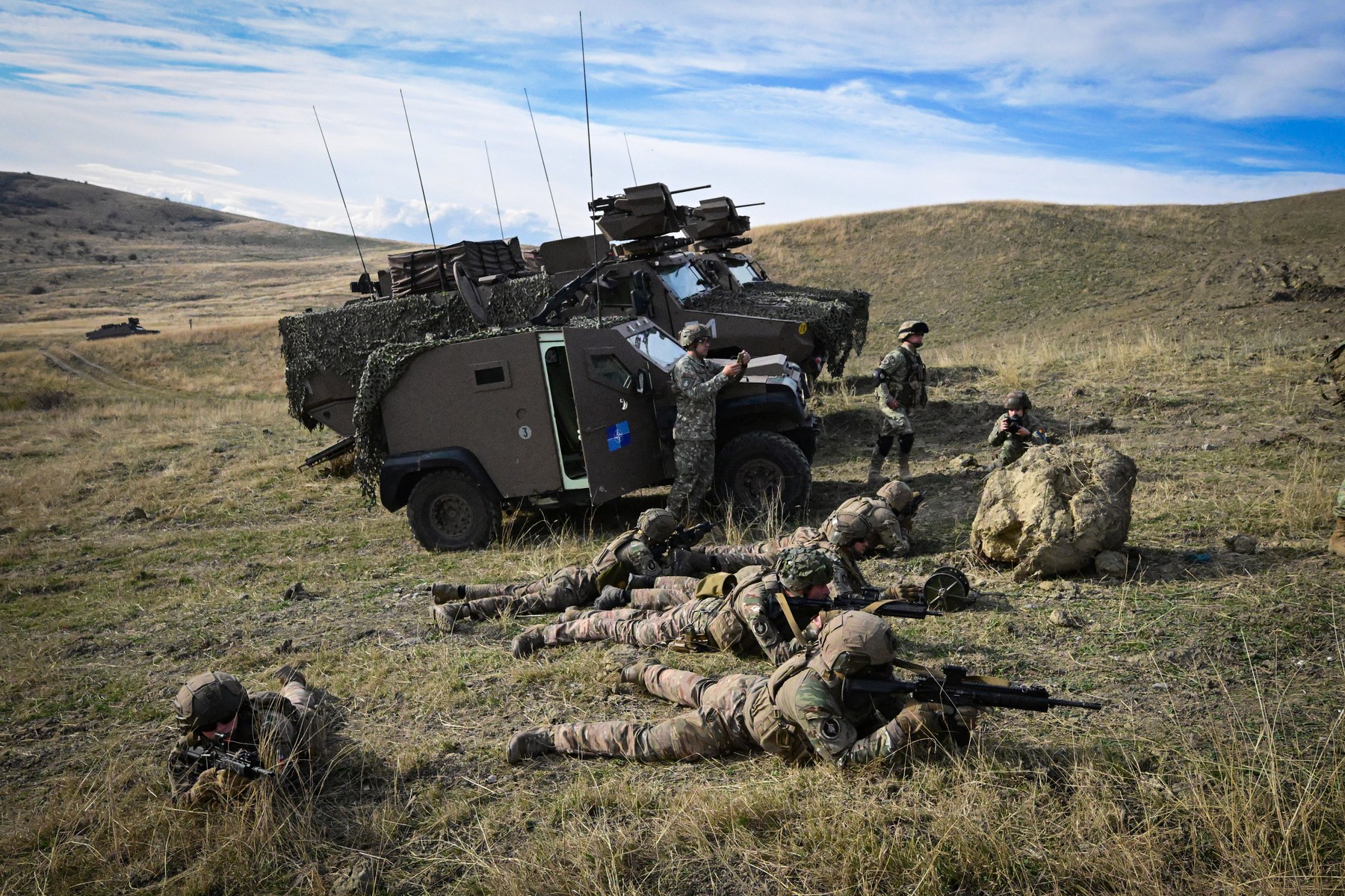
The only way to prevent an outright war with Russia, say former or current military officials and experts who spoke to CNN, is to make sure that, if war does break out, Europe would win.
In an op-ed published this Christmas, titled “Russia's shadow over Europe has forced it to face the truth: The risk of war is real again,” CNN cites current and former members of the armed forces, government and NATO officials, researchers and defense industry professionals whose thinking is based on the widely accepted intelligence assessment that Russia is preparing for the possibility of direct conflict with Europe.
“I think there are signs that societies are willing to have this conversation, but I think we're also seeing governments that are not yet confident enough to have this conversation with their public,” said Sam Greene, a professor of Russian politics at King's College London and an expert on democratic resilience.
Hybrid warfare
Russia is already waging a hybrid war against the West, most experts say, through sabotage operations and by injecting chaos and disinformation into domestic political discussions. They point to overwhelming evidence, including repeated incursions into NATO airspace by Russian aircraft and drones and GPS jamming in the Baltic countries, disinformation campaigns and sabotage attacks against critical infrastructure in several countries, which have been attributed to Russian intelligence. Russia has consistently denied its involvement.
“I think people are scared, especially as this phenomenon is becoming more visible,” Professor Greene said. “We're seeing drones outside airports, and I think there's a growing sense that it's probably (only) a matter of time before one of these drones takes down an airliner.”
Although Moscow has not launched any direct attacks against NATO allies in Europe, experts say this is partly because Russia knows it cannot defeat the alliance with its current capabilities, but that may change in the future.
Putin's warning for Europe
NATO Secretary General Mark Rutte warned earlier this year that Russia could be ready to use military force against NATO within five years. German Foreign Minister Johann Wadephul repeated this warning in a speech last month, saying that German intelligence believed that Moscow was “at least keeping open the option of a war against NATO until 2029 at the latest”.
Russian President Vladimir Putin said in early December that while Russia has no plans to go to war with Europe, “if Europe suddenly wants to go to war with us and starts, we are ready right now.”
The consensus among the Baltic states is that a Russian attack against them could happen within three years at most. Researchers at Harvard Kennedy School's Belfer Center for Science and International Affairs analyzed warnings and predictions made by various officials about Russia's readiness and willingness to launch a war against NATO and found that the years most often mentioned are 2027 and 2028.
Europe, unprepared after 8 decades of peace
Many European states have not paid much attention to defense in recent decades. Without major direct military conflict on the continent since 1945, Europe has enjoyed the longest period of continuous peace in centuries.
Then came two harsh wake-ups: a US president, Donald Trump, who made it clear to NATO allies that they could no longer count on the US so much, and Russia's full-scale invasion of Ukraine.
The harsh reality has led most European NATO members to increase defense spending. According to NATO data, 31 of the alliance's 32 members are on track to meet the target of spending 2% of GDP on defense this year – up from just six in 2021. Iceland, a founding member of NATO and the only country not expected to meet the target, has no armed forces of its own. In return, they contribute financially, with civilian personnel, and with air defense and surveillance systems.
In June, NATO members agreed to raise the target to 5 percent of GDP by 2035. However, many analysts are skeptical of that goal, especially since most European countries are facing financial pressures, even without taking into account a massive increase in defense spending.
The shocking statement of the head of the French army
Several Eurobarometer polls, which measure public opinion across the European Union, have shown this year that an overwhelming majority of Europeans – 78% – are worried about the EU's defense and security in the next five years. A third of people think defense should be among the bloc's spending priorities.
However, General Fabien Mandon, the head of the French armed forces, sparked outrage last month when he warned the French public that the country must prepare for possible future losses in the face of Russian aggression, saying France must “accept the loss of its children” to “protect what we are”.
But people's willingness to understand the threat and contribute to combating it varies significantly by strictly geographical criteria.
“If you're in the east, if you have a border with Russia, if you're in Poland or the Baltic states, the threat is very real to people there, and they're taking much more precautions in terms of public shelters because they think the risk of an airstrike is higher,” said Robin Potter, associate research fellow at the Chatham House think tank in the UK.
Sweden and Finland last year updated guidance for their citizens on how to survive in the event of war, distributing booklets that included instructions on how to prepare for communications disruptions, power outages and extreme weather conditions.
Several countries, including Lithuania, Latvia and Sweden, have reintroduced conscription in the past decade, while others such as Germany, Poland, Belgium, Romania and Bulgaria have introduced voluntary military training programs for their citizens.
Romania's weak point
Potter stated that citizens who have a deeper trust in their country's institutions are more willing to accept sacrifices for the common good.
“If people feel the state is working for them, they're probably more inclined to want to give something in return,” he said.
He gave the example of the Nordic states, which consistently rank high in rankings of well-being, happiness and quality of life, and where the concept of civic duty and “total defence” – where every citizen, business and public body becomes part of the war effort if necessary – is deeply ingrained.
In this regard, a CURS survey carried out before Christmas shows Romania as a dissatisfied and skeptical country. The survey reveals a stark contrast between institutions perceived as “functional” and those associated with politics. If the Army is in the first place with 81% “good or very good” trust, in the tail of the ranking are the judiciary (24%), the Government (25%) and the Parliament (26%).
 SURVEY Romania, at the end of 2025: a dissatisfied and skeptical country. Justice, in the last place for trust


