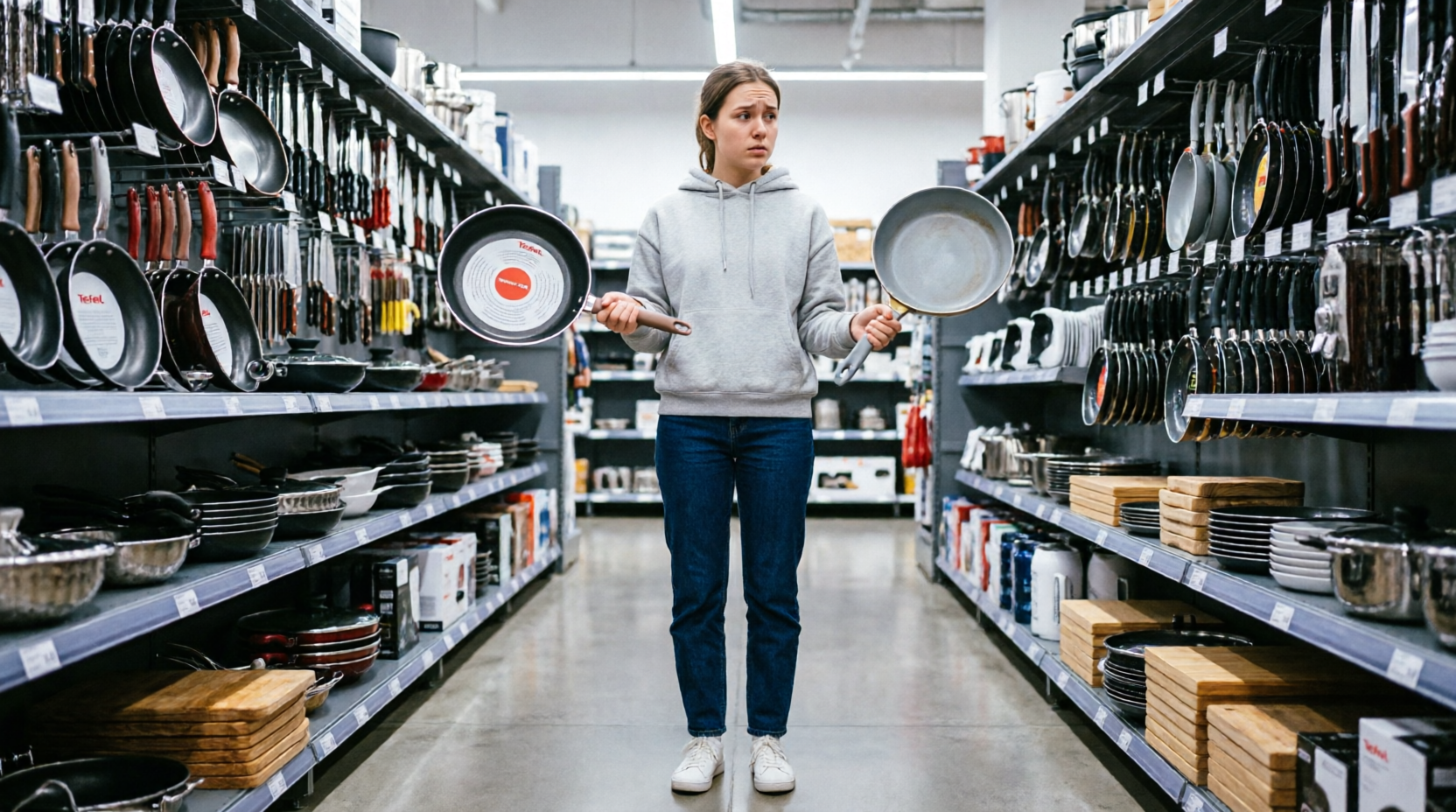
The basic rule of choice is this: it is better to buy 2-3 good frying pans for different tasks (for example, for scrambled eggs, pancakes and steaks) than one universal one – and get an unimportant result. And expert Dmitry Zmievsky spoke about the criteria for choosing a good frying pan.
Housing material
Basically, frying pans are made from the following materials:
- Aluminum. This frying pan is lightweight and heats up quickly. It is advisable to buy a cast aluminum frying pan – it will last longer and better. And thin aluminum does not hold heat well, deforms quickly and has little service life.
- Cast iron. The material holds heat well, but is heavy and requires special care. But if you're up for it, your meat and potatoes will be second to none.
- Stainless steel. These pans are only suitable for experienced cooks who understand how to work with temperature and heat. Otherwise, everything will stick to you.
Coating
This criterion includes 2 options:
- Teflon. These pans are great for pancakes, cheesecakes and scrambled eggs. The main thing is not to overheat or scratch the surface.
- Ceramics. Pans with such a coating do not last long, and their non-stick properties quickly disappear.
As for diamond, titanium and stone coatings, this is one of the marketing traps – it’s better not to expect impressive results from such pans.
Bottom thickness and pan size
The thicker the bottom, the better: the temperature will be stable, the heat will be uniform. Frying pans with a thin bottom are more convenient and heat up quickly, but food often burns on them.
Pans up to 24 cm are suitable for small breakfasts, and pans between 28-32 cm are suitable for large portions for the whole family. Universal size – 26-28 cm.
By the way, pay attention to the handle. It should be comfortable and reliable. If the handle slips and gets hot, cooking will turn into torture.