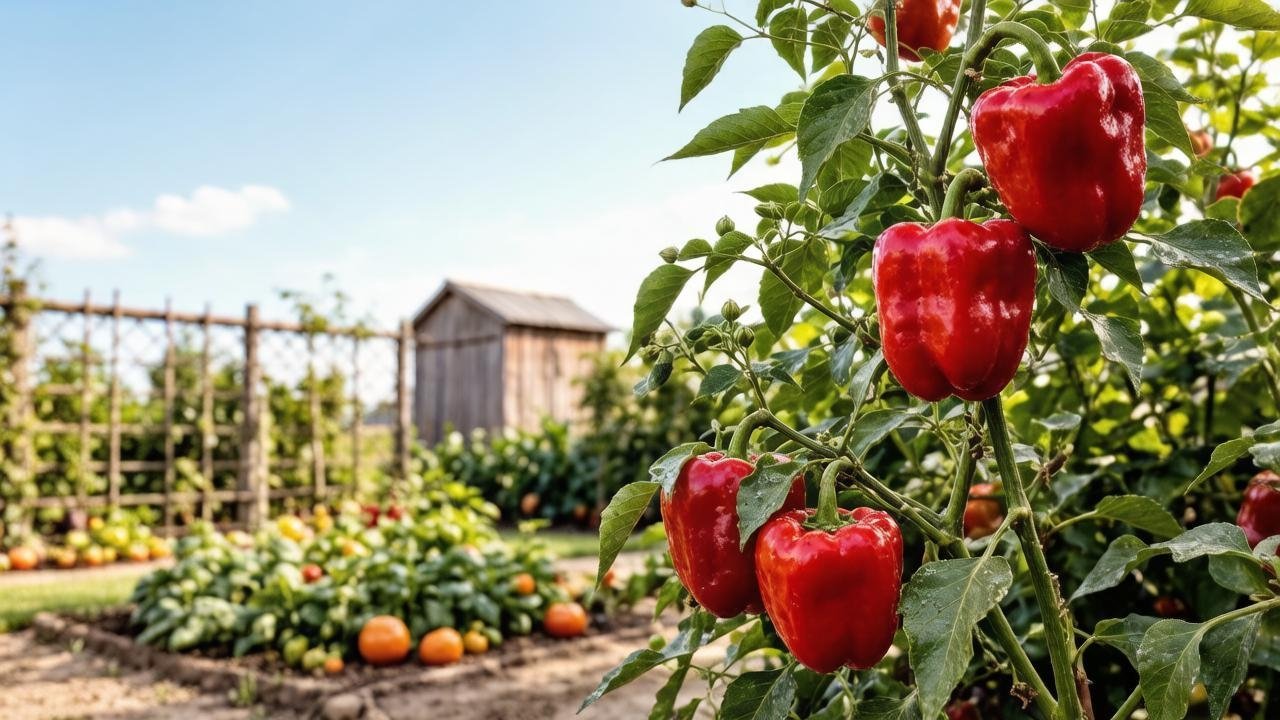
If you put three specific nutritional components in each hole, the seedlings are guaranteed to take root, and any variety – from early thick-walled to hot chili – will receive an excellent impetus for growth. What are the secrets for the cosmic growth of peppers, the author of the Zen channel “My Successful Dacha” (12+) told.
The depth and size of each hole usually done on a spade bayonet. The bottom and sides of the hole are well loosened so that it is convenient for the roots to grow. It is advisable to prepare the holes a few days before planting in order to have time to warm them up if the soil is not yet warm enough. This is easy to do: install arcs, stretch the film, and after 2-3 sunny days the earth in the holes warms up perfectly.
Planting scheme depends on the variety. For low-growing (determinant) varieties, make a distance of 30×40 cm. For tall (indeterminate) varieties, make at least 40×50 cm between bushes. Although some gardeners believe that pepper likes close quarters, you should not thicken the plantings. Poor ventilation inside the bush on cool rainy days leads to disease.
Three additives per well
Compost or humus
Place 1-2 generous handfuls into the hole. Compost provides organic matter and beneficial microorganisms that stimulate root growth and make nutrients available to the plant. It also improves the structure of the soil, making it loose and breathable. Important: no fresh manure or bird droppings should be placed in the hole – they will burn the young roots.
Sperphosphate
Add one heaped teaspoon of granulated superphosphate. Phosphorus is responsible for the development of a powerful root system. This fertilizer dissolves slowly and feeds the plant for a long time – up to 2-3 months.
Chalk or dolomite flour
Pepper is very sensitive to soil acidity and does not like an acidic environment (pH below 6.0). In acidic soil, it does not absorb food well, turns yellow and often gets sick. Therefore, a deoxidizing agent is added – one tablespoon of chalk or dolomite flour. Chalk not only removes acidity, but also provides calcium.
“I thoroughly mix all this with the soil at the bottom of the hole. Then I plant the pepper, sprinkle it with soil and water it generously under the root with warm water with the addition of Fitosporin or a weak solution of potassium permanganate to prevent diseases,” shares the author of the blog.
Read also what to put in the hole for a good tomato harvest.